


Encourage Compact Growth
Pinch back the soft tips of overly long stems every 2–3 weeks in early summer to keep plants dense, encourage more branching, and increase flower production.

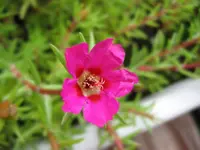
Moss rose (Portulaca grandiflora) is a low, spreading annual succulent often used as a groundcover or edging plant. It forms dense mats of fleshy, cylindrical leaves and bright, rose-like flowers in many colors.
This species is native to South America and is widely grown in warm, sunny climates worldwide. It thrives in hot, dry conditions, which makes it suitable for rock gardens, containers, and poor, sandy soils.
Its drought tolerance and fast growth make it relatively easy to manage, even for beginners. To care for Moss Rose, provide strong light, well-drained soil, and avoid consistently wet conditions.

Care Difficulty
Easy Care

Light Preference
Full Sun

Water Requirements
Low Water

Temperature Preference
Tropical / Frost Sensitive

Hardiness Zone
10–11

Soil Texture
Sandy, Loamy, Rocky

Soil pH
Slightly acidic (6.5–7.0), Neutral (7.0)

Soil Drainage
Well-drained

Fertilization
Minimal (feed rarely)
Scan your plant to receive care tips personalized for your specific plant
Available on iOS and Android
Portulaca grandiflora thrives in strong, direct sunlight to flower well.
Portulaca grandiflora prefers dry, fast-draining conditions and is highly drought-tolerant.
This species favors warm conditions and functions as a heat-tolerant annual in many climates.
Humidity is not a major factor for Portulaca grandiflora, which thrives in dry, sunny conditions typical of Moss Rose.
Portulaca grandiflora prefers very loose, sharply drained, sandy soil that never stays wet for long.
This species is well suited to container growing, especially in shallow, wide pots or hanging baskets.
Portulaca grandiflora is light‑feeding and needs only modest fertilization for good flowering.
Pruning Portulaca grandiflora helps maintain a compact mound and encourages continuous flowering.
This shallow‑rooted annual is more often transplanted than repotted and tolerates disturbance if handled gently.
Portulaca grandiflora is commonly propagated from seed and short stem cuttings during warm weather.
Portulaca grandiflora is usually grown as a warm‑season annual and does not survive hard frost outdoors.

Plant Health Check
Not sure what's wrong with your plant? Check your plant's health inside the app.
This species opens its flowers only in bright light, often closing them by late afternoon or on cloudy days, an adaptation that protects delicate reproductive tissues from excess moisture and low-light pollinators that are less effective.
The leaves and stems store water in specialized succulent tissues, allowing the plant to remain turgid and continue flowering during dry periods that would stress many other annual ornamentals.
Cultivated forms show an unusually broad range of flower colors, including white, yellow, orange, pink, red, and bicolors, resulting from intensive selection on floral pigments in horticulture.

This species is thought to originate from arid regions of South America, but through ornamental cultivation it has become naturalized in many warm, dry parts of the world, where it can form low, colorful mats on rocky or sandy substrates that many other flowering plants cannot colonize.
Lack of flowers often comes from too much shade, overly rich or wet soil, or excess nitrogen fertilizer. Provide very bright light, sharply drained soil, and avoid heavy feeding. Deadhead spent blooms to support continuous flowering when growing Moss Rose.
Keep your plants happy and healthy with plant identification, disease detection, and easy care guidance.

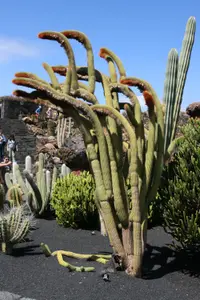
Vatricania
Vatricania guentheri
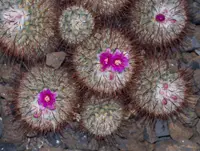
Silken Pincushion Cactus
Mammillaria bombycina
 POPULAR
Elephant Bush
Portulacaria afra
cutleaf evening primrose
Oenothera laciniata
Lily of the Nile
Agapanthus africanus
fourwing evening primrose
Oenothera tetraptera
Calanthe discolor
Calanthe discolor
Old Lady Cactus
Mammillaria hahniana