Root containment
In outdoor beds or large planters, install a solid root barrier or use a deep, heavy container so the vigorous roots do not damage paving, pools, or nearby structures over time.

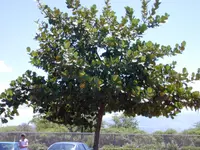
The autograph tree, Clusia rosea, is a tropical evergreen shrub or small tree grown as a foliage houseplant or landscape plant in warm climates. It has thick, leathery, oval leaves that often display carved names or drawings, which explains its common name.
In nature it grows in the Caribbean and parts of Central America, often as a coastal or rock-dwelling species. It tends to be tough and adaptable, but can become large over time and needs space.
This plant tolerates a range of indoor conditions, which makes it relatively straightforward to care for Autograph tree. It prefers bright light, moderate moisture, and well-drained soil to maintain healthy, dense growth.

Care Difficulty
Moderate Care

Light Preference
Partial Sun

Water Requirements
Moderate Water

Temperature Preference
Tropical / Frost Sensitive

Hardiness Zone
10–12

Soil Texture
Sandy, Loamy, Organic-rich

Soil pH
Acidic (5.5–6.5), Slightly acidic (6.5–7.0)

Soil Drainage
Moist but well-drained

Fertilization
Minimal (feed rarely)
Scan your plant to receive care tips personalized for your specific plant
Available on iOS and Android
Clusia rosea grows best with bright, indirect light and limited direct sun exposure.
This species prefers evenly moist, well-drained soil and tolerates short dry spells better than constant wetness.
This tropical shrub thrives in stable, warm conditions and is sensitive to cold and frost.
Clusia rosea prefers moderately humid air but adapts to typical indoor levels with some care.
Clusia rosea needs an airy, fast-draining yet moisture-retentive substrate to support steady growth.
This species is well suited to container growing when the pot supports its dense, woody root system and spreading canopy.
Clusia rosea benefits from modest, consistent feeding during active growth, especially in containers.
Clusia rosea responds well to light structural pruning that maintains size and density.
Container-grown Clusia rosea needs occasional repotting to support its woody root system and canopy size.
Clusia rosea is most commonly propagated from semi-hardwood stem cuttings taken in warm weather.
Clusia rosea is frost-sensitive and needs protection in regions with cool winters.

Plant Health Check
Not sure what's wrong with your plant? Check your plant's health inside the app.
In its native Caribbean habitats, this species often germinates in rock crevices or on other trees, then sends roots downward to reach soil, behaving as a hemi-epiphyte for part of its life cycle.
The plant produces a dense, sticky white latex that helps seal wounds and deter many herbivores, a common strategy in the Clusiaceae but particularly noticeable in this species when stems or leaves are cut.
Its pale pink to white flowers typically open in the evening or at night and are lightly scented, matching the activity patterns of its natural pollinators such as nocturnal insects.

The seeds of this species are coated in a fleshy, brightly colored aril that attracts birds, which then disperse the seeds after feeding, making it a significant participant in bird-mediated seed dispersal networks in parts of the Caribbean.
Yellowing leaves often result from excess water, poorly drained soil, or sudden temperature changes. Check that the root zone is not waterlogged, remove soggy soil if needed, and trim only fully yellow, older leaves.
Keep your plants happy and healthy with plant identification, disease detection, and easy care guidance.

-200x162.webp)