Never Never Plant Care (Ctenanthe setosa)

About Never Never Plant

Ctenanthe setosa is a tropical evergreen perennial from Brazil, grown mainly as a foliage houseplant. It belongs to the prayer plant group, known for leaves that subtly move with day–night light changes.

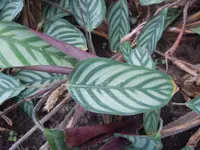
The plant forms low clumps with upright stems and elongated, silver-green leaves marked with darker stripes and rich purple undersides. This striking contrast makes it a popular choice for indoor collections.

It prefers stable warmth, moderate to high humidity, and evenly moist but well-drained soil, so consistent conditions are important if you want to care for Ctenanthe setosa successfully.

Main Plant Requirements

Care Difficulty

Moderate Care

Light Preference

Bright Indirect Light

Water Requirements

Keep Soil Moist

Temperature Preference

Tropical / Frost Sensitive

Hardiness Zone

11–12

Soil Texture

Loamy, Peaty, Organic-rich

Soil pH

Acidic (5.5–6.5), Slightly acidic (6.5–7.0)

Soil Drainage

Moist but well-drained

Fertilization

Light (every 4–6 weeks)

Get Personalized Care Plan

Scan your plant to receive care tips personalized for your specific plant

Personalized Care in the App

Available on iOS and Android

How to Care for the Never Never Plant

This plant does best in bright, filtered light that mimics a forest understory.

  • Provide 6–8 hours of bright, indirect light daily; light behind a sheer curtain or under dappled shade outdoors suits Ctenanthe setosa well.
  • Allow gentle morning sun in east-facing exposures, but protect from direct midday and afternoon sun, which can cause leaf scorch and fading patterns.
  • In winter, move the plant closer to a bright window or to a brighter shaded outdoor spot to compensate for shorter days and weaker light.

This species prefers evenly moist, but not saturated, soil.

  • Water when the top 2–3 cm of soil feels dry to the touch, allowing deeper soil to stay slightly damp rather than fully drying out.
  • Use a free-draining mix and pots or beds with good drainage; yellowing, limp leaves and a sour smell indicate overwatering and possible root issues.
  • In spring and summer, you may need to water more often; in cooler months, reduce frequency but avoid letting the root zone dry out completely.

Stable, warm temperatures support healthy growth and leaf color.

  • Aim for 65–80°F (18–27°C) for best growth; avoid rapid temperature swings that stress the plant and slow new leaves.
  • Keep it above 55°F (13°C); prolonged exposure below this can cause leaf curl, dark patches, and dieback, especially outdoors in cold snaps.
  • This plant dislikes frost and hot, dry extremes; protect from frost, and in heat above 86°F (30°C) provide extra shade and humidity to limit stress.

This species needs consistently high humidity to keep foliage healthy and prevent leaf damage.

  • Aim for 60–80% humidity; growth slows and tips scorch if kept much drier for long periods.
  • Ctenanthe setosa tolerates brief dips near 40–50% but persistent dry air leads to curling, browning edges, and crispy tips.
  • Increase humidity with grouped plants, a room humidifier, or a pebble tray placed under (not around) the pot.

This plant prefers a loose, airy, organic-rich substrate that drains freely but does not dry out too fast.

  • Use a peat- or coco-based mix with added compost, plus perlite or pumice for better drainage and aeration.
  • Aim for slightly acidic to neutral pH around 6.0–7.0, which supports nutrient availability and root health.
  • Ensure the soil feels springy and crumbly, never compact; mix in fine bark chips to create long-lasting structure.
  • Avoid heavy garden soil, thick clay, or any mix that stays soggy, which quickly promotes root and stem rot.

This species is well suited to container culture due to its shallow, fibrous root system.

  • Choose a wide, stable pot to accommodate its spreading habit and prevent tipping as foliage leans outward.
  • Use a container material that matches your environment, such as plastic for slower drying or terracotta where air is humid.
  • Select a pot with several unobstructed drainage holes so excess water exits rapidly and the lower root zone does not stay waterlogged.

This species benefits from light, consistent feeding during active growth for stable foliage color and steady growth.

  • Use a balanced liquid fertilizer (around 10-10-10 or 20-20-20) diluted to 1/4–1/2 strength for Ctenanthe setosa.
  • Apply every 4–6 weeks in spring and summer when the plant is actively growing.
  • Stop or reduce feeding to 1 light application in late fall if growth slows in winter.
  • Avoid organic products with strong odors indoors; use well-diluted synthetic or fine, sifted compost tea.

Pruning is mainly for cleanliness and light shaping rather than size control in this species.

  • Best time is late winter or early spring before strong new growth begins.
  • Remove yellowing, dead, or torn leaves at the base with clean, sharp scissors or pruners.
  • Cut back leggy or crowded stems to encourage denser, more compact foliage.
  • Disinfect tools before and after use to lower the risk of spreading leaf spot or other diseases.

Container-grown plants appreciate occasional repotting to maintain root health and substrate quality.

  • Plan to repot every 2–3 years in spring, or when roots circle the pot base or grow from drainage holes.
  • Choose a pot 2–5 cm wider with drainage holes and use a well-aerated, peat-free or peat-reduced tropical mix.
  • Water lightly the day before, then gently loosen and transfer the root ball, disturbing roots as little as possible.
  • After repotting Ctenanthe setosa, keep in bright, indirect light with slightly reduced watering for 1–2 weeks to limit stress.

This plant is most reliably multiplied by division, since named forms may not come true from seed.

  • Divide mature clumps in late spring or early summer when active growth supports recovery.
  • Unpot the plant, gently separate rhizomes so each division has several stems and healthy roots.
  • Plant divisions into small pots with fresh, moist, well-drained mix and firm lightly around roots.
  • Maintain high humidity, stable warmth (68–80°F), and shaded, indirect light until strong new growth appears.

Indoor culture is preferred in cold climates because this tropical species is frost-sensitive.

  • Keep plants above 60°F; brief exposure below 50°F can cause leaf damage and stress.
  • Move outdoor containers indoors before night temperatures drop below 55°F.
  • Place away from drafts, exterior doors, and cold window glass to prevent chilling of foliage.
  • Maintain moderate humidity and slightly drier soil than in summer, without letting the root ball fully dry.

Care Tips

Use wide pots

Select a pot that is slightly wider than it is deep to give the shallow, spreading rhizomes room to expand, and rotate the container 90° every 2–3 weeks to encourage even, compact growth.

Structured repotting method

When repotting, gently wash old soil from the roots, trim only dead or mushy sections, then reset the plant at the same depth and lightly firm fresh mix around the root ball to avoid air pockets.

Divide for rejuvenation

Every 2–3 years, divide the plant into 2–4 clumps with at least 3–4 stems each, then pot divisions separately to refresh growth and maintain a dense, full appearance rather than a thin, sprawling plant.

Leaf cleaning routine

Wipe both sides of the leaves with a soft, damp cloth every 2–4 weeks to remove dust, which improves gas exchange and makes it easier to spot early signs of spider mites or scale insects when growing Ctenanthe setosa.

Stabilize microclimate

Place the pot on a large, solid tray or bench away from doors and vents to reduce drafts and rapid humidity swings, which helps prevent leaf edge browning and stress-induced leaf folding.

Common Pests and Diseases

Spider mites

This pest often attacks Ctenanthe setosa in dry indoor air, causing fine stippling, dull leaves, and delicate webbing on leaf undersides. Symptoms include slowed growth and leaves that look dusty or faded.

Solution

Rinse foliage thoroughly with lukewarm water, focusing on leaf undersides, then repeat every few days for 1–2 weeks. Increase humidity to above 50%, isolate the plant, and use a horticultural soap or neem oil spray labeled for mites if the infestation persists.

Mealybugs

These insects appear as white, cottony clusters in leaf axils, along midribs, and at the base of stems, often causing leaf yellowing and sticky honeydew. This pest can spread easily between closely spaced prayer plants and other marantaceae.

Solution

Remove visible insects with a cotton swab dipped in 70% isopropyl alcohol, then wash the plant with lukewarm water and mild horticultural soap. Inspect weekly, repeat spot treatments as needed, and isolate the plant until no new mealybugs appear for several weeks.

Fungal leaf spot

This disease produces small, water-soaked or tan spots with darker margins that can merge into larger patches, especially on older leaves. Symptoms include yellowing around spots and premature leaf drop in persistently wet conditions.

Solution

Trim and discard affected leaves, avoid wetting foliage, and water at the soil level so leaves dry quickly. Improve air movement around the plant, reduce overcrowding, and, if spots continue to spread, apply a copper- or sulfur-based fungicide according to label directions for ornamental foliage plants.

Bacterial leaf blight

This disease causes irregular, translucent, or dark brown lesions that may look greasy and often start along leaf edges or at mechanical damage points. Symptoms include rapid spread in warm, humid, poorly ventilated conditions and a possible sour odor from severely affected tissue.

Solution

Remove and discard heavily affected leaves and any fallen debris, then avoid overhead watering and splashing between plants to limit spread. Improve air circulation, keep foliage dry, and if symptoms are severe, consider discarding the most affected plant to protect nearby marantaceae while propagating only from healthy, symptom-free sections.

Fusarium stem and crown rot

This disease starts at the soil line with dark, sunken, or mushy stem tissue and can lead to sudden wilting despite moist soil. Symptoms include yellowing lower leaves and a soft, collapsing crown, particularly in plants kept in consistently wet, compacted mixes.

Solution

Remove and discard affected plants or severely rotted sections, and check remaining roots and crowns, keeping only firm, white tissue. Repot healthy divisions into fresh, well-draining mix, water only when the top 2–3 cm of soil are dry, and sterilize pots and tools to reduce reinfection risk when growing Ctenanthe setosa.

Interesting Facts

Natural forest understory

In its native range in Brazil, this species grows in the shaded understory of Atlantic Forest remnants, where it experiences dappled light and consistently warm, humid air.

Purple leaf underside

The leaves have a pronounced purple underside due to anthocyanin pigments, which help capture and manage low, filtered light in its forest habitat.

Pronounced nyctinasty movement

Like many members of the Marantaceae family, it shows strong nyctinasty, a daily movement in which leaf petioles lift and lower the foliage in response to the light–dark cycle.

FAQs about Never Never Plant

Brown, crispy edges usually come from low humidity, irregular watering, or excess fertilizer salts. Increase humidity to 50–60%, water evenly, flush the pot occasionally, and keep it away from hot or cold drafts.

Grow Healthy Plants with Botan Care

Keep your plants happy and healthy with plant identification, disease detection, and easy care guidance.

Botan plant care app — identify plants on mobile

Explore More Plants