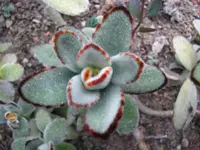
Bulbous airplant Care (Tillandsia bulbosa)

About Bulbous airplant

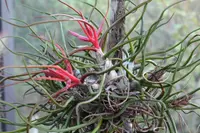
The bulbous airplant, Tillandsia bulbosa, is an epiphytic bromeliad that grows without soil, anchoring itself on trees or other structures. It stores water in its swollen base and absorbs moisture and nutrients mainly through its leaves.

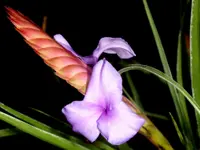
This species has twisting, tentacle-like leaves that turn brighter and often reddish near blooming, giving it a distinctive sculptural look. It naturally occurs in humid tropical regions of Central and South America, often in bright, filtered light.

Its lack of soil, need for good air movement, and regular moisture misting shape how to care for Bulbous airplant. With stable indoor conditions, it is generally manageable for beginners and intermediate growers.

Main Plant Requirements

Care Difficulty

Moderate Care

Light Preference

Bright Indirect Light

Water Requirements

Moderate Water

Temperature Preference

Tropical / Frost Sensitive

Hardiness Zone

10–12

Soil Texture

Sandy, Rocky, Organic-rich

Soil pH

Acidic (5.5–6.5), Slightly acidic (6.5–7.0)

Soil Drainage

Well-drained

Fertilization

Minimal (feed rarely)

Get Personalized Care Plan

Scan your plant to receive care tips personalized for your specific plant

Personalized Care in the App

Available on iOS and Android

How to Care for the Bulbous airplant

Tillandsia bulbosa needs bright, indirect light to maintain healthy color and compact growth.

  • Provide 4–6 hours of bright, filtered light daily, such as near an east window or shaded greenhouse bench.
  • Allow gentle morning sun but protect from strong midday and afternoon sun, which can scorch leaves and cause bleaching.
  • In winter, move the Bulbous airplant closer to bright windows or under grow lights, as low light leads to stretched, pale growth.

Tillandsia bulbosa absorbs water through its leaves, so focus on thorough wetting followed by complete drying.

  • Soak or drench the plant for 10–20 minutes, then shake off excess and let it dry within 3–4 hours in good air movement.
  • Water 2–3 times per week in warm, dry conditions and about weekly in cool, humid weather, increasing frequency if leaf tips curl or feel crisp.
  • Reduce watering if bases stay dark and soft or if a musty smell appears, which indicates overwatering and poor drying.

This species prefers warm, frost-free conditions to maintain steady growth and avoid tissue damage.

  • Aim for 65–80°F (18–27°C) for best growth, with gentle air movement to prevent heat buildup around the plant.
  • Protect from cold below 50°F (10°C), and never expose to frost, as freezing temperatures destroy the leaf tissues and base.
  • In hot spells above 90°F (32°C), increase air circulation, provide shade from harsh sun, and water more frequently to prevent stress.

This epiphytic air plant prefers consistently moist air around its leaves.

  • Aim for 50–70% humidity, mimicking its native tropical conditions.
  • It tolerates short dry spells, but prolonged air below 40% leads to curling, dull leaves, and slowed growth.
  • Increase humidity with daily misting, grouping plants, or placing it near (not in) a tray of water and pebbles.

This species does not grow in soil and instead anchors to a surface with free air circulation around its base.

  • Avoid any traditional potting mix, as soil around the base can trap moisture and cause rot.
  • Mount Tillandsia bulbosa on cork, driftwood, or rock using wire or waterproof glue, leaving air gaps around the bulbous base.
  • If placed in a decorative container, keep it empty or fill with inert, airy materials like large bark pieces or lava rock, never packing tightly.
  • After soaking or rinsing, always return the plant to a position where excess water drains fully away from the leaf bases.

This plant is suitable for containers only as a display holder, not as a rooted potted plant.

  • Choose shallow, open containers that allow thorough air movement around the entire plant body.
  • Use heavy or wide-based vessels to prevent tipping, since mounted plants can be visually top heavy.
  • Position the plant so no water can collect in the bottom of the container after soaking or misting, such as on a raised support or mesh.

Light feeding supports healthy growth and flowering for this epiphytic air plant.

  • Use a balanced water‑soluble orchid or air‑plant fertilizer at 1⁄4–1⁄2 strength, never full strength.
  • Apply as a spray over foliage every 3–4 weeks during spring–summer while growing Bulbous airplant.
  • Skip fertilizer on very hot, dry days to avoid tip burn and salt buildup.
  • Reduce feeding to once in 6–8 weeks or stop entirely during fall–winter rest.

Pruning needs for Tillandsia bulbosa are minimal and mainly hygienic.

  • Trim only dead, dried, or blackened leaves, cutting close to the base with small clean scissors.
  • Remove spent flower spikes once fully brown to tidy the plant and direct energy to offsets.
  • Gently peel away loose, papery leaf sheaths that trap debris, without pulling healthy tissue.
  • Disinfect tools with alcohol before and after use to limit spread of fungal or bacterial issues.

This air plant is usually mounted or placed in containers rather than traditionally repotted.

  • Consider transplanting when the clump outgrows its mount, air circulation is poor, or growth slows without other cause.
  • Best timing is spring to early summer, when temperatures are stable and light is bright but indirect.
  • Every 2–3 years, detach the plant gently and remount on cork, driftwood, or in an airy basket without soil.
  • After remounting, mist lightly for 1–2 weeks, avoid strong sun, and maintain good airflow to limit stress.

Division of offsets is the most practical method for multiplying this species at home.

  • Wait until pups reach at least 1⁄2–2⁄3 the size of the mother plant before separation.
  • In spring–summer, gently twist or cut pups away at the base using disinfected scissors or a knife.
  • Place divisions on a new mount in bright, filtered light with 50–70% humidity and strong airflow.
  • Seeds can be grown under high humidity and bright light, but germination is slow and specialized.

This tropical air plant is frost sensitive and needs protection in cold climates.

  • Move outdoor plants indoors before temperatures drop near 40°F, using bright, indirect light.
  • Avoid exposure to freezing drafts near windows or doors during cold nights.
  • Maintain indoor temperatures around 60–80°F and allow leaves to dry within a few hours after misting.
  • Reduce watering frequency in winter while keeping humidity moderate and airflow steady to prevent rot.

Care Tips

Mounting technique

Use breathable, non-rusting materials like cork, driftwood, or hardwood and secure the plant only around the bulb base with soft wire or nylon fishing line, keeping all leaf bases free so water does not collect and rot the plant.

Drying orientation

After any soaking or rinsing, place the plant upside down or slightly tilted for 1–2 hours so trapped water drains from the bulb and inner leaf bases, which greatly reduces rot risk.

Airflow management

Position the plant where there is consistent gentle air movement, such as near but not directly in front of a fan or open vent, to speed drying after watering and keep the narrow leaf bases healthy.

Seasonal mist adjustment

In cool, low-light winter conditions, replace some soakings with quick, thorough misting and ensure the plant dries within 2–3 hours to match its slower metabolism and reduce fungal problems when caring for Bulbous airplant.

Quarantine and inspection

When adding new air plants, keep them separate for 2–3 weeks and inspect leaf bases and crevices with a hand lens for scale or mealybugs so pests do not spread through your collection when you grow Tillandsia bulbosa.

Common Pests and Diseases

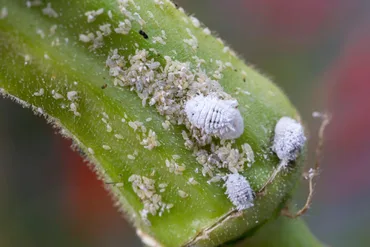
Mealybugs

This pest feeds on the soft leaf bases inside the bulb and in leaf axils, causing yellowing, stunting, and sticky honeydew that encourages sooty mold. Infestations are often hidden deep in the twisted foliage where air circulation is low.

Solution

Isolate the plant, then rinse thoroughly under a strong but gentle stream of lukewarm water, focusing on the bulb area and leaf bases. After drying, dab remaining insects with cotton swabs dipped in isopropyl alcohol, repeat every 5–7 days until no new insects appear, and improve airflow to prevent reinfestation.

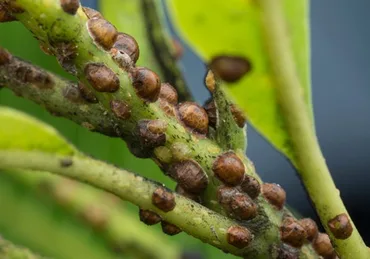
Scale insects

These insects attach to the tougher outer leaves and bulbous base, appearing as small, hard bumps that are easy to overlook. Feeding weakens the plant and may cause dull, patchy discoloration and leaf tip dieback.

Solution

Manually scrape or rub off visible scale with a soft brush or cloth, then rinse the plant thoroughly. Treat remaining insects with spot applications of isopropyl alcohol or a light application of diluted insecticidal soap, and increase ventilation and light within the recommended range to support recovery.

Fungal leaf spot

This disease produces small dark or water-soaked spots along the leaves, often where water sits for long periods in low airflow. Spots may expand and merge, leading to thinning or collapse of affected leaf sections.

Solution

Trim off severely spotted leaves with clean scissors and allow cut surfaces to dry quickly. Adjust watering so the plant dries fully within a few hours, increase air movement around the plant, and avoid prolonged misting in cool or very humid conditions to limit further spread of spores and support better Tillandsia bulbosa care instructions.

Bacterial soft rot

This disease causes mushy, foul-smelling tissue starting inside the bulb or at the base of inner leaves, often following chronic overwatering or poor drying. Symptoms include rapid collapse of the plant center while outer leaves may initially look intact.

Solution

Remove and discard the entire affected plant if the bulb is soft and has a strong odor, as recovery is rare once the core is infected. To protect nearby plants, improve air circulation, avoid soaking the bulb for prolonged periods, and ensure plants dry completely within a few hours after any watering or soaking routine.

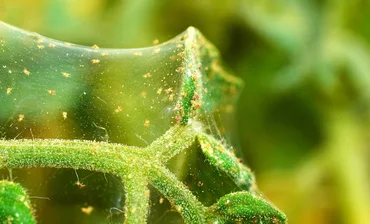
Spider mites

These pests occur mainly in warm, dry indoor environments and feed on the thin leaf surfaces, causing fine stippling, dull coloration, and occasional fine webbing between leaves. Damage is often more visible on plants kept very close to heat sources or under very dry air.

Solution

Rinse the plant thoroughly under running water, paying attention to both sides of the leaves and deep crevices, and repeat every few days for several cycles. Raise humidity moderately, improve airflow, and if mites persist, use a mild insecticidal soap rinse, ensuring the plant dries quickly afterward to protect the trichomes and leaf surface.

Interesting Facts

Hollow bulb adaptation

The swollen, hollow base of this air plant often shelters small invertebrates, and in nature tiny ants sometimes use it as a refuge while moving over mangrove branches.

Preference for mangroves

In the wild it is frequently found growing on mangrove trees in coastal wetlands of Central and northern South America, tolerating bright reflected light, salt-laden air, and periodic flooding around its host.

Color change before flowering

As the plant approaches flowering, the usually green, tentacle-like leaves can turn reddish or purplish, a color change linked to pigments called anthocyanins that may help protect tissues from intense light.

Botan icon

Did you know?

Some wild populations of this species have been recorded growing almost at sea level in mangrove swamps and also at higher, inland elevations, showing an unusually wide tolerance for different microclimates compared with many other epiphytic Tillandsia species.

FAQs about Bulbous airplant

Brown leaf tips usually result from very dry air, strong direct sun, or mineral buildup from hard tap water. Improve air movement, use rain or filtered water, soak then dry fully, and trim only completely dead tissue.

Grow Healthy Plants with Botan Care

Keep your plants happy and healthy with plant identification, disease detection, and easy care guidance.

Botan plant care app — identify plants on mobile

Explore More Plants