Rotate For Symmetry
Turn the pot 90° every 7–10 days so new leaves track the light evenly, which keeps the plant compact and prevents leaning stems that are prone to snapping.

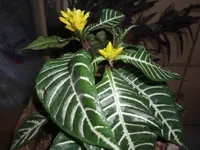
Zebra-plant (Aphelandra squarrosa) is a tropical evergreen shrub grown indoors for its striking foliage. It has glossy dark green leaves with bold white veins and a compact, upright habit.
In its native habitat in Brazil, it grows in warm, humid forest understories with filtered light. Indoors, it is valued for bright yellow flower bracts that appear above the foliage but can be short-lived.
This species is considered moderately demanding because it reacts quickly to low humidity, irregular watering, or poor light. To care for Zebra-plant successfully, aim for stable warmth, bright indirect light, and evenly moist, well-drained soil.

Care Difficulty
Hard Care

Light Preference
Bright Indirect Light

Water Requirements
Keep Soil Moist

Temperature Preference
Tropical / Frost Sensitive

Hardiness Zone
11–12

Soil Texture
Loamy, Peaty, Organic-rich

Soil pH
Acidic (5.5–6.5), Slightly acidic (6.5–7.0)

Soil Drainage
Moist but well-drained

Fertilization
Moderate (every 2–4 weeks)
Scan your plant to receive care tips personalized for your specific plant
Available on iOS and Android
Aphelandra squarrosa thrives in bright, filtered light that mimics a forest understory.
This species prefers evenly moist, not soggy, soil to support healthy foliage.
This plant prefers consistently warm, stable temperatures for best growth.
This species needs consistently high humidity to keep leaves healthy and prevent stress.
This plant prefers a loose, airy, organic-rich potting medium that drains fast yet holds some moisture.
This species is well suited to container growing due to its compact root system and upright habit.
Aphelandra squarrosa benefits from modest, consistent feeding during its active growing season for healthy foliage and blooms.
Pruning Aphelandra squarrosa helps maintain a compact shape and supports healthy new growth.
This species performs best when slightly root-bound but needs timely repotting to prevent stress and decline.
Aphelandra squarrosa is most commonly propagated from softwood stem cuttings taken during the warm season.
This tropical houseplant is frost-sensitive and requires warm indoor conditions in winter.

Plant Health Check
Not sure what's wrong with your plant? Check your plant's health inside the app.
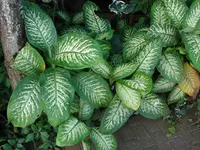
The leaves show a strong contrast between dark green tissue and thick white primary and secondary veins, caused by differences in chlorophyll concentration and leaf thickness that make the vascular network visually stand out.
The bright yellow bracts on its flower spikes can persist for several weeks, but the individual tubular flowers usually last only a few days, making the showy structure mostly a display of bracts rather than petals.
This species is naturally found in the Atlantic Forest of eastern Brazil, where it grows as an understory shrub in warm, humid, shaded habitats with consistently moist but well-drained soil.

In its native Brazilian range this species is pollinated primarily by hummingbirds, whose long beaks and tongues are well suited to reach nectar deep inside the tubular yellow flowers while simultaneously transferring pollen between plants.
Flowering usually fails when light is too low, humidity is poor, or the plant is stressed after repotting or relocation. Stable conditions, moderate feeding, and slightly brighter, indirect light often trigger buds on mature plants.
Keep your plants happy and healthy with plant identification, disease detection, and easy care guidance.

%20-%20Copy-200x143.webp)