Rose grape Care (Medinilla magnifica)

Also known as: Rose Grape

About Rose grape

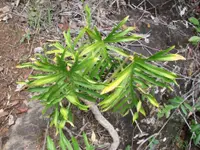
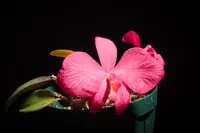
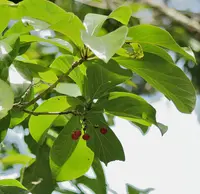
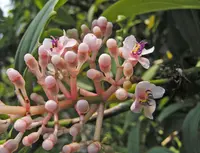
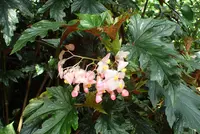
Rose grape (Medinilla magnifica) is a tropical evergreen shrub grown mainly as an ornamental houseplant for its striking, drooping clusters of pink flowers and berries. It has large, leathery, glossy leaves with pronounced veins, forming a compact, upright shape that suits bright indoor spaces and warm conservatories.

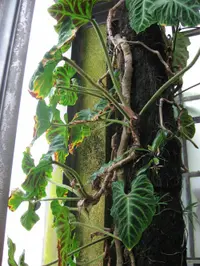
In nature, it grows as an epiphyte on trees in the shaded, humid forests of the Philippines. Its sensitivity to cold, low humidity, and irregular watering makes it more challenging than common houseplants, so it suits growers ready to learn how to care for Rose grape. It generally prefers bright, filtered light, consistently moist but not waterlogged soil, and good air circulation.

Main Plant Requirements

Care Difficulty

Hard Care

Light Preference

Bright Indirect Light

Water Requirements

Keep Soil Moist

Temperature Preference

Tropical / Frost Sensitive

Hardiness Zone

11–12

Soil Texture

Loamy, Peaty, Organic-rich

Soil pH

Acidic (5.5–6.5), Slightly acidic (6.5–7.0)

Soil Drainage

Moist but well-drained

Fertilization

Light (every 4–6 weeks)

Get Personalized Care Plan

Scan your plant to receive care tips personalized for your specific plant

Personalized Care in the App

Available on iOS and Android

How to Care for the Rose grape

Medinilla magnifica prefers bright, filtered light that mimics an understory tropical habitat.

  • Provide 4–6 hours of bright, indirect light each day, such as near an east window or under light shade outdoors.
  • Tolerates brief gentle morning sun but needs protection from harsh midday and afternoon sun to prevent leaf scorch on Rose grape.
  • In winter, move it to the brightest frost-free spot available, while in summer offer dappled shade under a tree or shade cloth.

This species needs consistently light moisture but is sensitive to both drought and waterlogging.

  • Water when the top 2–3 cm of soil feel dry, letting excess drain fully so roots never sit in standing water.
  • Reduce watering in winter, allowing the top 3–5 cm to dry, then resume slightly more frequent watering as new growth starts.
  • Watch for wilted, drooping leaves with dry soil as a sign of underwatering, and yellowing, soft leaves with wet soil as overwatering.

Stable, warm conditions are essential for reliable flowering and long-term vigor.

  • Aim for 65–80°F (18–27°C) for active growth, with slightly cooler nights improving bud formation.
  • Avoid temperatures below 55°F (13°C); brief exposure near this level may slow growth, while frost can kill foliage and stems.
  • In hot spells above 86°F (30°C), increase shade and airflow, avoiding hot, dry drafts from heating or reflected pavement surfaces.

This species needs high, stable humidity to keep leaves and flower bracts healthy.

  • Aim for 60–80% humidity; dry indoor air below 50% often leads to leaf edge browning and bud drop.
  • Rose grape tolerates brief dips in humidity but prolonged dryness causes dull, papery foliage and poor flowering.
  • Increase humidity with a nearby humidifier, grouped plants, and a pebble tray under (not touching) the pot, rather than misting the flowers.

This plant prefers a loose, airy, organic-rich mix that drains quickly yet holds some moisture.

  • Use a mix of roughly 40% fine orchid bark, 30% peat or coco coir, 20% perlite, and 10% compost for Medinilla magnifica.
  • Aim for slightly acidic soil at pH 5.5–6.5, which supports nutrient uptake and limits micronutrient lockout.
  • Ensure rapid drainage; water should flow out within seconds, not pool on the surface or sit in the saucer.
  • Avoid heavy garden soil or clay-based mixes that compact around roots and reduce oxygen availability.

This species is well suited to container growing due to its epiphytic, shallow-rooting habit.

  • Choose a wide, stable pot to counterbalance the top-heavy flowering stems and prevent tipping.
  • Select a breathable material like unglazed terracotta if moisture retention is high, or glazed pottery if the mix dries very fast.
  • Use a container with multiple drainage holes so excess water exits quickly, preventing waterlogging at the root zone.

Medinilla magnifica benefits from moderate, well-timed feeding to support foliage and flowering in Rose grape indoor care.

  • Use a balanced liquid fertilizer (for example 10-10-10 or 20-20-20) diluted to 1/4–1/2 strength for container plants.
  • Feed every 2–4 weeks during spring and summer when the plant is actively growing and forming buds.
  • Avoid high-salt or fast-acting products; slow-release pellets or light applications of fine compost are safer.
  • Stop or reduce feeding to once every 6–8 weeks in fall and winter when growth naturally slows.

Thoughtful pruning helps Medinilla magnifica maintain a compact shape and encourage strong flowering stems.

  • Best time is after the main flowering flush in late spring or early summer, once spent clusters fade.
  • Use clean, sharp pruning shears to remove dead, damaged, or crossing stems back to healthy wood.
  • Shorten overly long, leggy shoots to promote bushier growth and better light penetration into the canopy.
  • Avoid heavy cutting into old, woody stems, as this can reduce next season’s flowering potential.

This species prefers stable conditions, so repotting should be done only when clear signs of crowding appear.

  • Check for roots circling the pot, pushing through drainage holes, or very slow growth despite good care.
  • Plan to repot every 2–3 years in late winter or early spring, just before active growth resumes.
  • Move up only 1 pot size, using a well-drained, airy mix, and keep the root ball as intact as possible.
  • Water thoroughly after repotting, then place in bright, indirect light and maintain high humidity to limit transplant shock.

New Medinilla magnifica plants are most often produced from semi-ripe stem cuttings under warm, humid conditions.

  • Take 8–12 cm semi-ripe cuttings in late spring or early summer from non-flowering shoots.
  • Remove lower leaves, optionally dip the cut end in rooting hormone, and insert into a sterile, moist, well-drained medium.
  • Maintain 72–80°F, high humidity, and bright, indirect light; a propagator or clear cover helps reduce moisture loss.
  • After firm rooting, gradually increase ventilation, then pot cuttings individually into a slightly acidic, airy substrate.

This tropical shrub is highly sensitive to cold and must be kept above freezing in winter.

  • Keep indoor or greenhouse temperatures around 60–70°F and never below 50°F for extended periods.
  • In cold climates, grow in containers and move indoors before night temperatures drop under 55°F.
  • Reduce watering in winter, allowing the top layer of the mix to dry slightly while avoiding complete dryness.
  • Provide bright, indirect light and avoid cold drafts or direct exposure to heating vents that desiccate foliage.

Care Tips

Provide flower support

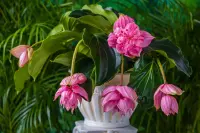
Use a small hoop stake or unobtrusive trellis to support heavy pendant flower clusters so branches do not snap under their weight as the panicles mature.

Rotate during bud set

When buds first appear, rotate the pot no more than 90° every 2–3 weeks to keep growth even while avoiding sudden light changes that can cause bud drop.

Use wide, stable pots

Choose a low, wide container with good weight so the plant does not tip when flowering stems extend and to allow the shallow roots to spread horizontally.

Gentle cleaning routine

Wipe the large leaves every 3–4 weeks with a damp, soft cloth to remove dust, which improves light use and reduces habitat for pests like scale and mealybugs.

Cool rest adjustment

After flowering, give the plant a slight rest period with a bit cooler nights and reduced feeding for 6–8 weeks to help set the next cycle of blooms when caring for Rose grape.

Common Pests and Diseases

Mealybugs

This pest is attracted to the plant’s soft new growth and flower clusters, where it hides in leaf axils and along stems. Symptoms include white cottony clusters, sticky honeydew, and distorted or stunted growth.

Solution

Isolate the plant, then dab visible insects with cotton swabs soaked in 70% isopropyl alcohol, and gently wash leaves and stems with lukewarm soapy water. Repeat weekly until no new insects appear, and improve air movement and avoid overfertilizing, which encourages soft, mealybug-prone growth.

Spider mites

These insects thrive on Medinilla magnifica in warm, dry indoor air and often colonize the undersides of leaves. Symptoms include fine webbing, tiny yellow stippling, and an overall dull, dusty look to foliage.

Solution

Rinse the plant thoroughly in the shower or with a hose, directing water to leaf undersides to dislodge mites, then increase humidity around the plant and reduce heat stress. For persistent infestations, use repeated applications of insecticidal soap or horticultural oil, applied carefully to both leaf surfaces every 7–10 days.

Scale insects

This pest attaches firmly to stems and leaf midribs, often blending with the plant’s structure and weakening it over time. Symptoms include brown or tan shell-like bumps, sticky honeydew, and sooty mold on leaves or nearby surfaces.

Solution

Manually remove scale with a soft brush or fingernail and wipe stems with a cloth lightly moistened with diluted alcohol, taking care not to damage the thin bark. Follow with thorough coverage using horticultural oil to smother remaining juveniles, and inspect regularly for new crawlers, especially on flower stalks and young stems.

Botrytis blight

This disease prefers the humid, shaded environment around the large hanging flower clusters, especially on aging or damaged blooms. Symptoms include soft brown spots on bracts and petals, grey fuzzy mold, and premature drop of flowers or buds.

Solution

Remove and discard all affected flowers and leaves, improve airflow around the plant, and avoid wetting blossoms when watering. Space the plant away from crowded neighbors, reduce ambient humidity slightly, and if conditions remain very humid, use a fan for gentle air circulation to limit spore spread.

Leaf spot (fungal)

This disease takes advantage of prolonged leaf wetness on the broad, leathery leaves. Symptoms include small water-soaked spots that enlarge into irregular brown or tan lesions, sometimes with yellow halos or dark borders.

Solution

Prune off and discard affected leaves, then water at the soil level and avoid misting foliage to keep leaves dry. Provide bright, indirect light and better airflow, and if new spots keep appearing, apply a labeled copper-based or other ornamental-safe fungicide according to Medinilla magnifica care instructions and product directions.

Interesting Facts

Epiphytic shrub habit

In its native range in the Philippines, this species often grows as an epiphyte, anchoring on tree branches rather than in soil, while still using roots only for support and moisture uptake, not as a parasite.

Pendant bract displays

Its showy pink structures are actually large bracts that surround clusters of small true flowers, an adaptation that visually amplifies the floral display to attract pollinators in shaded rainforest understories.

Specialized bird pollination

In the wild, it is believed to be mainly pollinated by birds and possibly large insects that can access the dense hanging flower clusters, which hang below the foliage where wind plays almost no role in pollination.

Botan icon

Did you know?

This species was first scientifically described in the 19th century and became a prized conservatory plant in European glasshouses, where its long, arching flower clusters helped popularize tropical ornamental shrubs among plant collectors.

FAQs about Rose grape

Lack of flowers often comes from insufficient light, overpotting, or excessive nitrogen fertilizer. Cool drafts and inconsistent watering also reduce bud formation. Provide stable warmth, bright but indirect light, and a slight dry rest between waterings to encourage blooms.

Grow Healthy Plants with Botan Care

Keep your plants happy and healthy with plant identification, disease detection, and easy care guidance.


Botan plant care app — identify plants on mobile

Explore More Plants