


Deadhead In Sections
Remove spent flower clusters every few days by cutting just above a healthy leaf node, working across the bed in small sections to keep plants blooming while avoiding a sudden, stressful hard cutback.

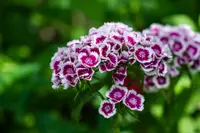
Sweet William, Dianthus barbatus, is a short-lived perennial often grown as a biennial, valued for its dense clusters of small, colorful flowers. Plants form neat, upright clumps with narrow leaves and flat-topped flower heads in reds, pinks, whites, or bicolors.
It is native to parts of Europe and western Asia but is widely grown in gardens across temperate regions. Flowers often have a light clove-like scent that attracts pollinators.
The plant is generally easy to grow, provided it has good light, well-drained soil, and avoids soggy conditions. Understanding how to care for Sweet William helps maintain strong flowering and healthy plants over several seasons.

Care Difficulty
Easy Care

Light Preference
Full Sun

Water Requirements
Moderate Water

Temperature Preference
Cool Climate

Hardiness Zone
3–9

Soil Texture
Sandy, Loamy, Organic-rich

Soil pH
Acidic (5.5–6.5), Slightly acidic (6.5–7.0)

Soil Drainage
Well-drained

Fertilization
Light (every 4–6 weeks)
Scan your plant to receive care tips personalized for your specific plant
Available on iOS and Android
Dianthus barbatus thrives in bright outdoor conditions with several hours of direct sun for compact, floriferous growth.
Watering should keep the root zone lightly moist but never saturated to support healthy Dianthus barbatus growth and flowering.
This species prefers cool to mild temperatures and tolerates moderate cold better than intense heat.
Dianthus barbatus prefers relatively dry air and does best in 30–50% humidity.
Dianthus barbatus thrives in lean, well-drained, slightly alkaline soil that keeps roots aerated and dry between waterings.
This species is well suited to container growing on balconies, patios, and sunny steps.
Moderate feeding supports compact growth and abundant blooms in Sweet William grown in containers or nutrient-poor soil.
Thoughtful pruning helps Dianthus barbatus stay compact, healthy, and floriferous.
This species is more often transplanted in beds than repotted long term in containers.
Dianthus barbatus is commonly propagated from seeds and soft cuttings for consistent flowering displays.
Most Dianthus barbatus plants are reasonably cold hardy but benefit from simple winter preparation in colder climates.

Plant Health Check
Not sure what's wrong with your plant? Check your plant's health inside the app.
Sweet William is botanically a short-lived perennial or biennial, often flowering most strongly in its second year and then declining, which is why it is frequently grown as a biennial in gardens.
The spicy, clove-like scent of its flowers comes largely from volatile compounds such as eugenol and related phenylpropanoids, which are also important in attracting pollinating insects.
Its flowers often show a bicolored pattern with contrasting eyes, rings, or picotee edges, the result of localized pigment production in the petal tissue controlled by specific gene expression patterns.

Historical records indicate that Sweet William has been cultivated in European gardens since at least the 16th century, making it one of the older continuously grown ornamental bedding plants in Western horticulture.
Lack of flowers often comes from insufficient light, overly rich nitrogen fertilizer, or plants still in their first year. This biennial usually blooms in its second year after experiencing winter cold, then may weaken afterward.
Keep your plants happy and healthy with plant identification, disease detection, and easy care guidance.

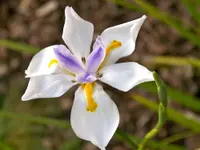
Fairy iris
Dietes grandiflora
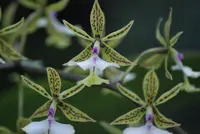
Stamford's Epidendrum
Epidendrum stamfordianum
 POPULAR
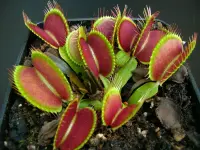
Venus flytrap
Dionaea muscipula
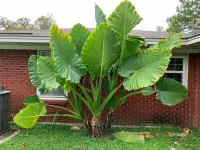
Giant Taro
Alocasia macrorrhizos
dwarf huckleberry
Gaylussacia dumosa
Italian parsley
Petroselinum crispum var. neapolitanum

Paraná-pine
Araucaria angustifolia
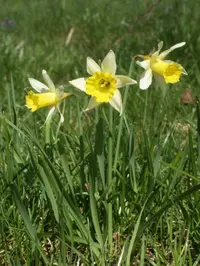
wild daffodil
Narcissus pseudonarcissus