Madeira Cranesbill Care (Geranium maderense)

Also known as: Giant Herb-Robert, Madeira cranesbill

About Madeira Cranesbill

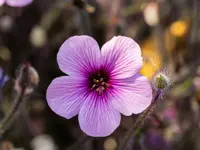
Madeira cranesbill (Geranium maderense) is a short-lived, dramatic perennial often grown as a biennial. It forms a large domed mound of divided, palm-like leaves with a tall, branched flower stalk. Masses of pink to magenta flowers rise above the foliage, creating a striking focal point in mild coastal gardens.

This species is native to the island of Madeira, where it grows in rocky, well-drained sites with a mild, frost-free climate. It can be challenging in colder or very hot regions, mainly due to its sensitivity to frost and excess heat.

Gardeners who want to care for Madeira Cranesbill should provide bright light, shelter from hard frost, and free-draining soil to support its rapid growth and heavy flowering.

Main Plant Requirements

Care Difficulty

Moderate Care

Light Preference

Partial Sun

Water Requirements

Moderate Water

Temperature Preference

Tropical / Frost Sensitive

Hardiness Zone

10–11

Soil Texture

Loamy, Sandy, Organic-rich

Soil pH

Acidic (5.5–6.5), Slightly acidic (6.5–7.0)

Soil Drainage

Moist but well-drained

Fertilization

Light (every 4–6 weeks)

Get Personalized Care Plan

Scan your plant to receive care tips personalized for your specific plant

Personalized Care in the App

Available on iOS and Android

How to Care for the Madeira Cranesbill

This plant thrives with bright, cool conditions that avoid harsh midday exposure.

  • Provide 4–6 hours of direct morning sun with light or dappled shade from midday onward; in hotter regions, prioritize filtered light after 11 a.m.
  • Geranium maderense tolerates light partial shade, but flowering is best where it receives open sky and no dense overhead canopy.
  • Watch foliage color and habit: pale, stretched, or floppy growth signals insufficient light, while crisped leaf edges or bleached patches indicate too much intense sun.

Geranium maderense prefers evenly moist but not saturated soil, especially during active growth.

  • Water when the top 3–5 cm of soil feels dry, soaking the root zone thoroughly, then let excess drain away to avoid standing water.
  • Use sharply drained soil or a sloped, free-draining bed; prolonged wetness around the crown increases risk of rot and yellowing lower leaves.
  • In cool, wet seasons reduce watering, while in hot, dry spells increase frequency; wilting in dry soil suggests underwatering, and limp, yellow, soft stems indicate overwatering.

This species grows best in mild, frost-free climates with stable, cool to warm temperatures.

  • Aim for average growing temperatures of 55–70°F (13–21°C) to support steady foliage growth and strong flowering later.
  • Protect the plant from frost; it is usually damaged near 30°F (-1°C) and may not survive prolonged drops below 28°F (-2°C) without cover.
  • In hot summers, brief peaks to 80–85°F (27–29°C) are tolerated if soil moisture is stable and the crown is shaded, but extended heat above this can cause stress and leaf scorch.

Humidity is rarely a limiting factor for Geranium maderense in typical home or outdoor conditions.

  • Performs best at 40–60% relative humidity but adapts well slightly outside this range.
  • Tolerates dry air if soil moisture is kept steady and roots are not allowed to fully dry out.
  • Humidity stress shows as crisp leaf edges and premature leaf yellowing; increase humidity by grouping plants or placing trays of water and stones nearby.

Geranium maderense prefers deep, well‑aerated, free-draining soil with moderate organic content.

  • Use a loose mix of loam with compost and coarse material such as perlite or grit to support drainage and root oxygen.
  • Aim for slightly acidic to neutral pH around 6.0–7.0, avoiding strongly acidic or chalky conditions that restrict nutrient uptake.
  • In heavy or clay soils, incorporate coarse sand or fine gravel through the upper 20–30 cm to prevent waterlogging around the crown.
  • Avoid compacted, sticky, or water-retentive substrates; test drainage so water disperses within a few seconds rather than pooling on the surface.

This species can be grown in large containers when space or climate control is needed.

  • Choose a wide, heavy pot to counterbalance the tall, top-heavy flowering stems and prevent tipping in wind.
  • Select a container at least 35–45 cm wide to allow the large rosette to expand without crowding the crown.
  • Use a fast-draining potting mix over a coarse drainage layer so excess water moves quickly away from the root zone.

Geranium maderense benefits from modest feeding to support foliage and flowering without forcing soft, weak growth.

  • Use a balanced 10-10-10 or 14-14-14 slow-release fertilizer or a thin layer of well-rotted compost in spring.
  • Feed every 4–6 weeks during active growth, from spring to late summer, for outdoor or Madeira Cranesbill indoor care.
  • Apply at 1/2–3/4 label strength for liquid feeds to avoid salt buildup and root burn.
  • Stop feeding in fall and winter so the plant can rest and harden growth for cooler conditions.

Pruning Geranium maderense is mainly about hygiene and gently managing size after flowering.

  • Use clean, sharp hand pruners or snips to remove dead, diseased, or damaged leaves whenever noticed.
  • In late spring or after the main flowering flush, cut spent flower stalks at the base to tidy the plant.
  • Thin out badly crowded or heavily shading leaves to improve air flow and reduce fungal problems.
  • Avoid cutting into the central crown; light shaping only is recommended to maintain the natural domed form.

This species is usually grown in the ground, with transplanting more important than frequent repotting.

  • Transplant young plants in spring when soil is workable and night temperatures stay above about 45°F.
  • Look for roots circling the pot, very fast drying soil, or stalled growth as signs that a container plant needs more space.
  • Shift into a container only 1–2 in wider, using a free-draining mix, to limit waterlogging and stem rot risk.
  • Water well after transplanting, shade lightly for 3–5 days, and keep soil evenly moist to reduce root stress.

Geranium maderense is most often propagated from seed rather than cuttings or division.

  • Collect ripe seed after flowering when capsules turn brown and dry but before they disperse naturally.
  • Sow in late summer or early fall in a free-draining seed mix, just barely covering the seed.
  • Maintain temperatures around 60–68°F and keep the mix lightly moist for several weeks to support germination.
  • Pot on seedlings once they have 2–3 true leaves, handling roots gently to avoid transplant shock.

This plant is frost-tender and needs thoughtful winter care in most climates outside mild coastal zones.

  • In USDA zones colder than 9, grow in containers or treat as short-lived, re-seeding in spring.
  • Move potted plants indoors or into a cool, bright, frost-free space before temperatures drop near 32°F.
  • Outdoors in mild areas, apply a 5–8 cm mulch around the base to insulate the root zone from cold snaps.

Care Tips

Seasonal staking

Install discreet stakes and soft ties early in the growing season to support the tall flowering stems before they become top-heavy and at risk of snapping in wind or heavy rain.

Basal rosette protection

Mulch lightly around, but not over, the central rosette in late autumn to buffer soil temperature and reduce crown damage during cold, wet periods.

Self-sowing management

Mark the plant’s position and leave spent flower stems in place until seed pods turn brown and dry, then either shake seed into the soil for natural reseeding or collect and sow it where new plants are desired.

Container rotation

For potted plants, rotate the container every 1–2 weeks during active growth so the rosette stays balanced and does not lean or distort toward one side of the light source.

Post-bloom renewal

After flowering finishes and the plant starts to decline, remove the old plant and gently loosen the surrounding soil to make space and improved aeration for the new seedlings that often establish nearby when growing Madeira Cranesbill.

Common Pests and Diseases

Botrytis blight

This disease often appears in cool, damp conditions, causing grey, fuzzy mold on leaves, flower stalks, and crowns. Symptoms include soft, water-soaked patches that quickly collapse and decay.

Solution

Remove and discard all affected leaves and flower stalks, then improve air circulation around the plant and avoid overhead watering. In persistently wet climates, apply a fungicide labeled for Botrytis on ornamentals and keep old flower stems and debris cleaned away as part of general Geranium maderense care instructions.

Rust

This disease causes small, yellow spots on the upper leaf surface and powdery orange-brown pustules on the undersides. Leaves may yellow, dry, and drop prematurely, weakening the plant.

Solution

Promptly remove and dispose of affected leaves and any heavily infected plants to reduce spore spread. Keep foliage dry, space plants for airflow, and if the problem persists, use a rust-specific fungicide according to label directions, rotating products if used repeatedly.

Leaf spot

This disease produces dark, irregular or circular spots on leaves, sometimes with a pale halo, which can merge and cause larger dead areas. Symptoms include thinning foliage and reduced vigor, especially in humid, shaded sites.

Solution

Cut off and discard spotted leaves and reduce overhead watering to keep foliage as dry as possible. Increase spacing, improve airflow, and apply a broad-spectrum ornamental fungicide if new spots continue to appear despite cultural adjustments.

Aphids

These insects cluster on soft stems, leaf undersides, and flower stalks, sucking sap and excreting sticky honeydew. This pest can cause leaf curling, distorted new growth, and may encourage sooty mold on the honeydew.

Solution

Wash colonies off with a strong but controlled stream of water, repeating as needed, and pinch off heavily infested shoot tips. If populations remain high, use insecticidal soap or a horticultural oil spray, ensuring thorough coverage of stems and leaf undersides.

Slugs and snails

These pests are frequent on outdoor plantings in mild, damp climates, chewing ragged holes in leaves and sometimes damaging young crowns. Symptoms include slime trails on soil and foliage, especially after wet nights.

Solution

Hand-pick slugs and snails in the evening, use physical barriers such as copper tape or sharp gravel, and remove hiding places like dense ground debris near the plant. In high-pressure areas, place iron phosphate slug bait around but not touching the plant, following label instructions.

Interesting Facts

Monocarpic flowering habit

This species is monocarpic, meaning a rosette typically grows for several years, flowers once with a very large inflorescence, sets seed, and then the main plant dies.

Massive dome-shaped inflorescence

Mature plants can produce a dense dome of hundreds of pink-purple flowers held on branching stems above the foliage, forming a distinctive rounded flowering structure.

Native to Madeira laurel forests

The species is naturally confined to the island of Madeira, where it grows in mild, moist conditions within and near evergreen laurel forest habitats.

Botan icon

Did you know?

The robust, woody-looking leaf stalks of this species act as structural props, bending outward and down to help support the heavy flowering dome above the plant, an unusual mechanical adaptation among hardy geraniums.

FAQs about Madeira Cranesbill

This species typically flowers once after forming a large rosette, often in its second or third year. Lack of bloom is usually due to immaturity, insufficient cold period, or recent stress such as transplanting or root disturbance.

Grow Healthy Plants with Botan Care

Keep your plants happy and healthy with plant identification, disease detection, and easy care guidance.

Botan plant care app — identify plants on mobile

Explore More Plants