Pinch For Bushiness
Pinch out the soft shoot tips when plants are 10–15 cm tall to encourage dense, multi-stemmed growth and a heavier flowering display later in the season.

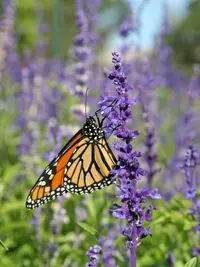
Mealycup sage, Salvia farinacea, is a clump-forming perennial often grown as an annual in cooler regions. It is valued for its upright flower spikes in shades of blue, violet, or white.
Plants have narrow, slightly toothed leaves and a tidy, bushy habit that fits well in borders, pollinator gardens, and containers. Flowers attract bees, butterflies, and other beneficial insects.
This species is native to parts of Texas and Mexico, where it thrives in warm, sunny, well-drained sites. Its tolerance of heat, short dry periods, and average soils makes it relatively easy to care for Mealycup sage.
It prefers full sun, moderate watering, and soils that do not stay waterlogged, which keeps plants healthier and flowering longer.

Care Difficulty
Easy Care

Light Preference
Full Sun

Water Requirements
Moderate Water

Temperature Preference
Warm Climate

Hardiness Zone
8–10

Soil Texture
Sandy, Loamy, Organic-rich

Soil pH
Acidic (5.5–6.5), Slightly acidic (6.5–7.0)

Soil Drainage
Well-drained

Fertilization
Light (every 4–6 weeks)
Scan your plant to receive care tips personalized for your specific plant
Available on iOS and Android
Salvia farinacea needs bright conditions to flower heavily and stay compact.
Salvia farinacea prefers evenly moist, well-drained soil rather than frequent shallow watering.
This species grows best in warm, mild conditions and is sensitive to frost.
This species handles typical home or outdoor humidity well, so moisture in the air is rarely a limiting factor for Mealycup sage.
Salvia farinacea prefers lean, well-aerated mineral soils that never stay waterlogged.
This species is well suited to container growing outdoors in sunny, airy locations.
Balanced, moderate feeding supports strong growth and flowering in Mealycup sage grown in containers or poorer soils.
Thoughtful pruning keeps Salvia farinacea compact and encourages long, floriferous display.
Container-grown or newly purchased Salvia farinacea benefits from timely transplanting into suitable soil and space.
New Salvia farinacea plants are commonly raised from seeds or soft cuttings under mild conditions.
Winter care for Salvia farinacea depends on climate, as plants behave as tender perennials or annuals in colder regions.

Plant Health Check
Not sure what's wrong with your plant? Check your plant's health inside the app.
Unlike many garden salvias with white or yellow pollen, Salvia farinacea produces noticeably blue pollen, which contributes to its overall cool-toned flower appearance and is a useful trait for correct identification.
This species is native to prairies and open habitats in Texas and parts of northeastern Mexico, where it is adapted to hot summers, periodic drought, and well-drained soils.
In warm climates, it flowers over a long season and provides consistent nectar and pollen for bees, butterflies, and other pollinators, making it valuable in ecological planting schemes and pollinator gardens.

The pale, powdery-looking coating on the buds and flower spikes of Salvia farinacea is caused by dense, whitish hairs and tiny waxy deposits, which create the characteristic mealy or frosted appearance that inspired the common name mealycup sage.
Poor flowering usually comes from too little light, excess nitrogen fertilizer, or lack of deadheading. Remove spent flower spikes, avoid high-nitrogen feeds, and ensure at least several hours of strong outdoor sun to restore abundant blooms when growing Mealycup sage.
Keep your plants happy and healthy with plant identification, disease detection, and easy care guidance.