Deadhead Progressively
Remove only spent side blooms and leave a few central cones to mature, so the plant keeps flowering through summer while still producing seed for wildlife and self-sowing.

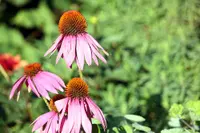
Purple coneflower, Echinacea purpurea, is a hardy, herbaceous perennial grown mainly for its long-lasting, daisy-like blooms and strong vertical form. It typically produces stiff stems topped with pink-purple petals surrounding a raised, spiny central cone.
This species is native to prairies and open woodlands of central and eastern North America, where it thrives in full sun and well-drained soils. Once established, it tolerates heat, short dry periods, and poor to average soil, which makes it relatively simple to care for Purple Coneflower.
Plants suit mixed borders, meadow-style plantings, and pollinator gardens, as the flowers attract bees and butterflies while the seedheads often feed birds in late season.

Care Difficulty
Easy Care

Light Preference
Full Sun

Water Requirements
Low Water

Temperature Preference
Cold Hardy

Hardiness Zone
3–9

Soil Texture
Sandy, Loamy, Clay

Soil pH
Acidic (5.5–6.5), Slightly acidic (6.5–7.0)

Soil Drainage
Well-drained

Fertilization
Minimal (feed rarely)
Scan your plant to receive care tips personalized for your specific plant
Available on iOS and Android
This species is a sun-loving prairie perennial that flowers best with strong light exposure.
This drought-tolerant perennial prefers deep, infrequent watering once established.
This hardy perennial tolerates a wide temperature range and survives typical outdoor winters in many regions.
This species is adapted to outdoor conditions and does not need special humidity control.
This species prefers lean, well-drained soils and is sensitive to prolonged wetness.
This species can be grown in containers outdoors if the pot supports its deep root system and tall stems.
This prairie perennial needs only light feeding, especially in richer soils.
Thoughtful pruning keeps Echinacea purpurea blooming well and reduces disease risk.
This deep-rooted perennial is usually grown in the ground, so focus on careful transplanting rather than frequent repotting.
Gardeners most often propagate this species by seed or by dividing mature clumps.
This hardy perennial tolerates freezing conditions in most temperate gardens and usually needs minimal winter attention.

Plant Health Check
Not sure what's wrong with your plant? Check your plant's health inside the app.
This species produces abundant nectar in late summer when many other blooms fade, making it a key food source for native bees, butterflies, and some beetles in prairie and meadow habitats.
Wild populations often persist in prairies that experience periodic fire or grazing, because its deep, sturdy root system allows the plant to resprout after above-ground parts are damaged.
Its ray florets (the petal-like structures) typically open a brighter pinkish-purple and then age to a duller, often slightly faded tone, which helps visually signal to pollinators which flower heads are still rich in nectar and pollen.

This species was one of the dominant showy forbs in many original tallgrass prairies of the central United States, and its historical abundance in some regions made it a recognizable landmark plant for early European settlers traveling across the Great Plains.
Lack of blooms often comes from too much shade, excess nitrogen fertilizer, or plants that are still immature. Overcrowding and old, woody clumps also reduce flowering; division every few years restores vigor and better bloom production.
Keep your plants happy and healthy with plant identification, disease detection, and easy care guidance.