Bench airflow management
Space plants so leaves do not touch and place pots on slatted benches or mesh stands to keep air moving around pseudobulbs and roots, which reduces fungal problems and improves flower spike quality.

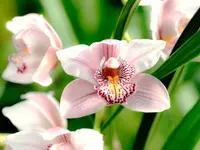
Cymbidium ensifolium is an evergreen, sympodial orchid with narrow, grasslike leaves and elegant flower spikes that carry fragrant blooms in subtle shades of green, yellow, or cream. Plants stay relatively compact, which makes them suitable for containers and small spaces.
This species is native to parts of East and Southeast Asia, where it grows in warm, humid forests and on well-drained slopes. Its preference for stable conditions and good air movement makes it moderately challenging for beginners but manageable with attention.
Those who learn how to care for Cymbidium ensifolium find it reliable, as long as it receives bright, filtered light, regular moisture, and a free-draining orchid substrate.

Care Difficulty
Moderate Care

Light Preference
Partial Shade

Water Requirements
Regular Water

Temperature Preference
Cool Climate

Hardiness Zone
9–11

Soil Texture
Loamy, Peaty, Organic-rich

Soil pH
Acidic (5.5–6.5)

Soil Drainage
Moist but well-drained

Fertilization
Moderate (every 2–4 weeks)
Scan your plant to receive care tips personalized for your specific plant
Available on iOS and Android
This orchid prefers bright, filtered light rather than intense direct sun.
This species prefers evenly moist, never soggy, growing conditions.
Stable, moderate temperatures support strong growth and flowering.
This species prefers moderately humid air but adapts if basic needs are met.
This orchid needs a loose, airy medium that drains quickly yet holds modest moisture around the roots.
This species is well suited to container growing when the pot is chosen to balance drainage and stability.
Nutrient support improves flowering and foliage quality for Cymbidium ensifolium grown in pots.
Pruning for Cymbidium ensifolium focuses on hygiene and maintaining healthy, flowering clumps.
Container-grown Cymbidium ensifolium benefits from periodic repotting to refresh the orchid medium and manage roots.
Division is the standard method for increasing Cymbidium ensifolium plants while keeping cultivar traits consistent.
Cool but not freezing winter conditions are important for Cymbidium ensifolium bud initiation and survival.

Plant Health Check
Not sure what's wrong with your plant? Check your plant's health inside the app.
This species produces delicately scented flowers that often become more noticeable during the evening and early night, a trait linked to attracting nocturnal pollinators in its native range.
Its long, narrow leaves resemble grass or sedge foliage, which helps it blend into understory vegetation and may reduce damage from herbivores that rely on broadleaf silhouettes.
The plant forms dense clumps of pseudobulbs that can persist for many years, slowly expanding and producing multiple flowering spikes from a single, established clump.

In traditional East Asian horticulture, this species has been selectively cultivated for centuries not only for flower color and shape but also for subtle leaf variegation and fragrance nuances, and some prized clones have been passed down as named lineages for generations.
Lack of flowers is usually linked to insufficient seasonal temperature drop, too little light, or overfeeding with nitrogen. Crowded but still healthy roots can encourage spikes. Correcting these factors is central to Cymbidium ensifolium care instructions.
Keep your plants happy and healthy with plant identification, disease detection, and easy care guidance.