Anthurium Rancho Ruffles Care (Anthurium plowmanii)

About Anthurium Rancho Ruffles

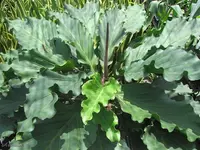
Anthurium Rancho Ruffles is a decorative foliage plant, selected from Anthurium plowmanii, valued for its strongly ruffled, arching leaves. The rosette form creates a sculptural, fountain-like shape that suits tabletops and bright corners.

In nature, A. plowmanii grows in tropical regions of South America, often in warm, humid forest environments. This background explains its preference for stable warmth, moderate humidity, and airy, organic-rich soil.

It is considered moderately easy to grow if given bright, indirect light and protection from cold drafts. Understanding how to care for Anthurium Rancho Ruffles mainly involves keeping roots lightly moist, avoiding waterlogging, and providing good indoor air circulation.

Main Plant Requirements

Care Difficulty

Moderate Care

Light Preference

Bright Indirect Light

Water Requirements

Moderate Water

Temperature Preference

Tropical / Frost Sensitive

Hardiness Zone

11–12

Soil Texture

Loamy, Peaty, Organic-rich

Soil pH

Acidic (5.5–6.5), Slightly acidic (6.5–7.0)

Soil Drainage

Moist but well-drained

Fertilization

Light (every 4–6 weeks)

Get Personalized Care Plan

Scan your plant to receive care tips personalized for your specific plant

Personalized Care in the App

Available on iOS and Android

How to Care for the Anthurium Rancho Ruffles

This species prefers bright, indirect light that mimics dappled tropical forest conditions.

  • Provide 6–8 hours of bright, filtered light each day, such as near an east-facing window or under 30–50% shade cloth outdoors.
  • Tolerates partial shade, but very low light slows growth and reduces leaf size, especially in forms like Anthurium Rancho Ruffles.
  • Avoid direct midday or strong afternoon sun, which causes leaf scorch; increase distance from hot windows or add sheer curtains, especially in summer.

Anthurium plowmanii prefers evenly moist but never soggy soil.

  • Water when the top 2–4 cm of soil feels dry, using slow, thorough watering until excess drains away, then empty any catch trays.
  • Reduce watering in cooler months when growth slows, letting the top layer dry a bit deeper while keeping the root zone slightly moist.
  • Watch for yellowing, soft leaves and a sour smell as signs of overwatering, and limp, curling, or crispy edges as signs of underwatering or overly dry soil.

Stable, warm temperatures support consistent growth and leaf quality.

  • Aim for 70–80°F (21–27°C) for best growth, with a safe general range of 65–85°F (18–29°C).
  • Protect from cold; growth stalls below about 60°F (16°C) and tissue damage occurs near 50°F (10°C), with plants killed by frost.
  • In hot weather above 85°F (29°C), increase shade and airflow, and avoid placing the plant near heat sources or on baking patios or metal surfaces.

This species prefers consistently warm, moderately high air humidity to keep leaves healthy and edges smooth.

  • Aim for 60–80% humidity; it copes with 50% but below this the leaf margins may crisp and growth can slow.
  • Watch for brown, dry edges, rolled leaf tips, and dull sheen as signs of humidity stress, especially in heated homes.
  • Increase humidity with a nearby humidifier, grouped plants, and a wide pebble tray under the pot, avoiding misting that keeps leaves wet.

Anthurium plowmanii performs best in a loose, chunky, organic-rich substrate that holds moisture but drains rapidly.

  • Use a mix of roughly 40% fine orchid bark, 30% peat or coco coir, 20% perlite, and 10% compost to mimic airy rainforest litter.
  • Target a slightly acidic pH around 5.5–6.5, which supports nutrient uptake while limiting salt buildup around the roots.
  • Ensure very fast drainage; water should leave the pot within seconds, with no waterlogged layer or heavy, compact zones.
  • Improve aeration by increasing bark and perlite if the mix feels dense or stays wet deeper than 3–4 days after watering, and avoid straight potting soil or clay-like mixes.

This species adapts well to container culture, provided the pot supports its spreading rosette and sensitive roots.

  • Choose a wide, stable pot rather than a narrow tall one so the spreading rosette does not tip as leaves enlarge and elongate.
  • Select slightly porous materials like terracotta if the mix stays wet longer than 4–5 days, as these help moisture evaporate from the root zone.
  • Use a container with multiple or wide drainage holes so chunky bark pieces do not block outlets and trap water at the base.

This species benefits from light, consistent feeding to support foliage growth without stressing the roots, similar to caring for Anthurium Rancho Ruffles.

  • Use a balanced liquid fertilizer (around 10-10-10 or 20-20-20) at 1/4–1/2 strength for container-grown Anthurium plowmanii.
  • Feed every 4–6 weeks during the growing season when light and temperatures are stable.
  • Pause or reduce feeding to 1 application in midwinter if growth slows under shorter days.
  • Avoid heavy compost or rich slow-release pellets that can oversalt the potting mix; flush the soil with plain water a few times per season.

Anthurium plowmanii needs only light pruning to maintain a clean, open rosette and reduce disease risk.

  • Best timing is late winter to early spring, before strong new growth starts.
  • Remove dead, yellowing, or mechanically damaged leaves at the base with clean, sharp pruners or scissors.
  • Thin crowded or overlapping leaves to improve air movement and keep the characteristic wavy form visible.
  • Disinfect blades with alcohol between cuts, especially if any tissue looks soft, spotted, or rotted.

This anthurium grows slowly but benefits from timely repotting to maintain an airy root environment.

  • Check for roots circling the container, pushing through drainage holes, or persistent wilting as signals it needs more space.
  • Plan repotting every 2–3 years in spring, moving to a pot only 2–5 cm wider with excellent drainage holes.
  • Use a chunky, aroid-style mix (orchid bark, perlite, coarse peat or coco coir) and keep the root ball at the same depth.
  • Handle the root mass gently, loosen only lightly, water thoroughly after potting, and keep in bright, indirect light for 1–2 weeks to reduce stress.

Anthurium plowmanii is most reliably propagated by division rather than from stem cuttings or seed at home.

  • Plan division in spring when repotting a well-established clump with several distinct growth points.
  • Gently unpot and separate sections, ensuring each division has healthy roots and at least 1–2 leafy crowns.
  • Plant divisions into small pots with a loose, well-drained mix and firm the medium lightly around roots.
  • Maintain warm temperatures (70–80°F), high humidity, and bright, indirect light until new leaves appear.

This tropical anthurium is frost-sensitive and needs sheltered winter conditions in most climates.

  • Keep indoor temperatures around 65–75°F and avoid exposure below 55°F to prevent chilling injury.
  • Move container plants indoors before the first frost if grown outdoors in summer.
  • Place away from cold drafts, heater vents, and single-pane windows that cause temperature swings.
  • Water less often in winter, letting the top mix dry slightly, since lower light slows growth and use of moisture.

Care Tips

Leaf span management

Rotate the pot 90° every 2–3 weeks so the long, wavy leaves develop a balanced rosette and do not lean or twist heavily toward one side.

Support for mature leaves

For large specimens, use low, discreet supports or a decorative pebble top-dress to stabilize the pot and prevent the long leaves from levering the root ball and tipping the container.

Calcium and magnesium check

If older leaves show interveinal chlorosis or weak structure despite regular feeding, add a cal-mag supplement at label rates once a month during active growth to support stronger foliage.

Salt buildup prevention

Every 6–8 weeks, flush the potting mix thoroughly with clean, lukewarm water until it runs freely from the drainage holes to remove accumulated fertilizer salts that can burn the thick roots.

Strategic repot timing

Plan repotting for late spring, just as new growth starts, and move only 1 pot size up so the plant re-establishes quickly and avoids staying in a large volume of constantly moist mix.

Common Pests and Diseases

Bacterial blight

This disease causes water-soaked, translucent lesions on leaves that quickly turn brown and irregular, often starting at the margins or tips. Symptoms include a yellow halo around spots and rapid collapse of affected tissue in warm, humid conditions.

Solution

Remove and discard all affected leaves, cutting well into healthy tissue, and disinfect tools between cuts. Reduce overhead watering, improve air circulation, avoid water sitting on leaves, and if spread continues, apply a copper-based bactericide according to label directions while isolating the plant from others.

Bacterial leaf spot

This disease produces small, round to angular, water-soaked spots that darken and can merge into larger blotches, often following splashing water patterns. Symptoms include a greasy appearance when lesions are fresh and eventual thinning or tearing of the leaf surface.

Solution

Prune out spotted leaves, keep foliage dry, and water at the soil level rather than from above. Improve airflow around the plant and consider using a copper-based or other labeled bactericide as a preventive measure when conditions are warm and humid.

Anthurium blight (fungal)

This disease causes tan to dark brown lesions that may form concentric rings and can start along veins or leaf edges, sometimes with a yellow border. Symptoms include gradual expansion of spots and premature yellowing and drop of older leaves under high humidity.

Solution

Remove diseased foliage, clean up fallen leaves, and space plants so air can move freely around them. Reduce humidity spikes, ensure the plant dries quickly after watering, and apply a targeted fungicide labeled for foliar blights on Anthurium if cultural measures do not stop progression.

Aphids

These insects cluster on soft new growth, undersides of leaves, and flower stalks, sucking sap and causing curling, distortion, and sticky honeydew deposits. This pest can promote sooty mold growth on affected surfaces and weaken young leaves of Anthurium plowmanii.

Solution

Rinse colonies off with a firm stream of lukewarm water and wipe remaining insects from leaves and petioles. For persistent infestations, apply insecticidal soap or neem oil thoroughly to all plant surfaces every 5–7 days until no new aphids appear, and keep new growth regularly inspected as part of Anthurium plowmanii plant care.

Mealybugs

These insects appear as white, cottony clusters in leaf axils, along midribs, and on roots, causing stunted growth, yellowing, and sticky residue. This pest hides in the tight leaf waves and ruffled margins characteristic of the plant, making early detection harder.

Solution

Dab visible mealybugs with cotton swabs dipped in 70% isopropyl alcohol and gently wipe crevices and ruffled leaf edges. Follow with repeated treatments of insecticidal soap or neem oil, paying special attention to leaf bases and undersides, and isolate the plant until no new cottony clusters are seen for several weeks.

Interesting Facts

Ruffled birdsnest leaves

This species forms a tight rosette of long, arching leaves with strongly wavy margins that resemble a birdsnest fern, a trait used by botanists to distinguish it from many other anthuriums with flatter foliage.

Natural forest gutter

In its native habitats of western Brazil, Peru, and Bolivia, the funnel-shaped rosette traps falling debris and water, creating a small nutrient-rich microhabitat right at the plant’s crown.

Close link to birds

The upright, rippling foliage and debris-filled rosette provide shelter and potential foraging spots for small invertebrates, which in turn can attract insect-feeding birds in its natural forest environment.

FAQs about Anthurium Rancho Ruffles

Crispy brown edges usually come from low humidity, fertilizer salts building up, or exposure to hot or cold drafts. Flush the potting mix with plain water, increase humidity to around 60–70%, and keep the plant away from vents.

Grow Healthy Plants with Botan Care

Keep your plants happy and healthy with plant identification, disease detection, and easy care guidance.

Botan plant care app — identify plants on mobile

Explore More Plants