Anthurium bakeri Care

About Anthurium bakeri

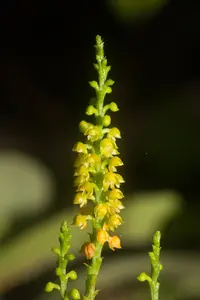
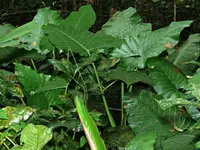
Anthurium bakeri is a tropical aroid grown mainly for its long, strap-shaped leaves and sometimes for its upright, pale inflorescences. It forms a compact clump that stays relatively narrow, which suits shelves and smaller indoor spaces.

This species is native to humid forests of Central and northern South America, where it often grows as an epiphyte on trees or in leaf litter. It prefers bright, filtered light, steady warmth, and evenly moist but very well-drained, airy substrate.

For most growers, the main challenges are providing enough humidity and avoiding waterlogged roots. Once those needs are met, it is a fairly stable species, and learning how to care for Anthurium bakeri helps it maintain healthy foliage over many years.

Main Plant Requirements

Care Difficulty

Moderate Care

Light Preference

Bright Indirect Light

Water Requirements

Keep Soil Moist

Temperature Preference

Tropical / Frost Sensitive

Hardiness Zone

11–12

Soil Texture

Loamy, Peaty, Organic-rich

Soil pH

Acidic (5.5–6.5)

Soil Drainage

Moist but well-drained

Fertilization

Light (every 4–6 weeks)

Get Personalized Care Plan

Scan your plant to receive care tips personalized for your specific plant

Personalized Care in the App

Available on iOS and Android

How to Care for the Anthurium bakeri

This species prefers bright, filtered light that mimics a forest understory.

  • Provide 6–8 hours of bright, indirect light each day, such as near an east or north-facing window or under light shade outdoors.
  • Tolerates partial shade, but if light is too low new leaves of Anthurium bakeri may emerge smaller and flowering can decline.
  • Avoid direct midday and harsh afternoon sun, which can cause leaf scorch; in summer, use sheer curtains or place under dappled tree shade.

Watering should keep the root zone evenly moist but never saturated.

  • Allow the top 2–3 cm of the mix to dry before watering again, using finger testing rather than a fixed calendar schedule.
  • Use a loose, fast-draining medium; water thoroughly until excess drains away, then empty any collection tray so roots are not left in standing water.
  • In warm, active growth increase frequency; in cooler months reduce watering. Wilting, curling, or very dry mix suggests underwatering, while yellowing leaves and a sour smell indicate overwatering.

Stable, warm temperatures support healthy growth and root function.

  • Aim for 70–80°F (21–27°C) for best growth, with acceptable short-term ranges of 65–85°F (18–29°C).
  • Avoid temperatures below 55°F (13°C); foliage damage and slowed growth often begin if exposed near this level, especially with drafts or wet soil.
  • Protect from frost and cold winds outdoors, and from hot, dry air above 90°F (32°C), which can cause leaf scorch and faster moisture loss.

This species prefers warm, stable conditions with fairly high humidity to keep foliage and roots healthy.

  • Aim for 60–80% humidity; short dips to 50% are tolerated but slower growth and minor leaf flaws may appear.
  • Dry air causes brown tips, rolled leaf edges, and stalled new leaves, especially in heated or air-conditioned rooms.
  • Increase humidity with a nearby humidifier, grouped plants, and a tray of damp pebbles placed under but not touching the pot.

Anthurium bakeri benefits from a loose, airy, organic-rich mix that mimics an epiphytic or forest-floor environment.

  • Use a coarse mix such as 40% fine orchid bark, 30% peat or coco coir, 20% perlite, and 10% compost for structure and nutrients.
  • Ensure rapid drainage so water flows through within seconds; the mix should feel springy, not compact, when squeezed.
  • Keep pH slightly acidic to neutral, around 5.5–6.8, which supports nutrient availability and healthy root function.
  • Avoid heavy garden soil or fine potting mixes that stay wet, as low oxygen around roots encourages rot and weak growth.

This species adapts well to container growing when the pot supports its semi-epiphytic roots and upright habit.

  • Choose a pot slightly deeper than wide to give roots vertical space and reduce wobbling of the elongated leaves.
  • Select a sturdy, heavier container if the plant becomes top-heavy so it does not tip when the medium is kept light and airy.
  • Use a pot material that matches your watering style, such as terracotta for faster drying or plastic to retain moisture a bit longer.

This species responds well to light, consistent feeding during its active growing season.

  • Use a balanced liquid NPK fertilizer at 1/4–1/2 strength for Anthurium bakeri during spring–summer.
  • Apply every 4–6 weeks when growth is active, on pre-watered soil to prevent root burn.
  • Pause or reduce feeding to 1 light dose in midwinter if growth slows.
  • Organic options like diluted compost extract or worm castings can supplement nutrients sparingly.

Pruning is mainly used to keep Anthurium bakeri clean, compact, and healthy.

  • Best time is late winter to early spring, before vigorous new growth begins.
  • Remove yellow, dead, or damaged leaves at the base with clean, sharp scissors or pruners.
  • Thin out crowded stems slightly to improve airflow and maintain an open, balanced form.
  • Disinfect tools before and after cutting to lower the risk of disease spread.

Container-grown plants need periodic repotting to maintain root health and steady growth.

  • Repot Anthurium bakeri every 2–3 years or when roots circle the pot or emerge from drainage holes.
  • Choose late winter or early spring, using a chunky, free-draining mix such as orchid bark with perlite and peat or coco coir.
  • Lift the plant gently, loosen circling roots, and trim only damaged roots to minimize stress.
  • Water lightly after repotting, keep humidity moderate-high, and shade from strong sun for 1–2 weeks.

Division is the most reliable method for multiplying this species in home conditions.

  • Divide Anthurium bakeri in late spring or early summer when repotting a mature, multi-crowned plant.
  • Gently separate clumps so each division has healthy roots and at least 1–2 leaves.
  • Plant divisions in a small pot with warm temperatures around 70–80°F, bright filtered light, and high humidity.
  • Keep the mix just slightly moist and avoid heavy fertilization until new growth is clearly visible.

This tropical species is frost-sensitive and requires warm, stable conditions in winter.

  • Keep Anthurium bakeri above 60°F, ideally 65–75°F, and avoid cold drafts or sudden temperature drops.
  • In cold climates, grow in containers and move indoors before outdoor temperatures fall below 55°F.
  • Reduce watering, allowing the top mix to dry slightly more, and stop heavy fertilizing during the coolest months.
  • Ensure bright, indirect light and avoid placing the plant against cold windows or near heating vents.

Care Tips

Wall-mount support

Grow this species in a slatted mount or on a textured board with sphagnum and ties, then hang it vertically so the strap leaves can arch naturally and avoid creasing or snapping at the base.

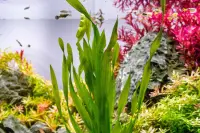
Air-root anchoring

Guide emerging aerial roots into the substrate or onto a moss pole and secure them loosely with soft ties so the plant stabilizes itself and can form a stronger, more resilient root system.

Targeted leaf cleaning

Wipe the long leaves with a barely damp microfiber cloth along their length every 4–6 weeks to remove dust, reduce spider mite risk, and keep gas exchange efficient without saturating the leaf base.

Pot choice for straps

Use a tall, narrow pot or a hanging container that lets the long leaves drape without kinking on a sharp rim, which reduces mechanical damage and bacterial entry points along the blade.

Seasonal root checks

At the start of each warm season, slide the root ball partially out of the pot to check for circling or rotted roots and trim only damaged sections, which supports healthier growth when caring for Anthurium bakeri.

Common Pests and Diseases

Bacterial blight

This disease causes water-soaked lesions on leaves that turn dark, often with a yellow halo and irregular dead patches along the veins or edges. Symptoms include rapid spread in warm, humid conditions, especially where foliage stays wet for long periods.

Solution

Remove and discard all affected leaves, avoid overhead watering, and keep foliage dry by watering at the soil level and improving air circulation. Disinfect tools between cuts, reduce humidity spikes, and if spread continues, apply a copper-based bactericide labeled for aroids according to the product instructions.

Xanthomonas leaf spot

This disease produces small, angular, yellow to brown spots that follow leaf veins and may merge into larger patches, sometimes with a translucent or greasy appearance. Symptoms include deformation of new leaves when infections occur at the growing point.

Solution

Promptly prune and discard spotted leaves, keep the plant out of direct leaf wetting, and maintain good spacing and airflow around the plant. Sterilize tools with alcohol or a 10% bleach solution after use and consider a preventive copper or biological bactericide when humidity is high and new spots appear.

Mealybugs

These insects appear as white, cottony clusters in leaf axils, along petioles, and sometimes on roots, causing leaf yellowing, distortion, and sticky honeydew. This pest thrives in warm indoor conditions and can spread between clustered aroid collections.

Solution

Isolate the plant, then dab visible mealybugs with cotton swabs dipped in 70% isopropyl alcohol and rinse foliage with lukewarm water. Follow with 2–3 treatments of insecticidal soap or a horticultural oil at 7–10 day intervals, checking hidden areas such as the base of leaves and the undersides of the strap-like blades when caring for Anthurium bakeri.

Scale insects

These insects form small, dome-shaped, brown or tan bumps on stems and leaf undersides that do not move, leading to weakened growth and sticky honeydew. Symptoms include dull, yellowing foliage and reduced vigor over time.

Solution

Gently scrape or wipe off scale with a soft cloth or toothbrush, then wash the plant with lukewarm water. Follow up with repeated applications of horticultural oil or insecticidal soap every 7–10 days, ensuring thorough coverage of petioles, midribs, and undersides until no new scale appears.

Spider mites

These pests cause fine stippling, dulling, and bronzing of the narrow leaves, often with very fine webbing in dry indoor air. Symptoms include slowed growth and a dusty appearance on the undersides of leaves.

Solution

Rinse foliage thoroughly under a gentle shower or sink sprayer, focusing on leaf undersides, then increase ambient humidity and keep the plant out of hot, dry drafts. Apply insecticidal soap or a labeled miticide to both sides of the leaves every 5–7 days for several cycles, and keep the plant slightly separated from other aroids until the population is controlled.

Interesting Facts

Natural rock climber

This species often grows as a lithophyte in the wild, rooting into pockets of organic matter on rocks and cliff faces rather than in deep forest soil.

Narrow hanging leaves

It develops long, narrow, pendant leaves that can hang down in a curtain-like fashion, an adaptation that helps shed heavy rainforest rainfall efficiently.

Central American specialist

The species is naturally distributed from southern Mexico through Central America into parts of Colombia, typically in lowland to premontane humid forests.

Botan icon

Did you know?

In its native habitat, this plant frequently grows at an angle or upside down on steep rock walls, allowing its inflorescences to project outward where pollinating insects can access them more easily despite the vertical terrain.

FAQs about Anthurium bakeri

Brown tips or margins usually result from low humidity, excess fertilizer salts, or inconsistent watering. Tap water high in salts or chlorine can worsen it. Flush the pot periodically, maintain stable moisture, and increase ambient humidity moderately.

Grow Healthy Plants with Botan Care

Keep your plants happy and healthy with plant identification, disease detection, and easy care guidance.

Botan plant care app — identify plants on mobile

Explore More Plants