Arrowhead Vine Care (Syngonium podophyllum)

Also known as: American evergreen, Goosefoot-plant, Goose Foot

About Arrowhead Vine

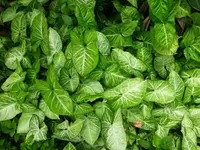
Arrowhead vine, Syngonium podophyllum, is a tropical climbing aroid grown mainly as a foliage houseplant. It is valued for its arrow-shaped leaves and compact juvenile form.

In warm, humid forests of Central and South America, it grows as a vine that can climb trees or trail along the ground. Indoors it often starts bushy, then develops longer, vining stems as it matures.

This plant is considered relatively easy, as it tolerates a range of indoor conditions and bounces back from minor neglect. To care for Arrowhead Vine, provide bright, indirect light, evenly moist but not waterlogged soil, and moderate indoor humidity.

Main Plant Requirements

Care Difficulty

Easy Care

Light Preference

Bright Indirect Light

Water Requirements

Moderate Water

Temperature Preference

Tropical / Frost Sensitive

Hardiness Zone

10–12

Soil Texture

Loamy, Peaty, Organic-rich

Soil pH

Acidic (5.5–6.5), Slightly acidic (6.5–7.0)

Soil Drainage

Moist but well-drained

Fertilization

Light (every 4–6 weeks)

Get Personalized Care Plan

Scan your plant to receive care tips personalized for your specific plant

Personalized Care in the App

Available on iOS and Android

How to Care for the Arrowhead Vine

Syngonium podophyllum prefers bright, indirect light that mimics a forest understory.

  • Provide 6–8 hours of filtered light per day, such as near a bright window with sheer curtains or under light tree shade outdoors.
  • Allow gentle morning sun but protect Arrowhead Vine from strong midday or afternoon sun, which can scorch leaves and fade variegation.
  • In low light it tolerates partial shade but growth slows and variegation may green out, so move slightly closer to light in winter.

Watering should keep the soil lightly moist but never saturated for healthy Syngonium podophyllum roots.

  • Before watering, let the top 2–3 cm of soil dry; check by feeling the surface rather than following a fixed schedule.
  • In spring and summer, expect to water more often as growth and evaporation increase, but always adjust to how quickly the soil dries.
  • Yellowing, soft leaves and a sour smell signal overwatering and poor drainage, while crisp edges and drooping leaves with dry soil indicate underwatering.

This species prefers warm, stable temperatures similar to a tropical understory environment.

  • Aim for 65–80°F (18–27°C) for active growth, avoiding rapid swings of more than about 10°F (6°C) in a day.
  • Protect the plant from cold; growth slows below 60°F (16°C) and tissue damage can occur below 50°F (10°C), especially with drafts.
  • It tolerates brief heat up to 90°F (32°C) if humidity is higher and soil moisture is monitored, but it is not frost hardy and must be shielded from freezing conditions.

Syngonium podophyllum prefers moderately high indoor humidity to keep foliage healthy and reduce leaf stress.

  • Aim for 50–70% humidity; it tolerates 40–45% but growth and leaf size may reduce.
  • Dry air causes crispy leaf tips, brown edges, and slower new growth, especially near heaters or vents.
  • Increase humidity with a nearby humidifier, grouped plants, or a pebble tray, avoiding misting that keeps leaves wet for long periods.

This species grows best in a loose, airy, organic-rich potting medium that drains quickly yet retains some moisture.

  • Use a peat- or coco-based mix with added perlite and fine orchid bark to create a chunky, well-aerated structure.
  • Ensure water drains freely through the pot within seconds, so roots stay moist but never sit in stagnant water.
  • Aim for slightly acidic to neutral pH around 6.0–7.0, similar to standard houseplant mixes.
  • Avoid heavy garden soil or compacted mixes that stay wet for many hours and limit root oxygen.

This species is well suited to container growing and adapts to both small decorative pots and larger floor containers.

  • Choose a pot that is heavier or more stable if grown on a moss pole, since the vining stems can become top-heavy over time.
  • Select pot materials with slightly porous walls, such as unglazed terracotta, if extra evaporation is needed for a consistently moist but not soggy root zone.
  • Allow enough horizontal space in wider pots so trailing stems can spread without crowding the root ball near the pot rim.

Syngonium podophyllum benefits from light, consistent feeding during its active growing season.

  • Use a balanced liquid fertilizer (for example 10-10-10 or 20-20-20) diluted to 1/4–1/2 strength for Arrowhead Vine in spring and summer.
  • Apply every 4–6 weeks when growth is active, on already moist soil to avoid root burn.
  • Pause or reduce feeding to 1 application in midwinter if growth slows under low light.
  • Organic compost or a slow-release indoor formula can replace liquids, but still at modest rates.

Pruning Syngonium podophyllum helps control size, encourage bushier growth, and remove damaged tissue.

  • Best time is late winter to early spring, before strong new growth, though light tidying can be done year-round.
  • Clip dead, yellowing, or damaged leaves and thin crowded, tangled vines to improve airflow and light penetration.
  • Pinch or cut back long stems just above a node to promote branching and a fuller, compact shape.
  • Use clean, sharp scissors or pruning snips, disinfecting blades between plants to limit disease spread.

This species adapts well to containers but appreciates periodic repotting to refresh soil and give roots space.

  • Plan to repot Syngonium podophyllum every 2–3 years, ideally in spring when growth resumes.
  • Check for roots circling the pot, poking from drainage holes, or slowed growth despite good care as signs it needs more room.
  • Choose a pot 2–5 cm wider with fresh, well-draining peat- or coco-based mix, and gently loosen circling roots.
  • Water thoroughly after moving, keep in bright indirect light, and avoid strong fertilizer for 3–4 weeks to limit transplant stress.

Syngonium podophyllum is commonly multiplied by stem cuttings taken from healthy, actively growing vines.

  • Take 8–12 cm cuttings in spring or early summer, each with at least 1 node and ideally an aerial root.
  • Root cuttings in water or in moist, sterile mix, keeping humidity high and temperature around 70–80°F.
  • Remove lower leaves, insert the node just below the surface, and keep medium evenly moist but not waterlogged.
  • Provide bright, indirect light and avoid strong fertilizer until new roots and a flush of leaves appear.

This tropical vine is frost tender and must be kept above freezing in winter conditions.

  • Move outdoor containers of Syngonium podophyllum indoors before temperatures drop below 50°F.
  • Maintain indoor temperatures around 60–75°F and avoid cold drafts from windows or doors.
  • Reduce watering slightly, letting the top 2–3 cm of soil dry between waterings as growth slows.
  • Suspend or greatly reduce fertilization until longer days and stronger growth return in spring.

Care Tips

Train As A Vine

Provide a small trellis, moss pole, or horizontal wires and loosely tie young stems with soft plant ties so the plant climbs rather than flopping, which keeps internodes shorter and foliage denser.

Rotate For Even Growth

Turn the pot 90° every 1–2 weeks so new leaves develop evenly around the plant, preventing lopsided growth and encouraging a fuller, more balanced canopy.

Refresh Potting Mix

Every 12–18 months, gently remove the root ball, shake off exhausted mix, and repot into fresh, airy substrate to restore structure, aeration, and nutrient-holding capacity without necessarily going up a pot size.

Use Tip Cuttings

When stems become leggy, cut just below a node, root the cuttings in water or moist mix, then replant them back into the original pot to thicken the plant and rejuvenate older specimens.

Prevent Pest Hotspots

Inspect the undersides of leaves and tight leaf folds every few weeks for early signs of spider mites or mealybugs, since these sheltered areas are common infestation points when growing Arrowhead Vine indoors.

Common Pests and Diseases

Spider mites

This pest is common on Syngonium grown in dry indoor air and causes stippled, pale leaves and fine webbing, especially on undersides. Symptoms include slowed growth and leaves that look dusty or speckled.

Solution

Rinse foliage thoroughly in the shower or with a hose, focusing on leaf undersides, then wipe down with a damp cloth. If needed, apply insecticidal soap or diluted neem oil every 5–7 days for several cycles and raise humidity to 50–60% while improving air movement to discourage reinfestation.

Mealybugs

These insects form white, cottony clusters in leaf axils, along stems, and sometimes on roots in potted Syngonium. Symptoms include sticky honeydew, distorted new growth, and yellowing leaves.

Solution

Isolate the plant, then dab visible insects with cotton swabs dipped in 70% isopropyl alcohol and wipe infested areas. Follow with repeated treatments of insecticidal soap or neem oil at 7–10 day intervals and check the root zone at repotting to remove any hidden colonies.

Bacterial leaf spot

This disease produces water-soaked, translucent spots that may turn brown with yellow halos on mature leaves, especially when foliage stays wet. Symptoms include rapidly spreading lesions and premature leaf drop on crowded plants.

Solution

Remove and discard affected leaves, avoid wetting foliage, and increase spacing and airflow around the plant. Water at the soil level, keep leaves dry, and in severe cases discard heavily infected plants to protect nearby Syngonium podophyllum plants.

Pythium root rot

This disease is favored by poorly drained substrates and frequent overwatering, leading to black, mushy roots and wilting leaves despite moist soil. Symptoms include stunted growth and yellowing or collapsing foliage starting from the base.

Solution

Unpot the plant, cut away all soft, dark roots, and repot into fresh, well-draining mix in a clean container. Reduce watering, allowing the top 2–3 cm of soil to dry before watering again, improve drainage and airflow, and avoid letting the pot sit in collected water to support long-term Syngonium podophyllum care.

Thrips

These insects scrape and suck plant tissues, causing silvery streaks, distorted new leaves, and black specks of excrement on foliage. Symptoms include deformed, small leaves and reduced variegation intensity in patterned cultivars.

Solution

Rinse the plant thoroughly, then use sticky traps to monitor adults and treat foliage with insecticidal soap or neem oil every 5–7 days for several weeks. Improve plant vigor with stable light and proper watering, and keep new or returning plants in quarantine to prevent fresh introductions.

Interesting Facts

Juvenile–adult leaf shift

This species shows strong heteroblasty, meaning the juvenile arrow-shaped leaves gradually change into much larger, deeply lobed or divided leaves as the plant matures and begins to climb.

Rooting at each node

Its stems readily form adventitious roots at the nodes when they contact a moist surface, allowing the plant to climb tree trunks in the wild and making it easy to propagate from stem cuttings indoors.

Nighttime sap flow

Like many aroids, it can show guttation, where excess water and minerals are exuded as droplets from leaf tips at night when root pressure is high and transpiration is low.

Botan icon

Did you know?

In its native Neotropical range from Mexico to Bolivia and Brazil, this species grows as a hemiepiphyte, often starting life in the ground and later transitioning to an epiphytic lifestyle high in the forest canopy as its climbing stems reach tree crowns.

FAQs about Arrowhead Vine

Brown leaf edges usually result from low humidity, inconsistent watering, or excess fertilizer salts. Tap water high in minerals or fluoride can also damage tissue. Trim affected tips, leach the soil, and increase ambient humidity for recovery.

Grow Healthy Plants with Botan Care

Keep your plants happy and healthy with plant identification, disease detection, and easy care guidance.

Botan plant care app — identify plants on mobile

Explore More Plants