Support tall stems
Install sturdy stakes or a low plant-support ring early in the season so tall flower stems stay upright in wind and rain, preventing breakage and bruised foliage.

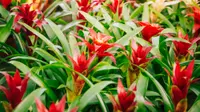
Indian shot, Canna indica, is a rhizomatous perennial often grown for its bold foliage and bright, upright flower spikes. It has large, paddle-shaped leaves and can form dense clumps that give a tropical look to gardens and patios. The species is native to tropical and subtropical regions of the Americas but is now widely cultivated in warm climates worldwide. It is generally easy to grow, as it tolerates heat, short dry spells, and a range of soils if drainage is reasonable. To care for Indian shot, provide steady moisture, fertile soil, and plenty of light for best flowering and foliage quality.

Care Difficulty
Easy Care

Light Preference
Full Sun

Water Requirements
Regular Water

Temperature Preference
Tropical / Frost Sensitive

Hardiness Zone
8–11

Soil Texture
Loamy, Clay, Organic-rich

Soil pH
Acidic (5.5–6.5), Slightly acidic (6.5–7.0)

Soil Drainage
Moist but well-drained

Fertilization
Moderate (every 2–4 weeks)
Scan your plant to receive care tips personalized for your specific plant
Available on iOS and Android
This plant is a sun-loving perennial that flowers best with strong, direct light.
This rhizomatous plant prefers consistently moist but not waterlogged soil.
This tropical species grows best in warm, frost-free conditions with stable seasonal temperatures.
Canna indica grows best in moderate humidity but adapts well to typical indoor and outdoor conditions.
Canna indica prefers deep, moisture-retentive yet aerated soil that supports fast, rhizome-driven growth.
This species is well suited to container growing when given enough root space and stable support.
Canna indica benefits from steady nutrition during the warm growing season to support lush foliage and flowering.
Pruning Canna indica keeps clumps tidy and encourages repeated flowering.
Container-grown canna benefits from periodic division and repotting, while garden clumps respond well to transplanting when crowded.
Canna indica is most commonly propagated by division of rhizomes, with seeds used mainly for breeding or large-scale production.
In cold climates, canna needs deliberate winter care because rhizomes are sensitive to hard frost.

Plant Health Check
Not sure what's wrong with your plant? Check your plant's health inside the app.
The underground rhizomes of Canna indica are rich in easily digestible starch and have been used as a traditional food source in parts of South and Central America and Asia, often cooked or ground into flour.
Archaeological evidence shows that Canna indica was domesticated by Indigenous peoples in the Americas thousands of years ago, making it one of the oldest known cultivated root crops in the Neotropics.
The species is grown commercially in some regions as a source of so‑called canna arrowroot, whose large starch granules are valued for producing clear, smooth gels in specialty foods and biodegradable products.

Canna indica is capable of rapid nutrient uptake in wet conditions and has been tested in constructed wetlands and wastewater treatment systems, where its robust growth and tolerance of high nutrient loads help remove excess nitrogen and phosphorus from contaminated water.
Lack of flowers usually comes from insufficient light, poor nutrition, or overcrowded rhizomes. Ensure full sun, apply a balanced fertilizer during active growth, and divide congested clumps every few years to restore flowering.
Keep your plants happy and healthy with plant identification, disease detection, and easy care guidance.