Mark Dormant Clumps
Tag planting spots with discreet labels at the end of the season so you do not disturb the shallow pseudobulbs when the foliage disappears in winter and the plant is invisible above ground.

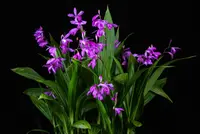
Chinese ground orchid, Bletilla striata, is a hardy terrestrial orchid grown mainly for its delicate, orchid-shaped flowers and pleated, sword-like leaves. It grows from small underground pseudobulbs and forms clumps that slowly expand over time, creating a low, graceful patch.
In nature, it occurs in woodland edges and grassy slopes in China, Japan, and parts of East Asia. Its tolerance of cool winters and its forgiving growth habit make it easier than many tropical orchids.
It generally prefers bright, indirect light, evenly moist but not soggy soil, and good drainage, which helps simplify how to care for Chinese ground orchid.

Care Difficulty
Easy Care

Light Preference
Partial Shade

Water Requirements
Regular Water

Temperature Preference
Cold Hardy

Hardiness Zone
5–9

Soil Texture
Loamy, Sandy, Organic-rich

Soil pH
Acidic (5.5–6.5), Slightly acidic (6.5–7.0)

Soil Drainage
Moist but well-drained

Fertilization
Light (every 4–6 weeks)
Scan your plant to receive care tips personalized for your specific plant
Available on iOS and Android
This hardy terrestrial orchid prefers bright conditions with gentle, filtered sun for best flowering.
This terrestrial orchid prefers consistently moist, but not saturated, soil during active growth.
This species is a cool- to mild-temperate orchid that tolerates a wide outdoor temperature range when dormant.
This hardy terrestrial orchid tolerates typical home humidity but benefits from slightly moist air in active growth.
Bletilla striata prefers loose, humus-rich soil that drains freely yet holds steady moisture around its pseudobulbs.
This species grows well in containers when given a stable, cool root zone and careful moisture control.
Bletilla striata benefits from modest, balanced feeding during active growth but does not require heavy fertilization.
Pruning needs for Bletilla striata are light and mainly focused on cleanliness rather than shaping.
Chinese ground orchid forms clumps that may need occasional division or transplanting to maintain vigor.
Bletilla striata is most commonly propagated by division of mature clumps rather than from seed.
This hardy terrestrial orchid generally tolerates typical temperate winters but benefits from some root‑zone protection in colder regions.

Plant Health Check
Not sure what's wrong with your plant? Check your plant's health inside the app.
This species is unusually cold-tolerant for an orchid and can survive winter frosts in the ground in many temperate climates, with its pseudobulbs protected below the soil surface.
Its broad, pleated leaves have strong parallel venation typical of monocots and play a major role in storing energy that fuels flowering the following spring.
The flowers often appear in mid to late spring, providing one of the earlier nectar and pollen sources among garden orchids for visiting insects in suitable climates.

This species has a long history of cultivation in East Asia, and traditional horticultural records from Japan describe numerous selected forms with variations in flower color and leaf variegation that have been passed down in gardens for centuries.
Lack of flowers often comes from insufficient light, overcrowded clumps, or nutrient imbalance. Divide congested rhizomes every few years and use a balanced, low-nitrogen fertilizer. Avoid heavy shade and do not remove healthy leaves after flowering.
Keep your plants happy and healthy with plant identification, disease detection, and easy care guidance.