


Rotate for symmetry
Turn the pot 90° every 1–2 weeks so rosettes receive even light and develop a balanced, compact shape instead of leaning toward one side.

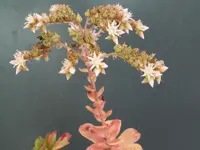
Haworth's aeonium (Aeonium haworthii) is a small, shrubby succulent from the Canary Islands and nearby regions, now common in warm, dry gardens. It forms branching stems topped with tight rosettes of spoon-shaped leaves, often edged in pink or red when grown in bright light.
The plant stays compact and slowly spreading, which suits containers, rock gardens, and sunny windowsills. Its main appeal is the combination of drought tolerance, modest growth, and relatively low maintenance.
Light, fast-draining soil, and careful watering are the key points in how to care for Haworth's aeonium. These traits make it accessible for beginners who already have some basic succulent experience.

Care Difficulty
Moderate Care

Light Preference
Full Sun

Water Requirements
Low Water

Temperature Preference
Warm Climate

Hardiness Zone
9–11

Soil Texture
Sandy, Loamy, Rocky

Soil pH
Slightly acidic (6.5–7.0), Neutral (7.0)

Soil Drainage
Well-drained

Fertilization
Minimal (feed rarely)
Scan your plant to receive care tips personalized for your specific plant
Available on iOS and Android
This succulent prefers bright, gentle sun to maintain compact growth and leaf color.
Watering should mimic brief rains followed by dry periods in free-draining soil.
This species prefers mild, frost-free conditions with good air circulation.
This species handles typical indoor humidity well and rarely needs adjustments.
Aeonium haworthii prefers a fast-draining, mineral-based substrate that prevents water from sitting around the roots.
This species is very suitable for container growing.
Light feeding supports compact, healthy growth in Haworth's aeonium without forcing soft, weak tissue.
Thoughtful pruning keeps Aeonium haworthii compact, tidy, and well-lit inside the canopy.
Container-grown plants benefit from occasional repotting to maintain aerated, fast-draining soil.
New plants are most often produced from stem cuttings taken during the active growing season.
Cool-season attention is important because this succulent is not fully frost hardy in much of the US.

Plant Health Check
Not sure what's wrong with your plant? Check your plant's health inside the app.
This species is naturally found on coastal cliffs and rocky slopes in the Canary Islands, where it is adapted to salt-laden winds and intense sun exposure.
Unlike many aeoniums that stay as single rosettes, this plant forms densely branched shrubs with many small rosettes, which helps it recover quickly after damage from wind or grazing.
It produces loose clusters of pale yellow to cream, star-shaped flowers in late winter to spring, which are visited by a range of small pollinating insects in its native range.

This species has become naturalized in several mild coastal regions outside its native Canary Islands, including parts of California and Australia, where it often establishes in cracks of seaside walls and rocky embankments due to its strong tolerance of salt spray and drought.
This species usually blooms only on mature rosettes and often after several years. Strong light, a mild winter rest, and stable, low-stress conditions help. After flowering, that rosette slowly declines while offsets continue the plant’s life cycle.
Keep your plants happy and healthy with plant identification, disease detection, and easy care guidance.


Goeppertia picturata 'Argentea'
Goeppertia picturata 'Argentea'
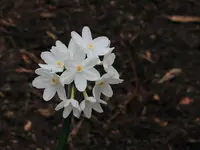
paperwhite narcissus
Narcissus papyraceus
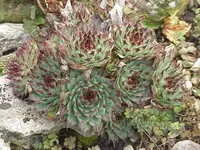
houseleek
Sempervivum calcareum
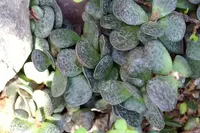
spotted adromischus
Adromischus maculatus
California cholla
Cylindropuntia californica
crowded maxillaria
Maxillaria densa
Cardboard palm
Zamia furfuracea
Zygophyllum indicum
Zygophyllum indicum