


Rotate For Symmetry
Turn the pot 90° every 2–3 weeks so the spathes and leaves develop evenly and the plant does not lean toward the main light source.

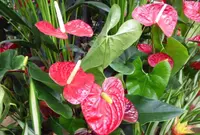
Flamingo flower, Anthurium andraeanum, is a tropical evergreen perennial grown mainly for its glossy leaves and long-lasting, waxy flowers. It is commonly used as an indoor ornamental plant or a sheltered patio plant in warm climates.
The plant forms a compact clump with heart-shaped leaves and brightly colored spathes, usually red, pink, or white, surrounding a central yellow or orange spadix. In nature it occurs in humid, shaded forests of Central and South America.
Its preference for stable warmth, high humidity, and evenly moist but well-drained soil makes it moderately demanding for beginners. Understanding how to care for Flamingo Flower makes it easier to keep it flowering regularly indoors.

Care Difficulty
Moderate Care

Light Preference
Bright Indirect Light

Water Requirements
Keep Soil Moist

Temperature Preference
Tropical / Frost Sensitive

Hardiness Zone
11–12

Soil Texture
Loamy, Peaty, Organic-rich

Soil pH
Acidic (5.5–6.5), Slightly acidic (6.5–7.0)

Soil Drainage
Moist but well-drained

Fertilization
Light (every 4–6 weeks)
Scan your plant to receive care tips personalized for your specific plant
Available on iOS and Android
Anthurium andraeanum prefers bright, indirect light to sustain flowering and healthy foliage.
Watering for Anthurium andraeanum should keep the root zone lightly moist but never saturated.
This species thrives in consistently warm, frost-free conditions similar to a tropical understory.
This species prefers consistently humid air to support healthy leaves and long-lasting blooms.
This plant performs best in a loose, airy, organic-rich mix that drains quickly yet holds some moisture.
This species is very suitable for container growing when the pot supports its air-loving roots and upright growth.
Anthurium andraeanum benefits from light, consistent feeding rather than heavy applications.
Pruning Anthurium andraeanum is mainly about cleaning and shaping the plant for long-term health.
Anthurium andraeanum stays healthiest when its roots are given fresh, airy mix every few years.
New Anthurium andraeanum plants are most reliably obtained by division rather than by seed.
Indoor Anthurium andraeanum plants need stable, warm conditions through winter rather than heavy outdoor-style protection.

Plant Health Check
Not sure what's wrong with your plant? Check your plant's health inside the app.
The showy red part often called the flower is actually a modified leaf known as a spathe, while the true flowers are the tiny, tightly packed structures on the central spike called the spadix.
In its native Colombian and Ecuadorian cloud forests, this species often grows as an epiphyte on tree trunks and branches, anchoring its roots in moss and organic debris rather than true soil.
Each colorful inflorescence, made of spathe and spadix together, can remain attractive for several weeks to months, which is one reason it is widely used in the cut flower trade and in Flamingo Flower indoor care discussions.

Anthurium andraeanum was one of the first tropical foliage and flowering plants to be hybridized extensively in the 20th century for the cut flower industry, leading to a wide range of stable spathe colors including white, pink, orange, and near-black forms that all trace back to this single species in their breeding lines.
Lack of blooms usually comes from insufficient light, depleted nutrients, or a pot that is too large. Mild root restriction, regular feeding, and stable warm conditions support flowering and are central to effective Anthurium andraeanum care.
Keep your plants happy and healthy with plant identification, disease detection, and easy care guidance.


Arrowhead Vine
Syngonium podophyllum 'Berry Allusion'
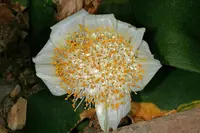
Dwarf Bloodlily
Haemanthus deformis
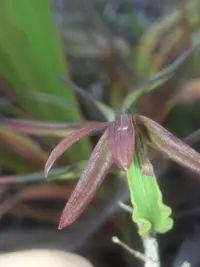
Dendrobium verruciferum
Dendrobium verruciferum
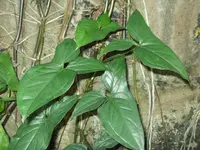
arrowhead vine
Syngonium macrophyllum
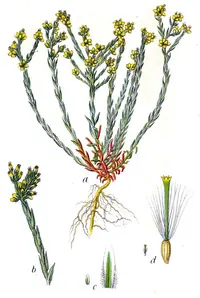
little cottonrose
Logfia minima
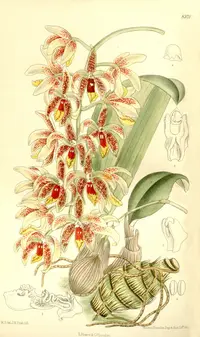
Dendrobium munificum
Dendrobium munificum
 POPULAR
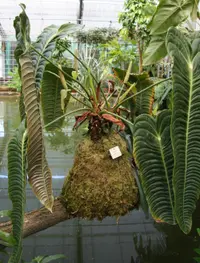
King Anthurium
Anthurium veitchii
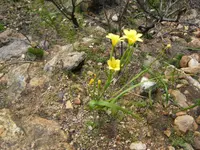
Apricot Tulp
Moraea ochroleuca