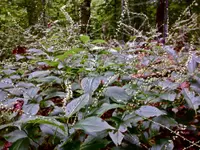
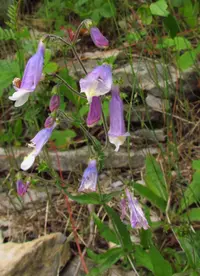
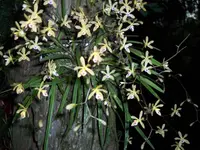
Fire-star orchid Care (Epidendrum radicans)

Also known as: Rainbow orchid, Ground-rooting epidendrum, Reed-stem epidendrum, Poormans Orchid

About Fire-star orchid

The fire-star orchid, Epidendrum radicans, is a terrestrial or semi-epiphytic orchid known for its long, reed-like stems and bright clusters of star-shaped flowers. It often forms dense clumps and can bloom for extended periods in suitable conditions.

In nature, it occurs in warm regions of Central and South America, typically on sunny slopes, roadsides, and disturbed areas. This background makes it more adaptable and forgiving than many delicate orchids.

Fire-star orchid generally prefers bright light, moderate moisture, and a very well-drained, airy growing medium. These traits mean care for Fire-star orchid is manageable for beginners who can provide stable warmth and good light.

Main Plant Requirements

Care Difficulty

Moderate Care

Light Preference

Full Sun

Water Requirements

Moderate Water

Temperature Preference

Tropical / Frost Sensitive

Hardiness Zone

10–11

Soil Texture

Sandy, Loamy, Organic-rich

Soil pH

Acidic (5.5–6.5), Slightly acidic (6.5–7.0)

Soil Drainage

Well-drained

Fertilization

Moderate (every 2–4 weeks)

Get Personalized Care Plan

Scan your plant to receive care tips personalized for your specific plant

Personalized Care in the App

Available on iOS and Android

How to Care for the Fire-star orchid

Epidendrum radicans grows best in bright, mostly indirect light with some direct sun each day.

  • Provide 4–6 hours of morning or late-afternoon sun, plus bright shade or filtered light for the rest of the day.
  • Tolerates light midday sun in mild climates, but in hot regions use 30–50% shade cloth or dappled tree shade to prevent leaf scorch.
  • If stems stretch, flowering declines, or leaves turn dark dull green, the plant needs more light; pale yellow, scorched patches indicate excess sun.

This orchid prefers evenly moist but not saturated conditions, with brief drying at the surface between waterings.

  • Water thoroughly when the top 2–4 cm of soil feels dry, allowing excess to drain away completely.
  • Reduce watering in cool seasons, but never let the root zone stay dry long enough for canes to shrivel or leaves to flop.
  • Signs of overwatering include soft, blackened roots and yellowing lower leaves, while crisp leaf tips and wrinkled stems show the plant is too dry.

This species prefers warm conditions and does best without exposure to frost.

  • Aim for 65–80°F (18–27°C) during active growth, with a slight drop at night for strong flowering.
  • It tolerates short dips to 45–50°F (7–10°C) but sustained temperatures below this damage foliage and roots.
  • In hot spells above 90°F (32°C), increase shade and air movement; avoid planting in low, cold pockets where frost settles.

This orchid prefers moderate humidity but adapts to many home environments.

  • Aim for 40–60% humidity; it tolerates brief dips lower, making Fire-star orchid indoor care relatively flexible.
  • Crisp brown leaf tips, accordion-like new growth, or stalled buds indicate humidity is too low.
  • Use a humidity tray or cluster plants together rather than misting, which adds only short-lived surface moisture.

This terrestrial orchid needs a loose, sharply drained mix that still holds moderate moisture.

  • Use a mix such as 40% fine orchid bark, 30% perlite or pumice, and 30% coarse, fibrous compost or coconut coir.
  • Ensure a crumbly, airy texture so roots receive constant oxygen and water drains freely within seconds of watering.
  • Target slightly acidic to neutral pH around 6.0–7.0, avoiding heavy lime additions that push pH too high.
  • Avoid dense clay, peat-only mixes, or compacted garden soil, which trap water and increase root rot risk for Epidendrum radicans.

This species adapts very well to container growing outdoors in mild climates.

  • Choose a heavy, wide container to prevent tall flowering stems from tipping the pot in wind.
  • Select a pot material that breathes, such as unglazed terracotta, to help excess moisture evaporate from the root zone.
  • Elevate the pot slightly on feet or bricks so drainage holes stay clear and water runs off quickly after rain or watering.

This orchid responds well to light, consistent nutrition during warm, active growth.

  • Use a balanced orchid fertilizer (such as 20-20-20) diluted to 1/4–1/2 strength in water.
  • Feed every 2–3 weeks in spring and summer while shoots and roots are actively growing.
  • Reduce feeding to 1x per month or stop entirely in fall and winter, depending on light and growth.
  • For caring for Fire-star orchid in pots, flush the medium with plain water monthly to prevent salt buildup.

Thoughtful pruning keeps Epidendrum radicans compact, tidy, and flowering well.

  • Best time is after a flowering flush in late spring or summer, once spikes fade.
  • Cut spent flower spikes back to a healthy node using clean, sharp scissors or pruners.
  • Remove dead, damaged, or weak canes at the base to improve light and air movement.
  • Lightly shorten overly tall, leggy stems to encourage branching and more future blooms.

Container-grown plants benefit from occasional repotting to refresh the medium and manage roots.

  • Repot every 2–3 years or when roots circle the pot, growth slows, or the medium decomposes.
  • Aim for late spring, just as new root tips appear, to support faster recovery.
  • Use a free-draining orchid mix and move to a pot only 2–3 cm wider than the old one.
  • Gently tease apart roots, trim dead sections, water lightly at first, and keep in bright, indirect light for 1–2 weeks to reduce stress.

This species is commonly propagated to create new, flowering plants from established clumps.

  • Division of mature clumps in spring or early summer is the most reliable method.
  • Lift the plant and separate sections with 3–4 healthy canes and a good root mass each.
  • Plant divisions into fresh, well-drained orchid mix and water lightly at first.
  • Provide bright, indirect light, 65–80°F, and steady moisture to support rapid root establishment.

In mild climates this orchid is semi-hardy, but extra winter care is needed in colder regions.

  • Epidendrum radicans is damaged by hard frost; outdoor plants suit USDA zones roughly 9–11.
  • Mulch the root zone with 5–8 cm of bark or straw in marginal climates to buffer temperature swings.
  • Move container plants indoors or to a frost-free greenhouse before nights drop near 40°F.
  • Indoors, give bright light, good air movement, and slightly reduced watering during the coolest months.

Care Tips

Secure Vertical Support

Provide a sturdy stake, trellis, or mesh panel and loosely tie canes as they elongate so the plant can climb, stay upright, and channel energy into healthy flower production instead of constantly toppling over.

Layered Root Zone

When potting, place a coarse, fast-draining mix at the bottom and a slightly finer mix near the roots to keep the base aerated while still holding enough moisture for active root growth.

Timely Flower Spike Removal

After flower spikes finish and stop producing new buds, cut them back to just above a leafy node to reduce disease entry points and redirect resources into new canes and future blooms.

Outdoor Hardening Routine

If moving plants outdoors for summer, gradually increase their time outside over 7–10 days in bright shade before full exposure to avoid leaf scorch and stress when growing Fire-star orchid.

Prevent Salt Buildup

Every 4–6 weeks, flush the pot thoroughly with plain water until it runs freely from the drainage holes to wash out accumulated fertilizer salts that can burn roots and reduce vigor.

Common Pests and Diseases

Scale insects

This pest attaches to canes and flower spikes, forming small brown or whitish bumps and excreting sticky honeydew that can lead to sooty mold. Symptoms include yellowing leaves, weakened growth, and poor flowering.

Solution

Remove heavily infested stems or leaves and wipe remaining areas with cotton pads dipped in 70% isopropyl alcohol, repeating weekly until no new scales appear. Improve air movement around the plant and, if needed, use a labeled horticultural oil spray, applied in the evening to avoid leaf burn and always following orchid-specific directions.

Mealybugs

These insects hide in leaf axils, on aerial roots, and at the base of canes, appearing as white cottony clumps. Symptoms include distorted new growth, sticky residue, and reduced vigor.

Solution

Isolate the plant, then dab visible mealybugs with 70% isopropyl alcohol and rinse the plant gently with lukewarm water to dislodge hidden insects. Repeat inspections every few days, and if populations persist, use an insecticidal soap or systemic product labeled safe for orchids, making sure the potting medium drains well afterward.

Spider mites

This pest thrives on Epidendrum foliage in hot, dry conditions, causing fine stippling on leaves that can progress to bronzing and premature leaf drop. Fine webbing may be visible on the undersides of leaves or between stems.

Solution

Increase humidity to 50–60% and rinse leaves thoroughly under a gentle shower, paying special attention to undersides. For ongoing infestations, use insecticidal soap or a miticide labeled for ornamental plants, applied in 2–3 treatments at 5–7 day intervals while keeping good air circulation to dry foliage quickly.

Bacterial brown spot

This disease causes water-soaked, translucent patches on leaves that rapidly turn brown and sunken, often with a yellow halo. Lesions can enlarge quickly in warm, wet conditions and may produce a foul odor.

Solution

Remove and discard affected leaves using sterilized tools, cutting at least 1–2 cm into healthy tissue, and avoid wetting foliage late in the day. Improve air circulation, keep water off leaves, and reduce overhead watering; in severe cases, apply a copper-based bactericide labeled for orchids, following directions carefully to avoid phytotoxicity.

Leaf spot fungus

This disease produces small, round to irregular dark spots on leaves that may merge into larger patches, especially on older foliage or plants grown in crowded, humid conditions. Symptoms include slow decline in overall leaf quality and premature yellowing of lower leaves.

Solution

Prune and discard spotted leaves, disinfecting cutting tools between cuts, and space plants to enhance airflow and faster leaf drying. Adjust watering to keep the potting mix moist but not wet on the surface, avoid prolonged leaf wetness, and use a broad-spectrum fungicide suitable for orchids if new spots continue to appear despite cultural corrections.

Interesting Facts

Terrestrial reed-stem orchid

Unlike many orchids that grow on trees, this species is primarily terrestrial and forms tall, reed-like canes that can reach around 1 m, rooting as they creep along slopes or disturbed ground.

Constantly renewing roots

The plant produces aerial roots from its lower stems that readily root where they touch soil, allowing older parts to die back while newer rooted sections keep advancing across the ground.

Non-resupinate flowers

Its flowers are typically non-resupinate, meaning they do not twist 180° during development as many orchids do, so the lip or labellum is held uppermost rather than forming the lower landing platform typical of moth or butterfly-pollinated orchids.

Botan icon

Did you know?

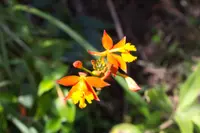
In parts of Central and South America, this species is so persistent on road cuts, pastures, and disturbed slopes that it often becomes one of the dominant wildflowers along highways, forming long ribbons of orange and red color that act as informal markers of human-altered landscapes.

FAQs about Fire-star orchid

Lack of blooms usually comes from insufficient light, too little fertilizer, or overcrowded roots. Provide bright, indirect light, a balanced orchid fertilizer during active growth, and divide congested clumps to restore flowering performance.

Grow Healthy Plants with Botan Care

Keep your plants happy and healthy with plant identification, disease detection, and easy care guidance.

Botan plant care app — identify plants on mobile

Explore More Plants