Support trailing stems
Provide a narrow trellis, hoop, or horizontal rod above the pot so the stems can drape and lightly loop over it, which reduces breakage and helps distribute light evenly along the vines.

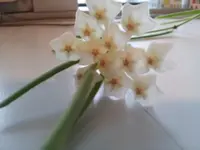
Hoya linearis is an epiphytic trailing plant from the Himalayas, valued for its long, narrow, soft leaves that hang in dense, curtain-like strands. It belongs to the dogbane family (Apocynaceae) and is often grown in hanging baskets indoors. In the wild it grows on trees in cool, bright, humid mountain forests, which explains its preference for good light without harsh direct sun and steady moisture without waterlogging. It is considered more delicate than many other hoyas due to its fine roots and sensitivity to drying out or poor drainage. With stable conditions and patience, it adapts well to indoor life, and understanding how to care for Hoya linearis makes it more reliable over time.

Care Difficulty
Moderate Care

Light Preference
Bright Indirect Light

Water Requirements
Moderate Water

Temperature Preference
Tropical / Frost Sensitive

Hardiness Zone
11–12

Soil Texture
Sandy, Loamy, Organic-rich

Soil pH
Acidic (5.5–6.5), Slightly acidic (6.5–7.0)

Soil Drainage
Well-drained

Fertilization
Light (every 4–6 weeks)
Scan your plant to receive care tips personalized for your specific plant
Available on iOS and Android
This trailing epiphyte prefers bright, indirect light that mimics dappled forest conditions.
Watering should balance moisture and air in the root zone to prevent rot.
Stable, warm conditions support healthy foliage and flowering for this species.
This species prefers moderately humid air and benefits from slightly above-average indoor humidity.
This epiphytic species needs a very airy, fast-draining mix that resists compaction.
This species is well suited to container growing, especially in hanging pots where vines can trail freely.
This species benefits from light, consistent feeding during active growth for balanced Hoya linearis plant care.
Pruning supports a tidy shape and healthy flowering stems on Hoya linearis.
Repotting keeps the root system healthy while maintaining a compact, trailing habit.
Propagation of this species is commonly done from stem cuttings taken during active growth.
Winter care focuses on preventing cold damage and rot in this frost-sensitive plant.

Plant Health Check
Not sure what's wrong with your plant? Check your plant's health inside the app.
This species is native to cool, moist montane forests of the Himalayas, where it often grows as an epiphyte on trees rather than in soil, exposed to bright but diffused mountain light and large day–night temperature swings.
Unlike most hoyas with thick, succulent leaves, this species has long, narrow, almost thread-like leaves that still store some water but are adapted to cool, humid air instead of intense, arid conditions.
The plant produces small, white, fuzzy star-shaped flowers arranged in umbels that release a sweet fragrance, typically at night, which helps attract nocturnal pollinators in its native range.

In the wild, this species often forms long, curtain-like cascades dangling from tree branches or rock faces, creating distinctive vertical green drapes that can reach well over 1 m in length under stable, cool, humid conditions.
Lack of flowers usually comes from insufficient light, unstable temperatures, or frequent repotting. Mature plants bloom more reliably when kept slightly root-bound, with consistent conditions and no removal of old flower spurs, called peduncles, after flowering.
Keep your plants happy and healthy with plant identification, disease detection, and easy care guidance.