


Pinch For Bushiness
Pinch back the soft shoot tips when plants are 5–8 cm tall to encourage dense, branching growth and a fuller trailing habit rather than long, sparse stems.

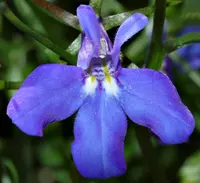
Trailing lobelia (Lobelia erinus) is a small, tender perennial often grown as an annual, valued for its dense trailing habit and fine-textured foliage. It forms cascading mounds that spill over containers, window boxes, and hanging baskets.
The plant is best known for its abundant small flowers in shades of blue, purple, white, or pink, which create an even carpet of color. It naturally occurs in southern Africa, where it grows in open, sunny sites with regular moisture.
This species can be moderately demanding, as it dislikes heat stress, drought, and poor drainage. Gardeners who learn how to care for Trailing Lobelia find it responds well to cool conditions, consistent moisture, and light, fertile soil.

Care Difficulty
Moderate Care

Light Preference
Full Sun

Water Requirements
Keep Soil Moist

Temperature Preference
Cool Climate

Hardiness Zone
9–11

Soil Texture
Loamy, Sandy, Organic-rich

Soil pH
Acidic (5.5–6.5), Slightly acidic (6.5–7.0)

Soil Drainage
Moist but well-drained

Fertilization
Moderate (every 2–4 weeks)
Scan your plant to receive care tips personalized for your specific plant
Available on iOS and Android
Lobelia erinus thrives in cool, bright conditions with gentle sun exposure rather than intense heat.
This plant prefers consistently moist but not waterlogged soil, especially during active flowering.
This cool-season annual grows best in mild temperatures and declines in prolonged heat or frost.
Lobelia erinus prefers moderately moist air but usually grows well in typical outdoor humidity levels.
Lobelia erinus performs best in cool, moist, well-aerated soil that drains freely but does not dry out quickly.
This species is well suited to container growing, including hanging baskets and window boxes.
Lobelia erinus responds well to light, consistent feeding during its main blooming period.
Pruning keeps Lobelia erinus compact and extends its flowering display.
This plant is usually treated as an annual, so transplanting young Lobelia erinus seedlings is more common than long-term repotting.
Most Lobelia erinus plants are propagated from seed for dense, flowering displays.
In most climates Lobelia erinus is grown as a warm-season annual and does not overwinter outdoors.

Plant Health Check
Not sure what's wrong with your plant? Check your plant's health inside the app.
In its native habitat of southern Africa, Lobelia erinus behaves as a short-lived perennial, but in most temperate gardens it is grown as an annual because it does not tolerate frost well.
The seeds are extremely small and dust-like, which allows large numbers to disperse easily by wind and water, helping the species colonize cracks, rock crevices, and disturbed ground.
Selective breeding has produced both compact mounding and long-trailing forms from the same species, which is why it can be used in bedding, hanging baskets, and window boxes with very different visual effects.

Modern blue, white, and bicolored garden varieties trace back to wild populations from South Africa, Lesotho, and surrounding regions, where the original plants typically had simpler blue to violet flowers that inspired breeders to develop the diverse ornamental forms grown today.
Poor flowering usually comes from heat stress, old spent blooms left on the plant, or nutrient imbalance with too much nitrogen. Regular deadheading, cooler conditions, and a balanced, low-nitrogen fertilizer often restore steady flowering through the season.
Keep your plants happy and healthy with plant identification, disease detection, and easy care guidance.

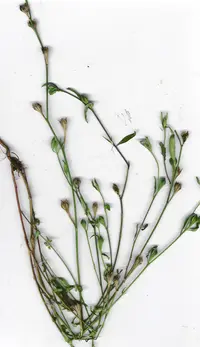
Kunth's evening primrose
Oenothera kunthiana
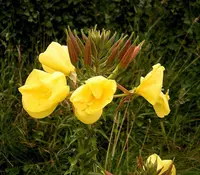
Large-flowered Evening-primrose
Oenothera glazioviana
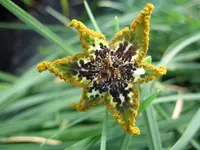
black flag
Ferraria crispa
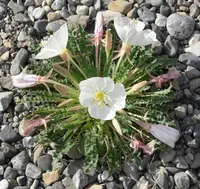
fragrant evening primrose
Oenothera cespitosa
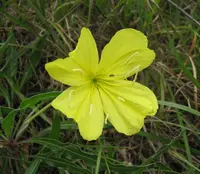
bigfruit evening primrose
Oenothera macrocarpa
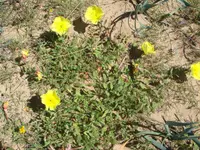
beach evening primrose
Oenothera drummondii
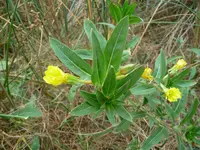
Oakes' evening primrose
Oenothera oakesiana
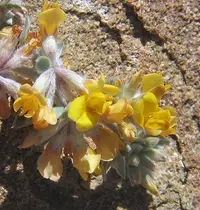
silver bird's-foot trefoil
Acmispon argophyllus