Strawberry saxifrage Care (Saxifraga stolonifera)

Also known as: trailing saxifrage, Mother-of-thousands, Strawberry Saxifrage

About Strawberry saxifrage

Strawberry saxifrage (Saxifraga stolonifera) is a small, evergreen perennial grown mainly for its patterned foliage and trailing habit. It forms low rosettes and sends out thin stolons that root and create new plantlets, similar to a spider plant.

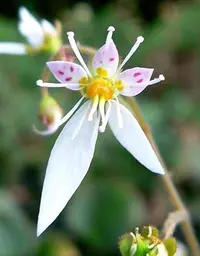
Leaves are round, softly hairy, green with silvery veins on top and reddish undersides, making it an attractive plant for pots, hanging containers, and shaded edges. In late spring or early summer, it produces delicate, airy flower stems with small white blooms.

This species is native to rocky, shaded habitats in East Asia, which helps explain its preference for cool conditions, bright indirect light, and evenly moist but well-drained soil. These traits make it fairly forgiving, as long as you understand how to care for Strawberry saxifrage.

Main Plant Requirements

Care Difficulty

Moderate Care

Light Preference

Partial Shade

Water Requirements

Regular Water

Temperature Preference

Cool Climate

Hardiness Zone

6–9

Soil Texture

Loamy, Silty, Organic-rich

Soil pH

Acidic (5.5–6.5), Slightly acidic (6.5–7.0)

Soil Drainage

Moist but well-drained

Fertilization

Light (every 4–6 weeks)

Get Personalized Care Plan

Scan your plant to receive care tips personalized for your specific plant

Personalized Care in the App

Available on iOS and Android

How to Care for the Strawberry saxifrage

This woodland perennial grows best in bright, indirect light that mimics dappled forest shade.

  • Provide 2–4 hours of gentle morning sun with bright, filtered light the rest of the day; avoid strong afternoon sun that can scorch leaves.
  • Grow Strawberry saxifrage in partial shade, such as an east-facing site or under light tree cover, where it receives broken light rather than direct exposure.
  • In summer, increase shade as sun intensity rises; in winter, allow a bit more direct light if available to compensate for shorter days.

This plant prefers evenly moist but not waterlogged soil throughout the growing season.

  • Water when the top 2–3 cm of soil feel dry, using enough water to moisten the root zone while allowing excess to drain away fully.
  • In spring and summer, expect more frequent watering as growth is active; in cooler autumn and winter conditions, extend intervals as the soil stays moist longer.
  • Watch for yellowing, soft leaves as a sign of overwatering and crisp, drooping foliage as a sign of underwatering, and adjust watering and drainage accordingly.

This species prefers cool to mild temperatures and dislikes extreme heat or deep frost.

  • Aim for active growth in 55–75°F (13–24°C), which supports steady foliage development without heat stress.
  • Saxifraga stolonifera can tolerate light frost down to about 20–25°F (-6 to -4°C) once established, but repeated hard freezes may damage crowns.
  • In hot climates, protect from prolonged temperatures above 86°F (30°C) by providing shade and consistent moisture, especially during summer heat waves.

This species prefers moderate, slightly elevated humidity and dislikes very dry indoor air.

  • Aim for 40–60% humidity, which suits Strawberry saxifrage in most homes without special equipment.
  • Crisping leaf edges and stalled growth in warm rooms often indicate air is too dry for this plant.
  • Increase humidity by grouping plants, placing the pot on a pebble tray with water, or running a small nearby humidifier.

This plant needs loose, moist, sharply draining soil that mimics a cool, humus-rich forest floor.

  • Use a mix of 50–60% peat or coco coir, 20–30% compost, and 20–30% perlite or fine bark for structure and drainage.
  • Slightly acidic to neutral pH (6.0–7.0) supports nutrient uptake and reduces risk of micronutrient issues for Saxifraga stolonifera.
  • Ensure the mix feels springy and crumbly, not sticky, so roots receive both air and consistent moisture.
  • Avoid heavy clay, compacted mixes, or pure peat that stay waterlogged and encourage root rot and fungal problems.

This species adapts very well to container growing.

  • Choose a wide, shallow pot so the creeping stolons can root and trail without crowding the central crown.
  • Select a slightly heavier or ceramic pot to keep spreading growth stable and prevent the container from tipping.
  • Elevate the pot on feet or a stand so drainage holes stay clear and excess water leaves the mix quickly.

This plant benefits from modest feeding during active growth but does not need heavy fertilization.

  • Use a balanced liquid fertilizer (such as 10-10-10) at half strength every 4–6 weeks in spring and summer for Strawberry saxifrage.
  • Alternatively, apply a thin layer of fine compost on the soil surface at the start of spring growth.
  • Avoid fertilizing in late fall and winter when growth slows or plant is semi-dormant.
  • Flush the pot with plain water occasionally to prevent salt buildup from repeated feeding.

Saxifraga stolonifera responds well to light, targeted pruning to keep growth tidy and healthy.

  • Best time is late winter to early spring, just before strong new growth starts.
  • Remove dead, yellowing, or damaged leaves at the base using clean, sharp scissors.
  • Trim overcrowded or elongated runners to control spread and encourage a denser rosette.
  • Cut spent flower stems down to the base to maintain appearance and direct energy back to foliage.

Repotting or transplanting is useful when growth slows or the root ball becomes crowded.

  • Check for roots circling the pot, growing through drainage holes, or very fast drying soil as signs to repot.
  • Plan to repot every 2–3 years in early spring, just as new growth begins.
  • Choose a shallow, slightly wider container with a well-draining mix and gently loosen circling roots.
  • Water thoroughly after repotting, then keep in bright, indirect light and slightly drier soil for 7–10 days to limit root stress.

This species is commonly multiplied using its stolons, along with division and sometimes seed.

  • Best season for most methods is spring to early summer, when growth is active and conditions are mild.
  • Peg plantlets on stolons onto moist, well-draining mix until rooted, then detach from the mother plant.
  • Divide crowded clumps, keeping several healthy rosettes and roots together, and replant at the same depth.
  • For seeds, use a fine, moist substrate, provide bright indirect light, and avoid covering very small seeds deeply.

This plant is moderately cold tolerant in the ground but needs some attention in colder regions and containers.

  • In USDA zones around 6–8, established outdoor clumps usually overwinter with minimal intervention.
  • Apply a light mulch layer around the root zone in late fall to buffer freeze–thaw cycles without burying crowns.
  • Move containers indoors to a cool, bright, frost-free spot if temperatures drop below about 25°F.
  • Reduce watering in winter, keeping soil just slightly moist to prevent root rot in slow growth conditions.

Care Tips

Manage Runners

Periodically trim and replant or discard excess stolons so the plant does not exhaust itself maintaining too many plantlets and the mother rosette stays dense and vigorous.

Encourage Compact Growth

Rotate the pot a quarter turn every 1–2 weeks so the rosette grows evenly and does not lean or stretch in one direction toward the light source.

Surface Root Care

Avoid deep cultivation of the pot surface and instead gently top up with fresh mix when needed, since this species forms fine, shallow roots that are easily damaged.

Cool-Season Boost

In cooler months, move the plant slightly closer to the brightest window or under a grow light so it maintains strong variegation and does not become sparse when outdoor light levels drop.

Prevent Crown Rot

Water at the pot edge rather than directly into the rosette and remove any dead leaves promptly, which helps reduce trapped moisture and decay around the crown when caring for Strawberry saxifrage.

Common Pests and Diseases

Spider mites

This pest often appears in warm, dry indoor air and can cause fine speckling and dull, tired-looking leaves on Strawberry saxifrage. Symptoms include delicate webbing on leaf undersides and along runners.

Solution

Rinse foliage thoroughly with lukewarm water, including the undersides of leaves and stolons, then increase humidity and improve air circulation. For persistent infestations, repeat washing every few days and use an insecticidal soap or neem oil spray, applied carefully to both upper and lower leaf surfaces.

Mealybugs

These insects hide in leaf axils, along runners, and near the crown, appearing as white, cottony clusters. This pest weakens the plant by sucking sap, causing yellowing and distortion of young leaves and stolons.

Solution

Isolate the plant, then dab visible insects with cotton swabs dipped in isopropyl alcohol and remove heavily infested stolons. Follow up with insecticidal soap or neem oil at 7–10 day intervals, making sure to treat leaf bases, crown, and the undersides of leaves until no new insects appear.

Leaf spot

This disease causes small brown, tan, or black spots on leaves that may merge into larger irregular patches, especially on older foliage. Symptoms include yellow halos around spots and premature leaf drop in crowded or poorly ventilated conditions.

Solution

Remove and discard affected leaves, then improve airflow by thinning dense stolons and avoiding overhead watering, especially late in the day. Keep foliage dry, water at soil level, and if spotting continues, apply a labeled copper or sulfur-based fungicide according to instructions, focusing on the upper leaf surface where lesions appear first.

Powdery mildew

This disease shows up as a white, powdery coating on the upper leaf surface, often starting on the older, lower leaves. Symptoms include distorted new growth and reduced vigor, particularly in cool, humid, low-light locations.

Solution

Increase light, space plants to improve airflow, and remove the most affected leaves to reduce spore load. Water at the base, keep leaves dry, and treat with a sulfur-based or potassium bicarbonate fungicide, repeating as directed until new leaves grow clean and unaffected.

Interesting Facts

Unusual variegated leaves

This species naturally develops silvery, net-like markings on the upper leaf surface and reddish tones beneath, created by air spaces and pigments that influence how light is captured and reflected for photosynthesis.

Spider-like flowering stems

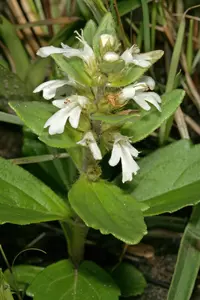
The plant sends up slender, branched stalks that hold delicate white flowers with two dramatically elongated lower petals, an asymmetrical form that is unusual among common houseplants and helps guide pollinators.

Self-propagation by stolons

It spreads by thin, above-ground runners (stolons) that form small plantlets at their tips, allowing a single plant to colonize cracks in rocks or pot edges without seed production.

Botan icon

Did you know?

In parts of East Asia, this species has a long history as a traditional ornamental grown in shallow dishes or hanging containers, valued for its ability to drape over stone features and evoke miniature cliff and ravine landscapes in courtyard gardens.

FAQs about Strawberry saxifrage

This species spreads by thin red stolons that root where they touch soil, forming small colonies. It is usually easy to control in garden beds or containers by trimming off unwanted runners and lifting stray plantlets.

Grow Healthy Plants with Botan Care

Keep your plants happy and healthy with plant identification, disease detection, and easy care guidance.

Botan plant care app — identify plants on mobile

Explore More Plants