Madagascar jewel Care (Euphorbia leuconeura)

About Madagascar jewel

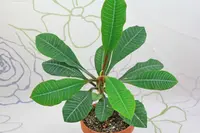
Madagascar jewel (Euphorbia leuconeura) is a succulent-type houseplant known for its upright stems, patterned leaves, and distinctive seed-shooting habit. It forms a single main stem that can become tree-like over time, with leaves arranged in a spiral near the top.

This species is native to shaded forest habitats in Madagascar, where it grows in rocky, well-drained soils. It adapts well indoors and is generally easy to manage if handled carefully.

Light to moderate indoor light, modest watering, and a free-draining mix are usually enough to care for Madagascar jewel successfully.

Main Plant Requirements

Care Difficulty

Easy Care

Light Preference

Bright Indirect Light

Water Requirements

Low Water

Temperature Preference

Tropical / Frost Sensitive

Hardiness Zone

11–12

Soil Texture

Sandy, Loamy, Organic-rich

Soil pH

Acidic (5.5–6.5), Slightly acidic (6.5–7.0)

Soil Drainage

Well-drained

Fertilization

Light (every 4–6 weeks)

Get Personalized Care Plan

Scan your plant to receive care tips personalized for your specific plant

Personalized Care in the App

Available on iOS and Android

How to Care for the Madagascar jewel

This species prefers bright, indirect light that mimics high, filtered sun in its native habitat.

  • Provide 6–8 hours of bright, indirect light daily; morning sun with light afternoon shade suits Madagascar jewel well, especially behind a sheer curtain or under high dappled shade outdoors.
  • Tolerates partial shade (3–4 hours of bright light), but growth slows and stems may stretch if light stays low for many weeks.
  • Avoid harsh midday sun, which can scorch leaves, especially through glass; in winter, move it slightly closer to the light source to compensate for shorter days.

Watering should be modest and guided by soil dryness to avoid root rot in this semi-succulent species.

  • Allow the top 3–5 cm of soil to dry before watering; check with a finger rather than using a fixed schedule, since light and temperature strongly affect drying time.
  • In spring and summer, water thoroughly but let excess drain away; in fall and winter, reduce frequency as growth slows and soil stays moist longer.
  • Yellowing, soft, or mushy stems suggest overwatering, while wrinkling, drooping, or very light pots suggest underwatering; Euphorbia leuconeura needs sharply draining, gritty soil to stay healthy.

Stable, warm conditions support steady growth and reduce stress for this species.

  • Ideal growth occurs around 65–80°F (18–27°C); short periods up to 85°F (29°C) are tolerated if light is filtered and soil is not constantly wet.
  • Protect from cold; growth slows below about 60°F (16°C), and damage can occur below 50°F (10°C), especially with damp soil or drafts.
  • Never expose the plant to frost, as tissue damage occurs near 32°F (0°C); in very hot spells above 85–90°F (29–32°C), add light shade and ensure good air movement to prevent heat stress.

Humidity is a minor factor for this species, which thrives in typical indoor air.

  • Aim for 30–50% humidity; higher levels are tolerated but not required for Madagascar jewel.
  • Plant tolerates dry heated rooms but very low humidity may slow growth slightly.
  • Crisp leaf edges or dull foliage can signal combined low humidity and under-watering; group plants or place on a pebble tray if air is extremely dry.

Soil should drain rapidly while holding enough structure to anchor the plant.

  • Use a gritty, porous mix such as 50–60% cactus potting mix blended with perlite or pumice and a small amount of coarse sand.
  • Soil texture is best loose and crumbly, never compacted, to keep roots aerated and reduce the risk of anaerobic (oxygen-poor) pockets.
  • Aim for slightly acidic to neutral pH, roughly 6.0–7.0, which suits Euphorbia leuconeura and helps nutrient availability.
  • Avoid heavy clay, peat-only mixes, or containers that stay wet for longer than 2–3 days after watering, as this promotes root and stem rot.

This species is very suitable for container growing due to its controlled, upright habit.

  • Choose a pot just slightly wider than the root ball so the mix dries within a few days, reducing the risk of stem rot.
  • Use a stable, heavier container material such as ceramic if the plant grows tall, to prevent tipping as the stem thickens.
  • Select a pot deeper than it is wide to support the taproot and keep the plant upright as the stem elongates.

This species benefits from light, controlled feeding during the active growing season.

  • Use a balanced liquid fertilizer (for example 10-10-10 or 20-20-20) diluted to 25–50% strength for Madagascar jewel in spring and summer.
  • Feed every 4–6 weeks while growth is active; skip applications if the soil is staying very wet or the plant looks stressed.
  • Stop fertilizing in fall and winter to match the plant’s semi-dormant phase and avoid weak, etiolated growth.
  • Slow-release granules at low dose can replace liquids; avoid rich compost that holds excess moisture around the roots.

Pruning Euphorbia leuconeura is mainly done to maintain size, remove damaged tissue, and improve structure.

  • Carry out pruning in late spring or early summer when the plant is actively growing and recovers faster.
  • Remove dead, diseased, or scarred stems and crowded side shoots to improve light penetration and airflow.
  • Use clean, sharp scissors or pruners and wear gloves to avoid skin contact with the irritating white latex sap.
  • Limit height by shortening tall, leggy stems just above a node to encourage branching and a more compact shape.

This succulent prefers modest, infrequent repotting to avoid root disturbance and excess moisture.

  • Repot every 2–3 years or when roots circle the pot, push through drainage holes, or growth slows despite good light.
  • Choose late spring as the main time for repotting so the plant can re-establish quickly in warm, bright conditions.
  • Move into a pot only 2–3 cm wider, using a fast-draining cactus or succulent mix to prevent waterlogged roots.
  • Slide the root ball out gently, loosen circling roots slightly, replant at the same depth, then water once and let the mix dry partly before the next watering.

Propagation is usually done from seeds and sometimes from carefully handled stem cuttings.

  • Collect fresh seeds from mature pods and sow them on the surface of a sterile, well-draining mix in spring or early summer.
  • Keep seed trays warm at 70–80°F with bright, indirect light and slightly moist, not wet, substrate for steady germination.
  • For cuttings, take healthy, non-woody stems in warm months, let the latex dry and the cut end callus for 1–2 days.
  • Insert cuttings into gritty mix, keep barely moist, and provide bright filtered light until new leaves indicate rooting.

This plant is frost-sensitive and needs mild, dry conditions over winter.

  • Move containers indoors before outdoor temperatures drop below 50°F, as freezing can kill roots and stems.
  • Provide bright, indirect light and keep room temperatures around 60–70°F to prevent excessive leaf drop.
  • Water sparingly in winter, allowing most of the potting mix to dry; reduced moisture limits root rot in cool conditions.
  • Avoid cold drafts, single-pane windowsills that dip below 50°F, and sudden temperature swings around the plant.

Care Tips

Safe seed control

Remove and discard developing seed pods before they dry to reduce self-sowing and prevent the plant from ejecting seeds across the room.

Trunk-straightening support

If the stem begins to lean, stake it loosely with a soft tie for a few months so new growth lignifies straight, then remove the support once the trunk feels firm.

Cautious handling routine

When repotting or cleaning, wear gloves and avoid breaking stems or leaves, then wipe any sap from tools and pots to limit skin irritation and accidental contact with pets or children.

Leaf-shape monitoring

Monitor the leaf size and pronounced midrib; suddenly smaller, thinner leaves usually signal root stress or nutrient depletion that justifies checking the rootball and repotting if densely rootbound.

Gradual light relocation

If moving the plant to a brighter spot, shift it 0.5–1 m closer to the light every 5–7 days to avoid sun scorch while still encouraging sturdy, compact growth typical when caring for Madagascar jewel.

Common Pests and Diseases

Spider mites

This pest often appears on Madagascar jewel in warm, dry indoor air and causes fine speckling, dull leaves, and delicate webbing between ribs and leaf bases. Symptoms include slowed growth and leaves that look dusty or faded.

Solution

Rinse the plant thoroughly in the shower or sink, focusing on leaf undersides and rib grooves, then let it dry in bright, indirect light. For ongoing Euphorbia leuconeura care, keep humidity moderate, isolate the plant, and repeat washes; if needed, apply insecticidal soap or a light horticultural oil weekly for 3–4 weeks, avoiding strong sun right after treatment.

Mealybugs

These insects hide in leaf axils and along the ribbed stem, appearing as white cottony clusters that excrete sticky honeydew. Symptoms include distorted new growth, yellowing leaves, and sometimes sooty mold on the sticky residue.

Solution

Dab visible insects with cotton swabs dipped in 70% isopropyl alcohol, then gently wipe along ribs and leaf bases to remove remaining pests. Repeat inspections weekly, isolating the plant, and if the infestation persists, use insecticidal soap or systemic granules labeled for indoor succulents, following label directions carefully.

Aphids

These insects gather on tender shoot tips and flower stalks, feeding on sap and causing curling, misshapen new leaves and sticky honeydew. Symptoms include slowed growth and a general decline in plant vigor, especially on young indoor plants.

Solution

Rinse affected areas under a gentle but firm stream of lukewarm water and remove heavily infested tips if needed. Maintain good light and airflow, monitor the plant closely, and use insecticidal soap in repeated applications if new aphids continue to appear.

Powdery mildew

This disease appears as white, powdery patches on the leaves, especially in crowded or poorly ventilated indoor locations. Symptoms include dull, distorted foliage and premature leaf drop from the lower part of the plant.

Solution

Improve airflow around the plant, avoid overhead misting, and remove the most affected leaves. If the problem continues, apply a mild fungicide labeled for indoor ornamentals or use a neem oil spray, ensuring good coverage while keeping the plant out of direct sun until leaves are dry.

Stem canker

This disease shows as localized brown, sunken, or corky lesions on the thick stem, often following mechanical damage or prolonged overwatering. Symptoms include slow growth above the affected area and occasional leaf yellowing or drop if the lesion girdles part of the stem.

Solution

Cut out small, localized lesions with a clean, sterile blade if feasible, allowing the wound to dry and callus in a bright, dry spot. Reduce watering, keep the plant in a well-drained succulent mix, avoid injuring the stem, and discard severely affected plants if rot spreads despite drier conditions.

Interesting Facts

Seed catapult mechanism

This species ejects its seeds explosively from the dry fruit capsules, often several feet away from the parent plant, which helps it colonize nearby pots and soil patches indoors and outdoors.

Distinct leaf vein pattern

Its leaves show pale, almost white midribs and lateral veins contrasting with the dark green blade, a diagnostic feature that helps distinguish it from many similar Euphorbia species.

Madagascar endemic shrub

The plant is naturally restricted to shaded, rocky forest habitats in Madagascar, where it often grows as an understory shrub on humus-rich, well-drained substrates.

Botan icon

Did you know?

Like many members of the Euphorbia genus, this species produces a poisonous, milky latex sap that can irritate skin and eyes, so any pruning or repotting is best done with gloves and care to avoid contact.

FAQs about Madagascar jewel

Yellow leaves usually come from overwatering, poor drainage, or sudden temperature changes. Check that the pot drains well, let the top soil dry between waterings, and avoid cold drafts or recent repotting shock.

Grow Healthy Plants with Botan Care

Keep your plants happy and healthy with plant identification, disease detection, and easy care guidance.

Botan plant care app — identify plants on mobile

Explore More Plants