Selective stem training
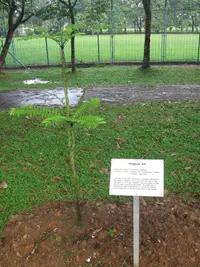
Tie young, flexible stems loosely to a central stake or bamboo cane to encourage a tall, tree-like form and prevent the canopy from leaning as it gains height.

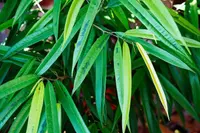
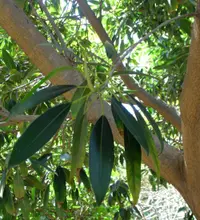
Alii fig, Ficus maclellandii, is a broadleaf evergreen tree commonly grown indoors as a tall, narrow houseplant. It is part of the fig genus but has long, slender leaves that give it a softer, more graceful look than the rubber tree or fiddle leaf fig.
In nature, it occurs in parts of Southeast Asia, where it grows as a full-sized tree in warm, humid conditions. Indoors it adapts reasonably well, though it dislikes sudden changes in light, temperature, or placement.
It is considered moderately easy if its basic needs are met. Stable bright indirect light, evenly moist but not waterlogged soil, and good drainage are the main points to remember when learning how to care for Alii fig.

Care Difficulty
Moderate Care

Light Preference
Bright Indirect Light

Water Requirements
Moderate Water

Temperature Preference
Tropical / Frost Sensitive

Hardiness Zone
10–12

Soil Texture
Loamy, Sandy, Organic-rich

Soil pH
Acidic (5.5–6.5), Slightly acidic (6.5–7.0)

Soil Drainage
Moist but well-drained

Fertilization
Light (every 4–6 weeks)
Scan your plant to receive care tips personalized for your specific plant
Available on iOS and Android
Ficus maclellandii prefers bright, indirect light that mimics lightly shaded woodland edges.
This species prefers evenly moist but not saturated soil, with short dry periods between waterings.
This fig thrives in stable, warm conditions without sudden temperature swings.
This species prefers moderate household humidity and reacts if air is very dry.
Ficus maclellandii grows best in a loose, airy, fast-draining potting medium.
This ficus is well suited to container growing when the pot supports its upright, often top-heavy form.
This species benefits from moderate, consistent feeding during active growth for balanced foliage and root development.
Ficus maclellandii responds well to light structural pruning to maintain size and encourage denser growth.
This ficus prefers slightly snug pots but benefits from periodic repotting to refresh the root zone and substrate.
Ficus maclellandii is most commonly propagated from semi-hardwood stem cuttings under warm, humid conditions.
This plant is frost-sensitive and needs mild, stable conditions during winter, especially in container culture.

Plant Health Check
Not sure what's wrong with your plant? Check your plant's health inside the app.
This species has unusually long, narrow leaves that resemble willow foliage, which is why it is often called the Alii or willow-leaf fig rather than being confused with the broader-leaved rubber figs or fiddle-leaf figs.
In parts of its native range in Southeast Asia, this fig can begin life as an epiphyte, germinating in leaf litter caught in tree branches before sending roots downward to the ground.
For many years plants in cultivation were sold under incorrect names or as Ficus binnendijkii, and taxonomic work only more recently clarified which cultivated forms actually belong to Ficus maclellandii.

Some cultivated forms such as Ficus maclellandii 'Alii' and 'Amstel King' were originally selected in Hawaii and Florida for their tolerance of indoor light levels and relatively low leaf-drop compared with other ornamental figs, which has made them standard choices for Alii fig indoor care in offices and public buildings.
Brown leaf tips or edges usually result from low humidity, irregular watering, or excess fertilizer salts. Check soil moisture, flush the pot occasionally with plain water, and increase humidity with a pebble tray or humidifier if air is very dry.
Keep your plants happy and healthy with plant identification, disease detection, and easy care guidance.