Sturdy container choice
Use a wide, heavy pot rather than a tall, narrow one so the shallow, fibrous root system and large fronds do not make the plant top-heavy and prone to tipping over.

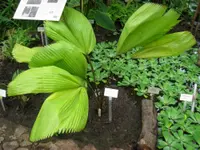
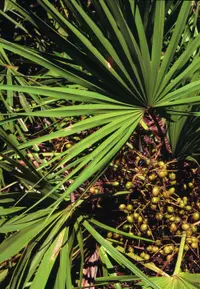
Ruffled fan palm, Licuala grandis, is a small, slow-growing tropical palm valued for its round, pleated, fan-shaped leaves. It usually grows with a single slender trunk and a compact crown, which makes it suitable for containers and sheltered garden spots.
This species is native to the rainforests of Vanuatu, where it grows in warm, shaded, and humid understories. Its need for steady warmth, high humidity, and protection from strong sun or wind makes it more demanding than many common houseplants.
Gardeners who learn how to care for Ruffled fan palm often grow it in bright, filtered light with evenly moist, well-draining soil and good air circulation.

Care Difficulty
Hard Care

Light Preference
Bright Indirect Light

Water Requirements
Keep Soil Moist

Temperature Preference
Tropical / Frost Sensitive

Hardiness Zone
11–12

Soil Texture
Loamy, Peaty, Organic-rich

Soil pH
Acidic (5.5–6.5), Slightly acidic (6.5–7.0)

Soil Drainage
Moist but well-drained

Fertilization
Light (every 4–6 weeks)
Scan your plant to receive care tips personalized for your specific plant
Available on iOS and Android
This palm performs best in bright, soft light that mimics filtered tropical sun.
This palm prefers evenly moist, not soggy, soil and reacts quickly to inconsistent watering.
This species is a true tropical palm and needs consistently warm, stable temperatures.
This species needs consistently high humidity to keep its large, pleated leaves healthy and intact.
This palm prefers a loose, moisture-retentive yet airy mix that never stays waterlogged.
This palm is well suited to container growing when given a stable, deep pot that manages moisture carefully.
Licuala grandis benefits from light but consistent feeding in the warm growing season.
Licuala grandis needs minimal pruning focused on leaf health and safety rather than shaping.
This palm prefers stable conditions, so repot only when clear signs show the container is too small.
Licuala grandis is most often propagated from seed, which is slow and requires patience and controlled conditions.
This palm is frost-sensitive and needs protective winter care in climates cooler than tropical or subtropical zones.

Plant Health Check
Not sure what's wrong with your plant? Check your plant's health inside the app.
This palm is native to lowland rainforests of Vanuatu, where it grows as an understory plant in warm, shaded, very humid conditions beneath taller trees.
Its almost perfectly circular leaves are divided into stiff, fan-like segments with pleated veins, an adaptation that helps shed heavy tropical rainfall efficiently while maximizing light capture in shade.
Unlike many palms that form clumps, this species typically develops a single slender trunk and grows slowly, often remaining trunkless or with only a short visible stem for many years in cultivation.

In its native habitat on Pacific islands, this species can form small, localized populations in rainforest clearings and streamside areas, making wild stands vulnerable to habitat disturbance and over-collection, so many horticultural specimens now come from nursery propagation rather than wild harvest.
This species is slow-growing, usually adding only 5–15 cm of trunk or overall height per year in cultivation. Growth is fastest in warm, humid, sheltered conditions with consistently moist soil and regular, balanced fertilization during the growing season.
Keep your plants happy and healthy with plant identification, disease detection, and easy care guidance.