Evergreen spindle Care (Euonymus japonicus)

Also known as: Evergreen Spindle

About Evergreen spindle

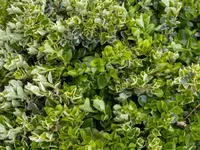
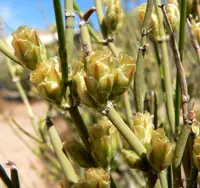
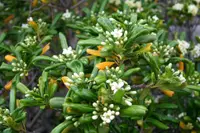
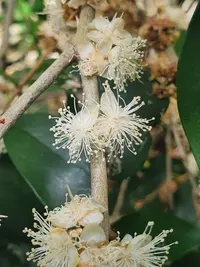
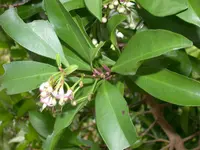
Evergreen spindle, Euonymus japonicus, is a dense, upright shrub often used for hedges, topiary, and foundation plantings. It keeps its glossy green leaves all year. Native to Japan, Korea, and China, it adapts well to many temperate landscapes and urban conditions. Variegated forms with cream or yellow margins are common in gardens. The plant tolerates pruning, wind, and city pollution, which makes it versatile in small and large spaces. It prefers moderately fertile, well-drained soil and regular moisture, with sun to light shade. These traits make it relatively straightforward for gardeners learning how to care for Evergreen spindle.

Main Plant Requirements

Care Difficulty

Moderate Care

Light Preference

Partial Sun

Water Requirements

Moderate Water

Temperature Preference

Cold Hardy

Hardiness Zone

6–9

Soil Texture

Sandy, Loamy, Clay

Soil pH

Slightly acidic (6.5–7.0), Slightly alkaline (7.0–7.5)

Soil Drainage

Moist but well-drained

Fertilization

Minimal (feed rarely)

Get Personalized Care Plan

Scan your plant to receive care tips personalized for your specific plant

Personalized Care in the App

Available on iOS and Android

How to Care for the Evergreen spindle

Euonymus japonicus grows best with bright conditions and can handle a range of outdoor exposures.

  • Provide 4–6 hours of direct sun daily, ideally with morning sun and light afternoon shade to reduce leaf scorch in hot summers.
  • Tolerates partial shade, but dense shade leads to sparse growth and dull leaf color, especially in variegated Evergreen spindle cultivars.
  • In cooler climates, full sun is suitable; in hotter regions, protect from strong afternoon sun using neighboring plants, fences, or dappled tree shade.

Euonymus japonicus prefers evenly moist, well-drained soil rather than constant wetness.

  • Allow the top 3–5 cm of soil to dry before deep watering; soil should feel cool and slightly moist below the surface, not soggy.
  • Increase watering during hot, dry periods and reduce in fall and winter, aiming to prevent complete soil drying between rains.
  • Watch for yellowing, soft leaves as a sign of overwatering and dry, crisp leaf edges or premature leaf drop as signs of underwatering.

This species is generally hardy and handles a wide temperature range when established outdoors.

  • Optimal growth occurs around 60–75°F (16–24°C), supporting steady foliage development and recovery from pruning.
  • Mature plants usually tolerate down to about 10–15°F (-12–-9°C); young or newly planted shrubs benefit from mulch to protect roots in colder snaps.
  • In hot summers above 90°F (32°C), provide soil moisture and light shade, as prolonged heat and dry wind can scorch leaves and stress the plant.

This shrub manages well in typical indoor humidity but performs best with slightly moist air.

  • Aim for 40–60% humidity; it tolerates drier air but growth may slow and leaf edges can brown.
  • Crisp leaf margins, dull foliage, and slowed new growth indicate humidity stress in Evergreen spindle.
  • Increase humidity by grouping plants, placing a water tray with pebbles nearby, or running a small room humidifier.

This species prefers a structured, free-draining soil that still retains moderate moisture.

  • Use a loamy mix with 40–60% mineral content (garden loam or sand) and 40–60% organic matter such as compost or fine bark for Euonymus japonicus.
  • Ensure sharp drainage by adding coarse sand or perlite at 10–20% of the volume, especially in heavier clay-based mixes.
  • Target a slightly acidic to neutral pH around 6.0–7.0, avoiding strongly acidic or alkaline conditions that reduce nutrient availability.
  • Avoid compacted, waterlogged, or pure clay soils; incorporate organic matter and grit to improve aeration and root health.

This shrub is suitable for long-term container growing on patios, balconies, or entryways.

  • Choose a heavy, wide-based pot to prevent wind tipping, since the shrub can become dense and top-heavy over time.
  • Select a container deep enough to allow a broad, fibrous root system, generally at least 30–40 cm tall for mature specimens.
  • Use a potting mix that drains faster than in-ground soil, and elevate the container slightly so drainage holes never sit in standing water.

Euonymus japonicus benefits from moderate, consistent feeding during the active growing season.

  • Use a balanced slow-release fertilizer (such as 10-10-10) or well-matured compost in spring to support new growth.
  • Apply granular slow-release around the drip line every 8–10 weeks through late summer, following label rates.
  • For container plants, use a balanced liquid fertilizer at 1/2 strength every 4–6 weeks in spring and summer.
  • Stop feeding Evergreen spindle in late summer and avoid fertilizing in winter to prevent soft, frost-prone growth.

Pruning helps keep Euonymus japonicus dense, healthy, and within its desired size.

  • Carry out main pruning in late winter or very early spring before strong new growth begins.
  • Remove dead, diseased, crossing, or inward-growing stems first to improve air flow and light penetration.
  • Shorten overly long shoots to maintain shape, creating a slightly tapered outline wider at the base.
  • Use clean, sharp bypass pruners and make cuts just above a leaf node to encourage branching.

This shrub is usually grown in the ground, but container plants and new plantings benefit from careful transplanting.

  • Look for roots circling the pot, water running straight through, or slowed growth as signs a container plant needs a larger pot.
  • Plan transplanting or repotting for early spring or early fall when temperatures are mild and stress is lower.
  • Expect container-grown plants to need a size upgrade about every 2–3 years, using a free-draining shrub or tree mix.
  • Water thoroughly before and after moving, loosen circling roots gently, and keep the root ball evenly moist for several weeks.

Euonymus japonicus is commonly propagated from semi-ripe stem cuttings for consistent, named forms.

  • Take 8–10 cm semi-ripe cuttings in late summer from healthy, non-flowering shoots.
  • Remove lower leaves, dip the cut end in rooting hormone, and insert into a moist, free-draining mix of perlite and peat or fine bark.
  • Maintain high humidity with a clear cover and provide bright, indirect light at 65–75°F for steady rooting.
  • For layering, bend a low flexible stem to the soil, pin and lightly cover a section, then sever once well rooted.

Established Euonymus japonicus is generally cold hardy in mild to moderate winters but benefits from some protection in colder regions.

  • In zones colder than its rated hardiness, apply a 5–8 cm mulch layer around the root zone, keeping it away from the stems.
  • Shield exposed plants from drying winter winds with a breathable burlap screen or wrap if necessary.
  • Move container plants to a sheltered, unheated but frost-free spot, such as a garage or cold porch, during severe freezes.

Care Tips

Salt‑tolerant placement

In coastal or roadside areas with winter de‑icing, position plants where windbreaks, hedges, or fences reduce direct salt spray and rinse foliage with plain water after storms to prevent leaf burn and edge dieback.

Hedge density management

When establishing a hedge, lightly pinch back new shoot tips several times in the first 2–3 growing seasons to encourage dense branching from the base instead of letting stems grow long and sparse.

Targeted pest scouting

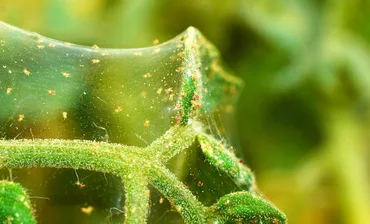
Check the undersides of leaves and inner stems every 2–3 weeks in warm weather for scale insects and spider mites, and treat small colonies early with a labeled horticultural oil before they spread through the whole planting.

Variegation maintenance

On variegated cultivars, promptly remove any strong-growing all‑green shoots at their origin on the stem so they do not overtake the patterned foliage and shade the rest of the plant.

Winter root protection

In cold climates or exposed containers, apply a 5–8 cm mulch layer over the root zone and group pots together against a sheltered wall to buffer freeze–thaw cycles, which supports long‑term success when growing Evergreen spindle.

Common Pests and Diseases

Euonymus scale

This pest appears as small white or brown shell-like bumps along stems and leaf surfaces, often causing yellowing and premature leaf drop. Heavy infestations can weaken branches and reduce new growth.

Solution

Prune out and dispose of heavily infested stems, then gently scrub remaining scale with a soft brush or cloth dipped in soapy water or a 1–2% horticultural oil solution. For persistent problems, use a labeled systemic insecticide in spring when crawlers are active and avoid plant stress by following consistent Euonymus japonicus care guidelines.

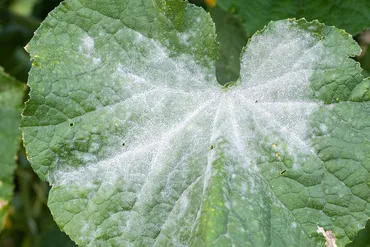
Powdery mildew

This disease causes white, talc-like patches on leaves, often starting on young growth and shaded areas. Symptoms include distorted new leaves and reduced vigor over time.

Solution

Improve air circulation by thinning crowded branches and avoiding overhead watering, especially late in the day. Remove the most affected leaves and, if needed, apply a sulfur or potassium bicarbonate fungicide labeled for ornamentals at the first signs of infection, repeating as directed in humid periods.

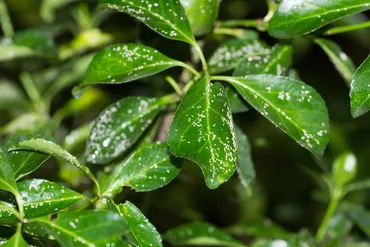
Anthracnose leaf spot

This disease produces tan to dark brown spots with purple or darker margins, which can merge into larger dead patches on leaves. Infected foliage may yellow and drop early, giving the shrub a thin appearance.

Solution

Rake and discard fallen leaves, and prune out badly affected shoots to reduce inoculum. Water at soil level, keep the canopy less dense, and use a copper- or chlorothalonil-based fungicide labeled for landscape shrubs if spotting recurs during wet weather.

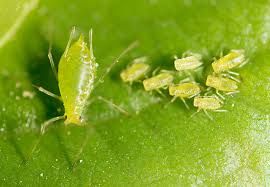
Aphids

These insects cluster on shoot tips and leaf undersides, sucking sap and causing curled, sticky foliage covered with honeydew and sometimes black sooty mold. New growth can appear distorted and stunted.

Solution

Spray infested shoots with a strong stream of water to dislodge colonies, then treat remaining aphids with insecticidal soap or a light horticultural oil, repeating every 5–7 days as needed. Encourage natural predators such as lady beetles where possible and avoid high-nitrogen fertilization that drives soft, aphid-prone growth.

Crown gall

This disease causes hard, irregular, tumor-like galls on stems near the soil line, which can restrict water movement and lead to gradual decline. Affected plants may show reduced vigor, dieback, and poor new growth over several seasons.

Solution

Remove and destroy severely affected plants, including as much of the root system and surrounding soil as practical, and avoid replanting Euonymus in the same spot for several years. For mild cases, cut out small galls well below the affected tissue with sterilized tools, improve overall plant vigor with proper watering and fertilization, and avoid wounding stems and roots to reduce new infections.

Interesting Facts

Coastal wind tolerance

This species naturally tolerates salty sea air and strong coastal winds, which is why it is widely planted in seaside towns and along shorelines as a shelterbelt shrub.

Clonal hedge formation

The shrub forms dense, multi-stemmed clumps from its base, allowing it to create very compact, almost wall-like hedges when repeatedly pruned.

Evergreen leaf longevity

Individual leaves can persist for several seasons, so the shrub maintains a stable canopy of foliage even in mild winters, which is a key benefit for Euonymus japonicus plant care in temperate gardens.

Botan icon

Did you know?

In several regions such as parts of the southeastern United States, this species has escaped cultivation and is considered invasive, forming thickets in woodlands and displacing native understory plants.

FAQs about Evergreen spindle

Yellowing leaves usually come from water stress, nutrient deficiency, or poor drainage. Check soil moisture, improve drainage, and consider a balanced slow‑release fertilizer. Also inspect roots for rot and foliage for scale or aphids.

Grow Healthy Plants with Botan Care

Keep your plants happy and healthy with plant identification, disease detection, and easy care guidance.


Botan plant care app — identify plants on mobile

Explore More Plants