


Root-bound signaling
Use the plant’s slight bulging of tuberous roots at the soil line as a cue to repot, shifting it only 1–2 in wider every 3–4 years to avoid excessive unused substrate that can stay wet too long.

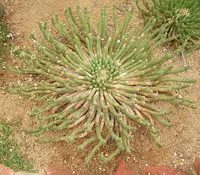
Porcupine vingerpol (Euphorbia inermis) is a small, clump-forming succulent from arid regions of South Africa. It grows from a central tuberous base that sends up many upright, finger-like stems. The smooth, leafless stems create a dense, architectural mound that stays compact and slow-growing indoors. This species suits growers who like unusual forms but prefer a plant that does not outgrow its space quickly. It is moderately easy to grow if its need for bright light and very sharp drainage is respected. Understanding how to care for Porcupine Vingerpol starts with treating it more like a desert cactus than a leafy houseplant.

Care Difficulty
Easy Care

Light Preference
Full Sun

Water Requirements
Low Water

Temperature Preference
Tropical / Frost Sensitive

Hardiness Zone
10–11

Soil Texture
Sandy, Loamy, Rocky

Soil pH
Slightly acidic (6.5–7.0), Neutral (7.0)

Soil Drainage
Well-drained

Fertilization
Minimal (feed rarely)
Scan your plant to receive care tips personalized for your specific plant
Available on iOS and Android
This succulent prefers bright, direct sun but tolerates some light shade in hot regions.
This species is drought-tolerant and needs infrequent, careful watering to avoid root rot.
This plant prefers warm, dry conditions and is sensitive to frost and prolonged cold.
Humidity is rarely critical for Euphorbia inermis, which thrives in typical indoor air.
This species needs a very fast-draining, mineral-based mix to prevent root rot.
This species is very suitable for container growing due to its compact, tuberous root system.
This succulent Euphorbia needs modest feeding, as Porcupine Vingerpol is adapted to lean, sandy soils.
Pruning Euphorbia inermis is mainly done to maintain a compact, healthy clump rather than to control vigorous growth.
Container-grown plants appreciate infrequent repotting that focuses on root health and drainage.
Propagation is most reliable from stem cuttings taken during warm, active growth.
This species is sensitive to hard frost and benefits from simple winter precautions in cooler climates.

Plant Health Check
Not sure what's wrong with your plant? Check your plant's health inside the app.
This species forms a multi-headed underground caudex, a swollen stem base that stores water and nutrients and produces many short, finger-like branches from a central crown.
Unlike many spiny succulent euphorbias, this species is spineless, yet its white latex sap is still toxic and can cause significant skin and eye irritation if not handled carefully.
In its native South African habitat it is primarily a winter grower, developing new shoots and leaves in the cooler, wetter months and resting or partially retreating in the hot, dry summer.

This species is naturally restricted to arid parts of South Africa’s Eastern and Western Cape provinces, where it often grows in very shallow, stony soils on exposed slopes, demonstrating a high level of adaptation to intense sun and limited water.
Growth is generally slow. New heads and stem segments appear gradually over several years, not months. Expect modest yearly increase in clump size. Faster growth comes from stable warmth, strong light, and consistent but conservative watering, not heavy feeding.
Keep your plants happy and healthy with plant identification, disease detection, and easy care guidance.

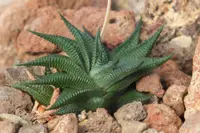
Fairy Washboard
Haworthiopsis limifolia
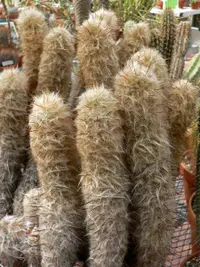
Old Man of the Mountain
Oreocereus trollii
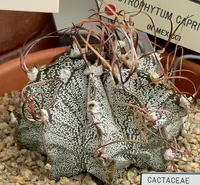
Goat's Horn Cactus
Astrophytum capricorne
Corsican Stonecrop
Sedum dasyphyllum
Jewel-leaf plant
Graptopetalum amethystinum
 POPULAR
Tasteless Stonecrop
Sedum sexangulare
 POPULAR
Ruens Haworthia
Haworthia retusa

Palmer's Sedum
Sedum palmeri