Bamboo Palm Care (Chamaedorea seifrizii)

Also known as: Reed Palm, Bamboo Palm

About Bamboo Palm

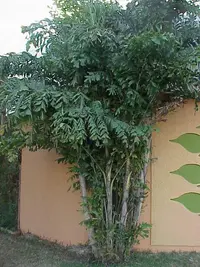
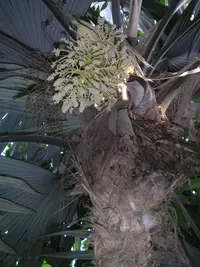
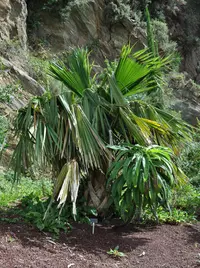
Bamboo palm, Chamaedorea seifrizii, is a compact clumping palm commonly grown indoors for its upright canes and fine, feathered fronds. It has a soft, bamboo-like look that suits offices and homes.

In nature it occurs in shaded, humid forests of Central America, which explains its preference for indirect light and evenly moist, well-drained soil.

The plant grows slowly and adapts well to containers, which makes it suitable for beginners who want to learn how to care for Bamboo Palm without complex routines. Its tolerance of low light and indoor conditions is one of its main strengths.

Main Plant Requirements

Care Difficulty

Moderate Care

Light Preference

Bright Indirect Light

Water Requirements

Moderate Water

Temperature Preference

Tropical / Frost Sensitive

Hardiness Zone

10–11

Soil Texture

Loamy, Peaty, Organic-rich

Soil pH

Acidic (5.5–6.5), Slightly acidic (6.5–7.0)

Soil Drainage

Moist but well-drained

Fertilization

Light (every 4–6 weeks)

Get Personalized Care Plan

Scan your plant to receive care tips personalized for your specific plant

Personalized Care in the App

Available on iOS and Android

How to Care for the Bamboo Palm

Chamaedorea seifrizii prefers bright, filtered light that mimics understory forest conditions.

  • Provide 6–8 hours of bright, indirect light each day, such as near an east- or north-facing window or in dappled outdoor shade.
  • Tolerates partial shade, but very low light leads to thin, stretched stems and sparse foliage over several months.
  • Avoid harsh midday or afternoon sun, which scorches leaves; in summer move slightly farther from windows or provide sheer curtain filtration.

This species prefers evenly moist but not saturated soil, with short dry intervals at the surface.

  • Water when the top 2–4 cm of soil feels dry, using thorough watering until excess drains away, then empty saucers within 10–15 minutes.
  • Reduce frequency in winter when growth slows, allowing slightly deeper drying, while avoiding complete bone-dry soil for extended periods.
  • Watch for yellowing lower leaves and a musty smell as signs of overwatering, and crisp brown tips or folding leaflets as signs of underwatering.

Stable, warm conditions support consistent growth and prevent stress in this palm.

  • Aim for 65–80°F (18–27°C) for best growth, avoiding frequent swings of more than 10°F (6°C) in a short period.
  • Protect from cold drafts and temperatures below 55°F (13°C), as light leaf damage can occur, and prolonged exposure below 40°F (4°C) may kill stems.
  • Tolerates brief heat up to about 90°F (32°C) if humidity is moderate and soil does not fully dry; in heat waves, increase airflow and check soil moisture more often.

This species prefers moderate, stable humidity and reacts when air stays too dry.

  • Aim for 40–60% humidity to keep foliage dense and tips green.
  • Tolerates typical heated indoor air but prolonged levels under 30% often cause brown tips and leaf-edge crisping.
  • Increase humidity with a nearby humidifier, grouping plants, or a wide pebble tray, rather than misting, which offers only brief benefit for Bamboo Palm.

This palm prefers a loose, airy, organic-rich mix that drains quickly but holds some moisture.

  • Use a peat- or coco coir-based potting mix with added compost, perlite, and fine bark to create a crumbly, loamy structure.
  • Ensure fast drainage so water runs freely from the pot within seconds and the mix never stays waterlogged.
  • Keep pH slightly acidic to neutral, around 6.0–7.0, which supports nutrient uptake for Chamaedorea seifrizii.
  • Avoid dense garden soil, heavy clay, or mixes with a high proportion of fine sand that compact and limit root oxygen.

This species is well suited to container growing for homes and shaded patios.

  • Choose a pot that is wider than it is deep to support the clumping stems and reduce tipping risk as the plant gains height.
  • Select a sturdy, slightly heavier container material, such as ceramic, to stabilize tall foliage in areas with drafts or foot traffic.
  • Elevate the pot on feet or a stand so drainage holes stay clear and excess water can exit quickly from the container base.

This palm responds well to light, consistent feeding during the active growing season.

  • Use a balanced liquid fertilizer (for example 10-10-10) at 1/2 strength every 4–6 weeks in spring and summer for Bamboo Palm indoor care.
  • Choose either diluted liquid feed or slow-release pellets; do not apply both heavily at once.
  • Pause or reduce feeding to 1/4 strength every 8–10 weeks in fall and winter.
  • Always water lightly before fertilizing to limit root burn and salt buildup.

Pruning keeps Chamaedorea seifrizii tidy and reduces disease risk.

  • Best time is late winter to early spring, before strong new growth starts.
  • Remove brown, yellow, dead, or damaged fronds at their base with clean, sharp pruners.
  • Thin crowded stems slightly to open the clump and improve air flow and light penetration.
  • Avoid cutting green, healthy fronds from the crown, as this slows growth and weakens the plant.

This palm prefers to stay slightly root-bound and does not need frequent repotting.

  • Repot every 2–3 years or when roots circle the pot, push up from drainage holes, or growth slows noticeably.
  • Plan repotting for spring, using a container only 2–5 cm wider with well-drained, peat-free potting mix.
  • Water thoroughly the day before, then handle the root ball gently and disturb roots as little as possible.
  • After repotting, water once to settle soil, keep in bright indirect light, and avoid fertilizing for 4–6 weeks.

Propagation of this palm is usually done by division rather than from cuttings.

  • Best time is in spring, when repotting established clumps of Chamaedorea seifrizii.
  • Separate offshoots that have several healthy stems and their own root section using a clean, sharp knife.
  • Pot divisions into small containers with airy, well-drained mix and keep at 70–80°F in bright indirect light.
  • Maintain evenly moist but not waterlogged soil and high humidity to support new root growth.

This tropical palm is frost-sensitive and needs protection in cool climates.

  • Keep indoor plants at 60–75°F, away from cold drafts, heaters, and frequently opened exterior doors.
  • In USDA zones below 10, grow in containers and move indoors before temperatures drop near 40°F.
  • For outdoor plants in mild climates, mulch 5–8 cm around the root zone, keeping mulch off the stems.

Care Tips

Cluster cane management

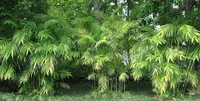
Periodically thin out the oldest, bare canes at the base with clean pruners to keep the clump open, improve air flow, and reduce risk of spider mites in the dense interior.

Rotating for symmetry

Rotate the pot 90° every 2–3 weeks so new fronds develop evenly around the plant, preventing a one-sided, leaning clump that becomes hard to re-balance later.

Hidden support staking

For tall, floppy canes, insert slim bamboo stakes inside the clump and loosely tie several stems together with soft ties to stabilize the plant without visibly altering its natural look.

Proactive pest inspection

Once a month, inspect the undersides of leaflets and where canes meet the soil with a hand lens, so early spider mite or scale activity can be treated before it spreads through the whole plant while caring for Bamboo Palm.

Gradual repot division

When the clump becomes overcrowded, divide it only during active growth by separating a few outer canes with intact roots and potting them separately, rather than splitting the entire root mass at once.

Common Pests and Diseases

Spider mites

This pest feeds on palm leaf sap and is common on indoor bamboo palms in warm, dry air. Symptoms include fine webbing, tiny yellow speckling, and dull, dusty-looking fronds.

Solution

Rinse both sides of the fronds thoroughly with lukewarm water or shower the plant to remove mites, then repeat every few days for 2–3 weeks. Increase humidity, reduce heat stress, and, if needed, apply insecticidal soap or neem oil, ensuring full coverage of leaf undersides and stems.

Scale insects

These insects appear as small, dome-shaped brown or tan bumps on stems and leaf midribs, often causing sticky honeydew and sooty mold. Infestations can weaken bamboo palm canes and lead to gradual yellowing and leaf drop.

Solution

Manually remove visible scale with a cotton swab dipped in isopropyl alcohol, then wash the foliage and stems with water and mild insecticidal soap. Inspect joints between canes regularly and repeat treatments every 7–10 days until new growth remains clean.

Mealybugs

This pest hides in leaf bases and along stems, forming white, cottony clusters that excrete sticky honeydew. Symptoms include distorted new growth, yellowing, and a general decline in vigor.

Solution

Isolate the plant, then wipe or dab mealybugs with cotton pads or swabs dipped in isopropyl alcohol, paying special attention to leaflet bases and cane junctions. Follow with a thorough spray of insecticidal soap or neem oil and repeat weekly until no new insects appear.

Fusarium leaf spot

This disease causes elongated, reddish-brown spots with yellow halos along the leaflets, which may coalesce and lead to premature frond browning. Symptoms include most damage on lower, older leaves in conditions of high moisture and poor air circulation.

Solution

Remove and discard heavily spotted fronds, keep foliage dry by watering at the soil level, and improve air movement around the plant. Avoid overhead misting, reduce crowding, and if spread continues, use a palm-safe fungicide according to label directions as part of broader Chamaedorea seifrizii care.

Pink rot

This disease, often caused by Gliocladium or related fungi, attacks weakened bamboo palms, leading to soft, rotting tissues at the base of fronds and canes, sometimes with salmon-pink fungal growth. Symptoms include sudden collapse of fronds and brown, mushy areas at the crown or along canes.

Solution

Immediately cut out and discard all affected fronds and soft tissue, sterilizing tools between cuts. Improve drainage, avoid overwatering and wetting the crown, reduce crowding, and consider a preventive fungicide labeled for palms if conditions remain humid and the plant has previously shown symptoms.

Interesting Facts

Naturally clustering stems

This palm forms tight clumps of many slender, reed-like stems from a shared root system, creating a bamboo-like appearance that is unusual among small understory palms of Central America.

Deep-shade specialist

In its native habitats of Mexico and Central America, it grows as an understory palm in lowland forests, adapted to very low light beneath taller canopy trees.

Air-cleaning research subject

It was one of the specific palms evaluated in early NASA and subsequent lab studies on indoor air quality, where it was noted for its potential to remove certain volatile organic compounds under controlled conditions.

Botan icon

Did you know?

In its native range, this species is sometimes used as a living screen or hedge plant in shaded gardens and along building walls, because its dense clumps and upright, cane-like stems create a semi-transparent green barrier that tolerates low light better than many other hedge species.

FAQs about Bamboo Palm

Brown tips usually result from low humidity, underwatering, or salt buildup from fertilizer or hard water. Trim dry tips with clean scissors, flush the soil occasionally, and maintain stable moisture and moderate indoor humidity.

Grow Healthy Plants with Botan Care

Keep your plants happy and healthy with plant identification, disease detection, and easy care guidance.

Botan plant care app — identify plants on mobile

Explore More Plants