Rotate For Symmetry
Rotate the container or adjust the plant’s orientation by 90° every 4–6 weeks so the crown receives even light and develops a balanced, radial rosette instead of leaning toward one side.


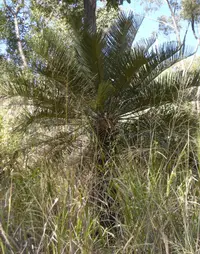
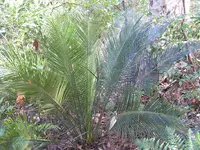
Sago palm (Cycas revoluta) is a slow-growing, long-lived cycad, not a true palm, valued for its symmetrical rosette of stiff, glossy fronds. It forms a thick, rounded trunk over time and usually stays compact, which makes it popular as a container and landscape specimen.
In nature, it occurs in southern Japan and nearby islands, where it grows in warm, well-drained, often rocky sites. Its tolerance of drought and general toughness make it durable, but its slow growth and sensitivity to overwatering mean it is not the easiest plant for beginners.
It prefers bright light, free-draining soil, and moderate moisture, so anyone who wants to care for Sago palm must focus on avoiding waterlogged conditions.

Care Difficulty
Moderate Care

Light Preference
Full Sun

Water Requirements
Moderate Water

Temperature Preference
Warm Climate

Hardiness Zone
9–11

Soil Texture
Sandy, Loamy, Rocky

Soil pH
Acidic (5.5–6.5), Slightly acidic (6.5–7.0)

Soil Drainage
Well-drained

Fertilization
Minimal (feed rarely)
Scan your plant to receive care tips personalized for your specific plant
Available on iOS and Android
Cycas revoluta thrives in bright light with some protection from harsh midday sun.
This species prefers thorough watering followed by a drying period, supported by sharply draining soil.
This cycad favors warm, stable conditions but tolerates short cool spells if kept dry.
Cycas revoluta prefers moderately dry air and only occasionally needs attention to humidity indoors.
Cycas revoluta requires sharply drained, mineral-based soil to prevent root and caudex rot.
This species is well suited to long-term container growing due to its slow, compact root system.
Cycas revoluta grows slowly and needs modest, controlled feeding for healthy fronds and a strong root system.
Cycas revoluta needs minimal pruning focused on safety, health, and maintaining a clean rosette form.
Container-grown Cycas revoluta dislikes frequent disturbance, so repotting is infrequent and should be done carefully.
Cycas revoluta is most reliably propagated from offsets, with seed propagation used mainly by advanced growers and nurseries.
Cycas revoluta is only marginally cold hardy and requires specific winter care in climates with freezing temperatures.

Plant Health Check
Not sure what's wrong with your plant? Check your plant's health inside the app.
Cycas revoluta belongs to the cycads, an evolutionarily ancient group of gymnosperms that arose long before flowering plants and coexisted with early dinosaurs. Its cones, not flowers, produce naked seeds without a protective fruit around them.
Individual plants are either male or female, producing only one type of reproductive structure. Male plants form elongated, central pollen cones, while female plants develop a rosette of leaf-like megasporophylls that carry exposed ovules.
All parts of the plant, especially the seeds, contain potent toxins such as cycasin and neurotoxic amino acids. These compounds help deter herbivores but make the plant dangerous to pets and humans if ingested.

This species can exhibit a remarkable survival strategy by resprouting from its subterranean stem after events such as fire or severe cold damage, allowing the plant to persist for many decades and sometimes longer than a human lifespan.
Older fronds naturally yellow and die as new growth emerges. Widespread yellowing, especially on newer leaves, often indicates nutrient deficiency, root stress, or chronic overwatering. Check drainage, avoid waterlogged soil, and consider a balanced, slow-release palm fertilizer.
Keep your plants happy and healthy with plant identification, disease detection, and easy care guidance.