


Basket mounting
Grow plants in open wooden baskets or coarse mesh containers so the thick roots can hang freely, which improves air movement and reduces rot in humid climates.

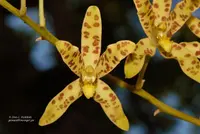
Leopard orchid, Ansellia africana, is a striking epiphytic orchid known for its tall, cane-like pseudobulbs and showy yellow flowers marked with brown or maroon spots. Mature plants can form large clumps, often creating a basket-like mass of roots when grown mounted or in open containers.
This species is native to tropical and subtropical Africa, where it grows on trees in bright, airy conditions. It is considered moderately challenging, mainly because it needs strong light, good air movement, and a clear dry and wet rhythm. Understanding how to care for Leopard orchid helps prevent root problems and encourages regular flowering.

Care Difficulty
Hard Care

Light Preference
Partial Sun

Water Requirements
Moderate Water

Temperature Preference
Tropical / Frost Sensitive

Hardiness Zone
11–12

Soil Texture
Sandy, Organic-rich

Soil pH
Acidic (5.5–6.5), Slightly acidic (6.5–7.0)

Soil Drainage
Well-drained

Fertilization
Moderate (every 2–4 weeks)
Scan your plant to receive care tips personalized for your specific plant
Available on iOS and Android
Ansellia africana prefers strong, bright light similar to open woodland edges.
This orchid prefers a wet–dry cycle rather than constantly moist roots.
This species thrives in consistently warm, frost-free conditions.
This species prefers moderate to high humidity and shows stress if kept too dry for long periods.
Ansellia africana needs a coarse, airy orchid medium rather than standard potting soil.
This orchid adapts well to container culture when the pot supports its extensive root system and tall canes.
Ansellia africana benefits from moderate, targeted feeding to support vigorous cane growth and flowering.
Pruning Ansellia africana focuses on removing spent or unhealthy growth while keeping the clump open and functional.
Ansellia africana prefers tight conditions but benefits from careful repotting or division when clearly root-bound or declining.
Propagation of Ansellia africana is usually done by division, using mature, multi-cane clumps.
Ansellia africana is a warmth-loving orchid that needs protection from cold and frost in most climates.

Plant Health Check
Not sure what's wrong with your plant? Check your plant's health inside the app.
In the wild, this species often grows as an epiphyte high in tree canopies, where its dense, basket-like roots trap leaf litter and form natural "ant gardens" that house ant colonies and other small organisms.
Unlike many orchids, this species is semi-deciduous and may shed a portion of its leaves in the dry season, an adaptation that reduces water loss in its native African savanna and woodland habitats.
The yellow, brown-spotted flowers are not only visually distinctive but also strongly scented, especially in warm conditions, which helps attract specific pollinators over distance.

Historically, the thick, wiry roots of this orchid were sometimes harvested in parts of southern Africa and used as a traditional material to make durable fishing nets and cordage due to their notable strength and flexibility.
Lack of flowers usually comes from insufficient light, no cool, drier rest after flowering, or too much nitrogen fertilizer. Provide bright filtered light, a slight winter dry period, and use balanced orchid fertilizer to support blooming.
Keep your plants happy and healthy with plant identification, disease detection, and easy care guidance.

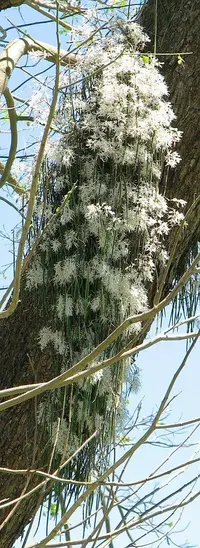
Thin Pencil Orchid
Dendrobium teretifolium

Yellow-Vein Eranthemum
Pseuderanthemum maculatum
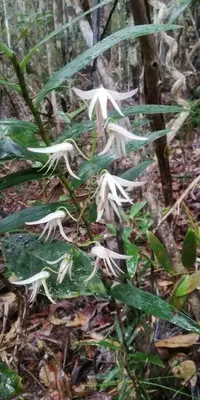
Dendrobium fractiflexum
Dendrobium fractiflexum

narrowleaf evening primrose
Oenothera fruticosa
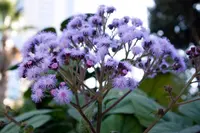
flat-top whiteweed
Ageratum corymbosum

Shell ginger
Alpinia zerumbet

Anthurium Rancho Ruffles
Anthurium plowmanii
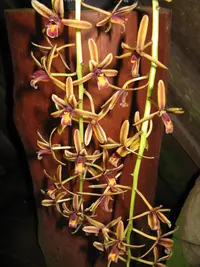
Finlayson's Cymbidium
Cymbidium finlaysonianum