Chenille plush plant Care (Echeveria pulvinata)

About Chenille plush plant

Echeveria pulvinata, commonly called chenille plush plant, is a compact, shrubby succulent prized for its soft, fuzzy leaves. The foliage is covered in fine hairs that give it a velvety, plush look and reduce water loss.

This species comes from arid regions of Mexico, where it grows in bright, dry, rocky habitats. Its slow, tidy growth habit and modest size make it well suited to indoor pots and small collections.

Echeveria pulvinata is generally easy to grow if given strong light, well-draining soil, and careful watering. These traits make it a good choice for those learning how to care for Chenille plush plant.

Main Plant Requirements

Care Difficulty

Easy Care

Light Preference

Full Sun

Water Requirements

Low Water

Temperature Preference

Tropical / Frost Sensitive

Hardiness Zone

10–11

Soil Texture

Sandy, Loamy, Rocky

Soil pH

Slightly acidic (6.5–7.0), Neutral (7.0)

Soil Drainage

Well-drained

Fertilization

Minimal (feed rarely)

Get Personalized Care Plan

Scan your plant to receive care tips personalized for your specific plant

Personalized Care in the App

Available on iOS and Android

How to Care for the Chenille plush plant

This succulent needs bright light to stay compact, colorful, and healthy.

  • Provide 6–8 hours of bright sun daily, ideally with morning sun and light afternoon shade in hot, dry climates.
  • Tolerates very light partial shade, but growth of the Chenille plush plant becomes looser and leaf fuzz thins if light stays below 4–5 hours of sun.
  • Protect from intense afternoon sun behind glass, which can scorch leaves; shift to slightly shadier exposure during peak summer and maximize sun access in winter.

This species prefers infrequent, deep watering and thorough drying between waterings.

  • Water only when the top 3–5 cm of soil are completely dry; in warm growing seasons this may mean every 7–14 days, but always check the soil first.
  • Use very fast-draining, gritty soil so water runs through in seconds and no puddling remains around the roots or in rosettes.
  • Reduce watering sharply in cool seasons; soft, translucent, or mushy leaves suggest overwatering, while wrinkled, very thin leaves indicate the need for a careful soak.

Stable, warm conditions support dense, healthy growth for this succulent.

  • Aim for 65–80°F (18–27°C) during active growth, with slightly cooler nights to mimic its native climate and encourage compact rosettes.
  • It tolerates short dips to about 30–32°F (-1–0°C) if dry, but repeated frost damages foliage; protect from freezing rain and prolonged cold, especially in containers.
  • In hot summers above 90°F (32°C), provide light afternoon shade and good airflow to limit heat stress and prevent leaf scorch on fuzzy surfaces.

This succulent prefers dry indoor air and rarely needs humidity adjustment.

  • Aim for 30–40% humidity, similar to most heated or air-conditioned homes.
  • Dry air is tolerated well; avoid frequent misting, which can sit on the fuzzy leaves and invite rot.
  • Watch for soft, collapsing leaves or dark leaf spots after prolonged dampness, and improve airflow around the Chenille plush plant.

This species needs a very fast-draining, gritty mix that dries quickly between waterings.

  • Use a cactus/succulent base mix blended with coarse sand or fine gravel for a loose, sandy texture.
  • Ensure rapid drainage by adding 30–50% perlite or pumice so water does not linger around the roots.
  • Keep pH slightly acidic to neutral, around 6.0–7.0, which suits most commercial succulent mixes.
  • Avoid dense, peat-heavy or compost-rich mixes that stay wet and reduce aeration around the root zone.

This species is well suited to container growing when excess moisture is controlled carefully.

  • Choose a shallow, wide pot so the spreading rosettes stay stable and excess mix can dry evenly.
  • Use unglazed terracotta when possible, as the porous walls help moisture evaporate faster from the root zone.
  • Raise the pot on feet or a stand so drainage holes are unobstructed and runoff can escape immediately.

This succulent benefits from light feeding during active growth but stays compact even with minimal fertilizer.

  • Use a balanced liquid fertilizer (around 10-10-10) diluted to 25–50% strength for Chenille plush plant in spring and summer.
  • Apply every 4–6 weeks only when the soil is moist to limit root burn and salt buildup.
  • Skip compost-heavy mixes; choose low-organic, cactus or succulent-friendly products instead.
  • Stop feeding in fall and winter, when growth slows, to avoid weak, stretched tissue.

Pruning Echeveria pulvinata focuses on cleanliness and shape rather than heavy cutting.

  • Best timing is late winter to early spring, before strong new growth starts.
  • Snip off dead, shriveled, or damaged leaves at the base with clean, sharp scissors or small pruners.
  • Remove crowded or etiolated rosettes to keep the plant compact and encourage denser new growth.
  • After flowering, trim spent flower stalks close to the rosette to redirect energy to foliage and offsets.

This succulent prefers a snug pot and needs repotting only when clearly rootbound or declining.

  • Look for roots circling the pot, pushing through drainage holes, or noticeably slow growth as cues to repot.
  • Plan to move the plant into fresh, gritty cactus mix every 2–3 years, ideally in spring.
  • Choose a container just 2–3 cm wider, with excellent drainage, to limit excess moisture around roots.
  • Gently loosen circling roots, let any broken roots callus 1–2 days, then water lightly after potting to reduce stress.

New plants are most often produced from offsets and stem or leaf cuttings rather than seed.

  • Take offsets or short stem cuttings in late spring–summer, when growth and rooting are strongest.
  • Allow cut surfaces to dry and callus for 1–3 days before planting to reduce rot risk.
  • Set cuttings or leaves on barely moist, gritty mix in bright, indirect light with good air movement.
  • Keep soil just slightly damp until roots and small rosettes form, then transition to normal succulent watering.

Cold conditions demand specific winter care to maintain healthy, compact growth.

  • Treat Echeveria pulvinata as frost sensitive; sustained exposure below 32°F can damage leaves and roots.
  • In cold climates, grow in containers and move indoors or into a greenhouse before the first hard frost.
  • Place indoors in the brightest possible spot and keep temperatures around 55–70°F with dry-ish soil.
  • Reduce watering sharply in winter, allowing the mix to dry nearly completely between light waterings.

Care Tips

Seasonal light shift

Rotate the pot by 90° every 2–3 weeks and move it slightly closer to the light source in late fall and winter to keep rosettes compact and evenly shaped as natural light levels drop.

Strategic offset removal

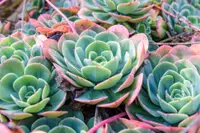
Use a clean, sharp blade to remove well-rooted offsets from the outer ring of the clump in late spring, then let the cuts callus for 2–3 days before replanting to maintain an attractive mother plant and produce healthy propagules.

Crown protection from splashing

When watering nearby plants or cleaning shelves, shield the rosette with your hand or a piece of cardboard so no water or cleaning solution splashes into the fuzzy leaves, which helps prevent spotting and rot in the dense hairs.

Targeted pest monitoring

Check the leaf bases and the woolly undersides with a hand lens every few weeks, and at the first sign of mealybugs or scale, isolate the plant and treat only the affected areas with a cotton swab dipped in 70% isopropyl alcohol.

Controlled outdoor acclimation

If moving the plant outdoors for summer, start it in bright shade for 5–7 days and then increase sun exposure by about 30–60 minutes every few days to avoid scorch and stress while growing Chenille plush plant in stronger light conditions.

Common Pests and Diseases

Mealybugs

This pest often hides in leaf axils and along the fuzzy stems, sucking sap and causing stunted, distorted growth and sticky honeydew. Symptoms include cottony white clumps that are easy to overlook in the plant’s hairs.

Solution

Isolate the plant, then dab visible mealybugs with cotton swabs dipped in 70% isopropyl alcohol and repeat weekly until clear. Rinse the plant gently, improve light and airflow, and for larger infestations use a labeled insecticidal soap or neem oil spray, taking care not to oversaturate the soil.

Aphids

These insects gather on tender new growth and flower stalks, feeding on sap and causing curling, yellowing, and sticky residue that can attract sooty mold. The soft foliage tips of this species are especially attractive when the plant is in active growth or flowering.

Solution

Move the plant away from others and hose or shower off affected areas with a gentle but firm stream of water. Follow with applications of insecticidal soap every 5–7 days for 2–3 cycles and avoid excess nitrogen fertilizer, which encourages soft growth that aphids prefer.

Spider mites

This pest thrives in warm, dry air and can be hard to spot on the plant’s fuzzy leaves, causing pale stippling, dulling of the foliage, and very fine webbing. Symptoms include slow decline and patchy discoloration that may look like sun stress at first.

Solution

Increase humidity slightly around the plant without keeping leaves wet, then rinse all leaf surfaces under lukewarm water, including the undersides. Follow up with repeated applications of neem oil or a miticide labeled for houseplants every 7–10 days, and keep the plant in bright light to support recovery.

Edema

This disorder occurs when roots absorb water faster than the leaves can transpire it, leading to small corky spots or blisters on the thick leaves. Symptoms include rough, raised patches that do not rub off and are often seen after sudden changes in watering or humidity.

Solution

Allow the soil to dry more thoroughly between waterings and avoid sudden heavy soakings after a dry period. Provide strong light, good airflow, and use a very free-draining succulent mix so that water moves quickly through the pot.

Fungal leaf spots

This disease develops when moisture lingers on the hairy leaves, causing circular brown or black lesions that may enlarge and merge over time. Symptoms include spotting that often starts on lower or crowded leaves, especially in low light or poor airflow.

Solution

Remove and discard affected leaves, then improve spacing, airflow, and light, and avoid wetting the foliage when watering. If spots continue to spread, apply a copper-based or sulfur-based fungicide labeled for succulents, following directions carefully and keeping the plant on the dry side afterward.

Interesting Facts

Velvety sun protection

The leaves are densely covered in fine hairs that scatter intense sunlight and reduce water loss, an adaptation to its native high-light, semi-arid habitats in Oaxaca, Mexico.

Red-tipped coloration

Under strong light and cooler, drier conditions, the leaf margins and tips develop a distinct red edge caused by increased production of protective pigments called anthocyanins.

Clonal rosette clusters

This species naturally forms tight clumps by producing offsets around the mother rosette, allowing it to spread slowly over rocky slopes and create small, stabilizing mats in its habitat.

Botan icon

Did you know?

In its native range in Mexico, this species often grows on well-drained volcanic or rocky soils at higher elevations, where cool nights and strong sun together shape its compact, densely pubescent rosettes and distinctive red coloration patterns.

FAQs about Chenille plush plant

Leggy, stretched growth usually develops when light is slightly too low or coming strongly from one direction. Rotate the pot regularly and move it to a brighter position, then lightly prune elongated stems to encourage more compact rosettes.

Grow Healthy Plants with Botan Care

Keep your plants happy and healthy with plant identification, disease detection, and easy care guidance.


Botan plant care app — identify plants on mobile

Explore More Plants