Rose-painted Calathea Care (Goeppertia roseopicta)

About Rose-painted Calathea

Rose-painted calathea is a compact, evergreen tropical plant grown mainly for its patterned foliage rather than flowers. It belongs to the Marantaceae family, often called prayer plants because many species fold their leaves at night.

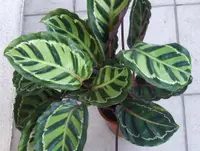
Goeppertia roseopicta typically forms a low clump of broad, oval leaves with dark green to purplish surfaces marked by pale pink or cream feathered patterns. The undersides are usually rich purple, giving the plant strong visual contrast.

In nature, it occurs on the shaded forest floor of tropical South America, so it prefers warm, stable indoor conditions. Humidity needs, sensitivity to cold drafts, and dislike of dry soil make it moderately demanding, so learning how to care for Rose-painted Calathea is important for long-term success.

Main Plant Requirements

Care Difficulty

Moderate Care

Light Preference

Bright Indirect Light

Water Requirements

Keep Soil Moist

Temperature Preference

Tropical / Frost Sensitive

Hardiness Zone

11–12

Soil Texture

Loamy, Peaty, Organic-rich

Soil pH

Acidic (5.5–6.5), Slightly acidic (6.5–7.0)

Soil Drainage

Moist but well-drained

Fertilization

Light (every 4–6 weeks)

Get Personalized Care Plan

Scan your plant to receive care tips personalized for your specific plant

Personalized Care in the App

Available on iOS and Android

How to Care for the Rose-painted Calathea

This tropical understory plant prefers soft, filtered light that mimics dappled forest shade.

  • Provide 8–10 hours of bright, indirect light each day, such as near an east- or north-facing window with a sheer curtain.
  • Tolerates partial shade, but in very low light leaves may lose contrast and new growth becomes sparse on Rose-painted Calathea.
  • Avoid direct midday or afternoon sun, which can cause brown, scorched patches; shift slightly farther from windows in summer when sun intensity increases.

Watering should keep the root zone evenly moist but never saturated.

  • Before watering, let the top 2–3 cm of soil dry; use a finger test rather than a fixed schedule to guide frequency.
  • Choose a loose, well-draining mix and a pot with drainage holes to reduce the risk of root rot from prolonged soggy conditions.
  • In warm, bright months, expect faster drying and slightly more frequent watering; in cooler, lower-light periods, slow down if leaves droop yet soil still feels wet.

Stable, warm conditions support healthy foliage color and growth.

  • Aim for 65–80°F (18–27°C) as the main growing range, with the best growth often around 70–75°F (21–24°C).
  • Protect from temperatures below 60°F (16°C); prolonged exposure near 50°F (10°C) can cause leaf yellowing, edge browning, and slowed growth.
  • Goeppertia roseopicta tolerates brief highs up to about 85°F (29°C) if humidity stays high and soil does not dry out fully, but it is not frost hardy.

This species needs consistently high humidity to keep leaves smooth and prevent edge damage.

  • Aim for 60–80% humidity; leaf edges brown and curl inward when air stays drier than about 50%.
  • Rose-painted Calathea tolerates brief dips to 40–50% if soil moisture is stable and drafts are avoided.
  • Increase humidity with grouped plants, a room humidifier, or a wide pebble tray where water evaporates around the pot.

This plant prefers a loose, humus-rich potting medium that holds moisture but drains quickly.

  • Use a peat- or coco-coir-based mix with added perlite and fine orchid bark to create a fibrous, airy structure.
  • Aim for slightly acidic to neutral pH, around 6.0–7.0, which supports nutrient uptake without leaf burn.
  • Improve drainage and aeration by ensuring at least 30–40% of the mix is chunky material such as perlite, bark, or pumice.
  • Avoid heavy garden soil, unamended compost, or mixes that stay waterlogged, which promote root rot and suffocation in Goeppertia roseopicta.

This species is very suitable for container growing due to its shallow, fibrous root system and compact spread.

  • Choose a pot that is wider than it is deep so roots can spread laterally without sitting in a thick, wet column of soil.
  • Select non-porous materials like glazed ceramic or plastic if the plant is in a warm, dry room, to slow moisture loss from the mix.
  • Ensure drainage holes are large and unobstructed so water exits within seconds of watering rather than pooling at the base.

Nutrient inputs support steady foliage growth in Rose-painted Calathea but must stay gentle and dilute.

  • Use a balanced liquid fertilizer (for example 10-10-10 or 20-20-20) at 1/4–1/2 strength to avoid leaf burn.
  • Feed every 4–6 weeks in spring and summer when growth is active, skipping any application on stressed plants.
  • Stop or reduce to 1 light feeding during fall and winter, as Goeppertia roseopicta slows growth in low light.
  • Flush the pot with plain water every 2–3 months to limit salt buildup from fertilizers.

Pruning needs for Goeppertia roseopicta are light and focused on hygiene rather than reshaping the plant.

  • Trim yellow, brown, or torn leaves at the base year-round using clean, sharp scissors to limit infection risk.
  • Remove dead or weak outer leaves in spring to encourage light and air into the center of the clump.
  • Cut only individual leaf stalks, never the central crown, to maintain the plant’s natural rosette form.
  • Wipe blades with alcohol before and after use to avoid spreading leaf spot or other fungal problems.

Container-grown plants stay healthier when repotted carefully and not kept rootbound for long periods.

  • Check every 1–2 years; dense roots circling the pot, slow growth, or quick drying soil indicate Goeppertia roseopicta needs a larger container.
  • Plan repotting for late spring or early summer, when warmth and longer days help the root system recover.
  • Choose a pot only 2–5 cm wider, using a loose, airy, peat-free mix with added fine bark or perlite.
  • Slip the root ball out gently, loosen circling roots with fingers, keep the crown at the same depth, then water and keep in shade for 3–5 days.

New plants are usually produced by division rather than by seed for this species.

  • Divide mature clumps of Goeppertia roseopicta in late spring or early summer, when active growth supports recovery.
  • Unpot the plant, gently tease apart natural sections, ensuring each division has several healthy leaves and roots.
  • Plant divisions into small pots with moist, airy mix, then keep at 70–80°F with high humidity and bright, indirect light.
  • Cover with a clear dome or bag with vents to maintain moisture while still allowing some air exchange.

This tropical species is not frost hardy and demands indoor winter care in most climates.

  • Keep Goeppertia roseopicta indoors when outdoor temperatures approach 55°F, as foliage is damaged by colder air.
  • Maintain 65–75°F indoors with stable conditions, avoiding drafts from windows or heating vents.
  • Provide bright, indirect light and slightly reduce watering while never allowing the root ball to fully dry.
  • Raise humidity to 50–70% with trays or humidifiers to limit winter leaf edge browning.

Care Tips

Stable pot weight

Use a slightly heavier ceramic or clay cachepot around the plastic nursery pot to keep the plant stable and reduce the risk of stems snapping if it is bumped or the leaves become top-heavy.

Prevent salt buildup

Every 4–6 weeks, water thoroughly until at least 30–40% of the pot volume drains out to flush excess fertilizer salts that can burn leaf edges on this salt-sensitive species.

Leaf cleaning routine

Wipe both sides of the leaves gently with a damp, soft cloth every 2–4 weeks to remove dust, improve photosynthesis, and reduce hiding spots for mites and other pests.

Draft and vent management

Position the plant out of the direct path of HVAC vents, space heaters, and frequently opened exterior doors, as repeated blasts of dry or cool air cause marginal leaf browning and curling.

Quarantine and inspection

When adding new houseplants, keep them in a separate area for 2–3 weeks and inspect undersides of leaves with a hand lens so that caring for Rose-painted Calathea is not complicated by imported spider mites or mealybugs.

Common Pests and Diseases

Spider mites

This pest thrives on Goeppertia roseopicta in dry air and causes fine stippling, dull leaves, and delicate webbing on leaf undersides. Symptoms include slowed growth and leaves that lose their vivid patterns and look dusty or faded.

Solution

Rinse leaves thoroughly with lukewarm water, focusing on the undersides, then repeat every few days for 2–3 weeks to break the life cycle. Increase humidity to 50–60%, isolate the plant, and if needed use a neem oil or insecticidal soap spray labeled for indoor foliage plants, applied according to directions.

Fungus gnats

These insects are attracted to the consistently moist, organic-rich potting mixes typically used for Rose-painted Calathea and their larvae feed on fine roots. Symptoms include tiny black flies around the pot and slow, weak growth in very wet soil.

Solution

Allow the top 2–3 cm of the potting mix to dry slightly between waterings while still protecting the plant from full dryness, and remove any decaying plant material on the surface. Use yellow sticky traps for adults and, if the infestation persists, treat the soil with a biological control containing Bacillus thuringiensis israelensis (BTI) or beneficial nematodes following label instructions.

Leaf spot disease

This disease shows as irregular brown or dark purple spots with yellowish halos on the decorative leaves, often starting on older foliage. Symptoms include spots enlarging over time and, in severe cases, sections of the leaf collapsing or drying out.

Solution

Promptly remove and discard affected leaves, cutting back into healthy tissue with clean, disinfected scissors, and avoid getting water on the foliage when irrigating. Improve air movement around the plant, keep leaves dry, and in persistent cases use a copper- or sulfur-based fungicide labeled for indoor ornamentals, following dosage and safety instructions carefully.

Edema

This physiological disorder appears when roots absorb water faster than leaves can transpire, a situation common in Goeppertia roseopicta kept in low light and heavy soil. Symptoms include small, corky, blister-like bumps or rough patches on lower leaves, sometimes with yellowing around affected areas.

Solution

Reduce watering frequency slightly so the top layer of soil dries before watering again, and ensure the pot has drainage holes and a loose, airy mix. Provide stable temperatures, moderate indirect light, and avoid sudden shifts from very dry to very wet soil to prevent new lesions, as existing damage will not reverse.

Broad or cyclamen mites

These microscopic pests distort the tender new leaves that Goeppertia roseopicta relies on for its ornamental value, leading to twisted, hardened, or undersized foliage. Symptoms include tight, deformed emerging leaves, dull coloration, and a rough or puckered texture near the growth point without visible webbing.

Solution

Isolate the plant immediately, remove and discard the most deformed new leaves, and rinse the crown area thoroughly with lukewarm water. Maintain higher humidity, improve overall plant vigor, and if distortion continues, apply a miticide or insecticidal soap specifically labeled for broad or cyclamen mites, repeating at the interval stated on the product label.

Interesting Facts

Night leaf postures

This species performs pronounced nyctinasty, folding its patterned leaves upward along the midrib each evening, which makes the contrasting pink midribs and undersides more visible at night.

Patterned for shade

Its distinctive rose-pink central band and feathered markings are believed to help optimize light capture on the forest floor by breaking up direct light and spreading it across the lamina surface.

Taxonomic name change

Formerly known as Calathea roseopicta, this species was reassigned to the genus Goeppertia after molecular studies showed that traditional Calathea included several unrelated lineages.

Botan icon

Did you know?

In its native Amazonian understory, this species typically grows in the dappled light just inside forest edges and along small clearings, where falling leaf litter and constantly decomposing organic matter create the loose, humus-rich soils that it is evolutionarily adapted to exploit.

FAQs about Rose-painted Calathea

Brown, crispy edges usually come from low humidity, irregular watering, or excess fertilizer salts. Increase humidity, water when the top layer just starts to dry, flush the pot occasionally, and keep it away from hot or cold drafts.

Grow Healthy Plants with Botan Care

Keep your plants happy and healthy with plant identification, disease detection, and easy care guidance.

Botan plant care app — identify plants on mobile

Explore More Plants