Rotate For Symmetry
Turn the pot 90° every 2–3 weeks so stems receive light from all sides and develop an even, upright, and compact form rather than leaning toward one direction.

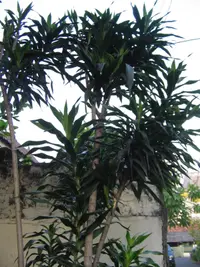
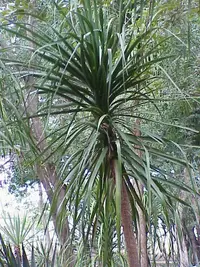
Suji, botanically known as Dracaena angustifolia, is a compact, woody shrub often grown indoors for its neat, upright form and narrow, glossy leaves. It stays relatively slender, so it suits small spaces and simple interiors.
In nature it occurs in tropical Asia, where it grows in warm, shaded forest edges. This background explains its preference for bright, indirect light and evenly moist but not waterlogged soil.
The plant is generally considered low-maintenance, with slow to moderate growth and good tolerance of typical indoor conditions. These traits make it straightforward to care for Suji for most home and office owners.

Care Difficulty
Easy Care

Light Preference
Bright Indirect Light

Water Requirements
Moderate Water

Temperature Preference
Tropical / Frost Sensitive

Hardiness Zone
10–12

Soil Texture
Loamy, Sandy, Organic-rich

Soil pH
Acidic (5.5–6.5), Slightly acidic (6.5–7.0)

Soil Drainage
Well-drained

Fertilization
Light (every 4–6 weeks)
Scan your plant to receive care tips personalized for your specific plant
Available on iOS and Android
Dracaena angustifolia grows best in bright, indirect light that mimics its understory habitat.
Watering for this species focuses on allowing partial drying between soakings to protect the roots.
Stable, warm conditions support steady growth and reduce stress for this species.
This species prefers moderate indoor humidity but usually tolerates typical home air.
This species grows best in a loose, fast-draining, organic-rich mix that resists compaction.
This species is well suited to container growing in homes and offices.
Dracaena angustifolia responds well to modest, controlled feeding when grown in containers.
Pruning supports a clean shape and controlled height for Dracaena angustifolia.
Container-grown plants benefit from periodic repotting to maintain root health.
Dracaena angustifolia is commonly propagated by stem cuttings rather than seeds.
This tropical species is frost-sensitive and needs protection in cold climates.

Plant Health Check
Not sure what's wrong with your plant? Check your plant's health inside the app.
This species naturally forms dense, bamboo-like clumps of very narrow, linear leaves, which is why it is often described as reed dracaena in horticultural literature.
It is naturally distributed in lowland swamp forests and wet thickets across Southeast Asia, where it grows in periodically waterlogged but still aerated soils along streams and forest edges.
In cultivation it is often confused with other narrow-leaved Dracaena species, so correct identification relies on details such as its thin, flexible stems and the arrangement and width of the leaves rather than leaf color alone.

In several parts of Southeast Asia, this species is frequently planted as a low, linear hedge or boundary marker around rice paddies and home gardens because its stiff, upright clumps form a durable living fence that tolerates humid, monsoonal conditions.
Brown tips or edges usually come from low humidity, fluoride or salts in tap water, or inconsistent watering. Use filtered or distilled water, keep soil lightly moist but not wet, and trim damaged tips with clean scissors.
Keep your plants happy and healthy with plant identification, disease detection, and easy care guidance.