Silver Dollar Vine Care (Xerosicyos danguyi)

About Silver Dollar Vine

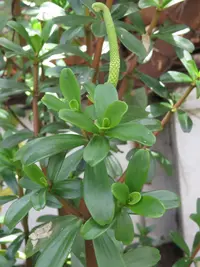
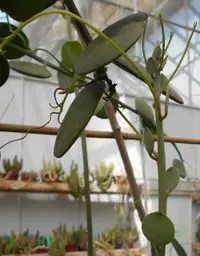
Silver dollar vine, Xerosicyos danguyi, is a drought-tolerant succulent climber from Madagascar. It belongs to the cucumber family but has thick, rounded leaves that store water. The plant grows with woody, twining stems that can climb or trail, making it suitable for hanging containers or supported pots. Its silvery green, coin-shaped leaves give a distinctive, architectural look. This species is adapted to rocky, dry habitats, so it prefers bright light, good airflow, and very well-drained soil. Once established, it is relatively forgiving of occasional neglect, which helps simplify how to care for Silver Dollar Vine.

Main Plant Requirements

Care Difficulty

Easy Care

Light Preference

Full Sun

Water Requirements

Low Water

Temperature Preference

Tropical / Frost Sensitive

Hardiness Zone

10–11

Soil Texture

Sandy, Loamy, Rocky

Soil pH

Slightly acidic (6.5–7.0), Neutral (7.0)

Soil Drainage

Well-drained

Fertilization

Minimal (feed rarely)

Get Personalized Care Plan

Scan your plant to receive care tips personalized for your specific plant

Personalized Care in the App

Available on iOS and Android

How to Care for the Silver Dollar Vine

This succulent vine prefers bright, dry conditions with strong but not harsh sun.

  • Provide 4–6 hours of direct morning sun plus bright, indirect light for the rest of the day, especially for Silver Dollar Vine in containers.
  • Outdoors, give full sun with light afternoon shade in very hot climates to prevent leaf scorch and excessive shriveling.
  • In low light, stems stretch and leaves space out; move the plant gradually to a brighter spot, especially from late fall to early spring.

This drought-tolerant species stores water in its leaves and stems, so it prefers infrequent, deep watering.

  • Allow the top 3–5 cm of soil to dry completely before watering, then soak thoroughly so excess drains away, especially in fast-draining cactus mix.
  • Reduce watering sharply in winter, only when the soil is dry well below the surface, as growth slows and roots are prone to rot.
  • Signs of overwatering include yellowing, translucent, or mushy leaves; hard, wrinkled leaves and limp vines indicate Xerosicyos danguyi needs water.

This plant thrives in warm, dry conditions typical of its arid origin.

  • Aim for 65–80°F (18–27°C) for active growth, with good airflow in summer to prevent heat buildup around the foliage.
  • Protect from cold below 40°F (4°C); brief dips to 35°F (2°C) may be tolerated, but frost can damage leaves and young stems.
  • In hot climates above 90°F (32°C), give light afternoon shade and avoid heat-reflecting surfaces that can overheat roots and foliage.

This drought-adapted succulent tolerates low household humidity and rarely needs special humidity management.

  • Ideal humidity is 30–50%, matching most heated or air-conditioned homes.
  • Silver Dollar Vine handles dry air well; leaf shriveling or soft, wrinkled discs usually reflect underwatering, not humidity stress.
  • If air is extremely dry and hot, reduce leaf stress by shading from intense sun and watering slightly more frequently rather than adding humidity.

Xerosicyos danguyi needs a fast-draining, mineral-rich mix that mimics arid, rocky soils.

  • Use a gritty, sandy mix such as 50–60% cactus mix blended with coarse pumice, perlite, or horticultural grit.
  • Aim for slightly acidic to neutral pH around 6.0–7.0, which suits most succulent-focused commercial mixes.
  • Ensure water runs through in seconds and the pot feels noticeably lighter within a day, confirming strong drainage and aeration.
  • Avoid heavy peat, clay, or compacted mixes that stay wet, as these promote root rot and inhibit oxygen reaching the roots.

This species is well suited to container growing for controlled drainage and root conditions.

  • Choose a wide, shallow pot that allows spreading roots while preventing the vine from becoming top-heavy and tipping over.
  • Select unglazed terracotta if extra evaporation is needed to keep the mix dry between waterings.
  • Use a pot weight or low, broad container profile to stabilize trailing stems and climbing support structures in windy or high-traffic areas.

This drought-adapted succulent needs modest feeding to stay compact and healthy when grown as a houseplant or patio specimen.

  • Use a balanced liquid succulent or cactus fertilizer (around 10-10-10 or 20-20-20) diluted to 25–50% strength.
  • Feed Silver Dollar Vine every 4–6 weeks during spring and summer while growth is active.
  • Avoid fertilizing in late fall and winter when growth slows or stops.
  • Apply only to already-moist soil to limit root burn and salt buildup.

Pruning Xerosicyos danguyi is mainly done to control size and keep the vines tidy.

  • Carry out pruning in late winter or early spring before active growth resumes.
  • Remove dead, damaged, or shriveled stems first, then thin very crowded or tangled vines.
  • Shorten overly long shoots to encourage branching and a fuller, more compact plant.
  • Use clean, sharp scissors or pruning snips and cut just above a node or branching point.

This succulent vine has a modest root system and prefers infrequent repotting in a well-drained mix.

  • Check for roots circling the pot, emerging from drainage holes, or for slowed growth as signals to repot.
  • Plan repotting in spring, moving to a container only 2–3 cm wider to avoid excess wet soil.
  • Refresh with a gritty cactus or succulent mix, handling the roots gently to minimize damage.
  • Let roots dry for 1–2 days after repotting, then water lightly to reduce stress and encourage recovery.

Xerosicyos danguyi is most often propagated from stem cuttings under warm, bright conditions.

  • Take 7–10 cm semi-firm stem cuttings in late spring or early summer, including several nodes.
  • Allow cut ends to dry and callus for 2–3 days before planting into a gritty, barely moist mix.
  • Provide bright, indirect light, 70–80°F warmth, and very light watering to promote rooting.
  • For seeds, use a sandy mix, keep slightly moist, and maintain warmth for slow but steady germination.

This tender succulent is not frost hardy and needs thoughtful winter management in cool climates.

  • Move container plants indoors before temperatures drop near 40°F, giving bright, indirect light.
  • Maintain indoor temperatures around 60–75°F and keep soil almost dry between light waterings.
  • In mild climates, use a very free-draining site and a gravel mulch to insulate the root zone.
  • Avoid cold drafts and prolonged exposure near single-pane windows to prevent chilling damage.

Care Tips

Use sturdy supports

Provide a rigid trellis, wire frame, or hanging grid that can handle woody, heavy vines so older stems do not snap under their own weight as they lignify and thicken over time.

Encourage branching

Pinch or lightly tip-prune soft growing tips in spring to stimulate side shoots, which creates a fuller plant and distributes the weight of the vines more evenly along the support.

Root cuttings strategically

When a vine becomes too long or bare at the base, air-layer or take cuttings from the healthiest mid-stem sections and root them back into the same pot to rejuvenate and thicken the planting.

Optimize potting depth

Set the plant slightly deeper in the pot than a typical succulent, just enough to cover the upper roots, to stabilize the woody base and reduce the risk of the plant toppling as vines extend.

Monitor weight and tilt

For hanging baskets, periodically check the balance of the pot and rotate it 90° every few weeks so the vine mass develops evenly and does not stress hooks or bend stems on one side when growing Silver Dollar Vine.

Common Pests and Diseases

Mealybugs

This pest feeds on succulent stems and leaves, sucking sap and causing slowed growth, yellowing, and sticky honeydew. Symptoms include cottony white clusters tucked into stem joints or along the round leaves.

Solution

Isolate the plant, then dab visible mealybugs with cotton swabs dipped in 70% isopropyl alcohol and gently wipe affected areas. Follow with a thorough rinse, improve light and airflow, and repeat alcohol or insecticidal soap treatments weekly until no new insects appear; for persistent outbreaks on Xerosicyos danguyi plant care, a systemic insecticide labeled for succulents can be used according to directions.

Spider mites

These insects favor the dry conditions often used for this succulent and can cause fine webbing, stippled leaves, and dull, grayish discoloration. Symptoms include tiny moving dots on the undersides of leaves and gradual leaf drop in severe cases.

Solution

Shower the plant with a firm stream of lukewarm water to remove mites and webbing, then treat all surfaces with insecticidal soap or a light horticultural oil, ensuring good coverage on leaf undersides. Raise humidity slightly around the plant without keeping the soil wet, increase air movement, and repeat treatments every 5–7 days until no mites remain.

Scale insects

This pest appears as small, rounded or oval bumps stuck to stems and sometimes leaves, often matching the plant’s gray-green color. Symptoms include sticky honeydew, sooty mold growth on the honeydew, and weakened, slow growth over time.

Solution

Gently scrape or lift individual scales off with a fingernail or soft tool and wipe stems with a cloth lightly moistened with 70% isopropyl alcohol. After manual removal, apply insecticidal soap or horticultural oil to all stems and repeat every 1–2 weeks until new growth stays clean.

Corky stem lesions

This disease is usually fungal or bacterial and shows as small sunken or corky brown spots on stems, sometimes enlarging into rough, cracked patches. Symptoms include localized tissue drying, slight stem distortion, and slow spread along crowded, poorly ventilated growth.

Solution

Cut out and discard affected stem sections back to healthy tissue using sterilized tools, then allow cuts to dry in bright, indirect light. Improve airflow, space the vines, avoid wetting stems during watering, and if the problem persists, apply a copper-based fungicide or broad-spectrum succulent-safe fungicide according to label instructions.

Edema

This disorder is physiological, not infectious, and appears as small corky blisters or raised rough patches on leaves or stems where cells burst from excess internal water pressure. Symptoms include localized scarring but usually limited spread if watering is corrected.

Solution

Allow the potting mix to dry more between waterings and avoid sudden heavy soaking when the plant has been kept very dry or cool. Provide strong light, keep temperatures stable, and use a fast-draining succulent mix so water passes quickly through the pot, preventing repeated swelling of tissues.

Interesting Facts

Unusual leaf structure

This species has nearly round, coin-like leaves that are actually thickened succulent organs adapted to store water, an unusual trait in the cucumber family (Cucurbitaceae).

Climbing succulent vine

Unlike many succulents that grow as rosettes or shrubs, it grows as a twining vine that uses wiry stems to scramble over rocks and shrubs in its native Madagascar habitat.

Specialized drought survival

The plant combines water-storing leaves with a swollen, woody base (caudex) and a waxy leaf surface, all of which help reduce water loss in the dry spiny thickets where it naturally occurs.

Botan icon

Did you know?

In its native southwestern Madagascar, this species often grows on exposed, rocky limestone slopes in harsh, seasonally arid conditions, acting as a pioneer plant that can establish in very poor, shallow soils where few other broad-leaved vines can survive.

FAQs about Silver Dollar Vine

Yellowing leaves usually result from excess moisture around the roots, compacted or poorly draining soil, or prolonged low light. Check for soggy mix, let it dry more between waterings, and remove any soft, rotting roots.

Grow Healthy Plants with Botan Care

Keep your plants happy and healthy with plant identification, disease detection, and easy care guidance.

Botan plant care app — identify plants on mobile

Explore More Plants