Japanese banana Care (Musa basjoo)

Also known as: Japanese fibre banana, Hardy banana

About Japanese banana

Japanese banana, Musa basjoo, is a hardy ornamental banana grown mainly for its bold, tropical-looking foliage rather than for edible fruit. It forms clumps of thick pseudostems with large, paddle-shaped leaves that create a lush, architectural presence in gardens or large containers.

This species originates from East Asia and is valued in cooler climates because it can survive much lower temperatures than most bananas when protected at the roots. It grows fast in warm conditions and can reach impressive height in a few seasons.

It is considered relatively easy to grow if given bright light, consistent moisture, and fertile, well-drained soil. Learning how to care for Japanese banana helps maintain strong growth and healthy leaves.

Main Plant Requirements

Care Difficulty

Moderate Care

Light Preference

Full Sun

Water Requirements

Keep Soil Moist

Temperature Preference

Cold Hardy

Hardiness Zone

5–11

Soil Texture

Loamy, Sandy, Organic-rich

Soil pH

Acidic (5.5–6.5), Slightly acidic (6.5–7.0)

Soil Drainage

Moist but well-drained

Fertilization

Heavy (weekly, diluted)

Get Personalized Care Plan

Scan your plant to receive care tips personalized for your specific plant

Personalized Care in the App

Available on iOS and Android

How to Care for the Japanese banana

Musa basjoo grows fastest with abundant direct sun but also tolerates some shade.

  • Provide 6–8 hours of direct sun daily, ideally strong morning sun with lighter afternoon exposure to limit leaf scorch.
  • In hot climates, give Japanese banana light shade after 2–3 p.m. or filtered light through taller plants to reduce heat stress and leaf burn.
  • In late fall and winter, accept slower growth as sun angle drops; remove nearby shade or debris so plants still receive at least 4–5 hours of sun.

Musa basjoo prefers evenly moist but not waterlogged soil during active growth.

  • Water deeply when the top 3–5 cm of soil feels dry, aiming for moisture that reaches the root zone rather than frequent shallow watering.
  • Use well-drained soil; persistent sogginess, sour smell, or yellowing, limp leaves suggest overwatering and possible root rot risk.
  • In cool seasons or when growth slows, allow the soil to dry slightly deeper and watch for leaf curl or folding as a sign the plant needs water.

Musa basjoo is a cold-tolerant banana that grows best in warm, frost-free conditions.

  • Optimal growth occurs around 70–85°F (21–29°C); growth slows noticeably below 60°F (16°C).
  • The root system can survive brief drops near 0°F (-18°C) if mulched, but above-ground stems are usually killed by hard frost.
  • In hot spells above 95°F (35°C), growth may stall; provide extra water and some afternoon shade to limit heat stress and leaf scorch.

This species prefers moderately humid air but usually copes with typical home and patio conditions.

  • Aim for 50–70% humidity; growth is slower and leaves smaller in consistently drier air.
  • Crisp leaf edges, rolling, or brown tips indicate humidity stress rather than only underwatering.
  • Cluster plants together, place pots on pebble trays with water, or use a nearby humidifier to raise humidity for Japanese banana.

This species grows best in deep, loose, organic-rich soil that drains freely yet holds consistent moisture.

  • Use a loamy mix of roughly 50% high-organic compost, 30–40% garden soil, and 10–20% coarse material such as perlite or grit.
  • Ensure fast drainage; water should move through within seconds, with no standing water or sticky, soggy patches.
  • Target slightly acidic to neutral pH around 6.0–7.0 for reliable nutrient availability for Musa basjoo.
  • Avoid heavy clay, compacted areas, or pure sand; incorporate compost and coarse material to improve both aeration and drainage.

This banana is suitable for large containers if the pot supports its fast growth and top-heavy habit.

  • Choose a wide, heavy container to counter wind and the tall, leafy canopy that can easily topple lighter pots.
  • Select thick-walled plastic or glazed ceramic if slower drying is needed, or porous terracotta where overwatering risk is higher.
  • Provide at least 40–50 cm depth so the thick, fibrous root mass can anchor the plant and stabilize tall pseudostems.

Musa basjoo responds well to moderate feeding during the warm growing season.

  • Use a balanced NPK fertilizer or slow-release granules, or top-dress with well-rotted compost for organic nutrition.
  • Feed every 4–6 weeks in spring and summer when growth is active, skipping applications during cool, slow-growth spells.
  • Apply at half the label strength for container plants to limit salt buildup and root burn risk.
  • Stop feeding in fall and winter when the plant is dormant or growth is minimal, especially in cooler climates.

Musa basjoo benefits from light, targeted pruning to maintain vigor and tidy clumps.

  • Best timing is late spring to early summer, once any winter damage is clear.
  • Cut back dead, frost-killed, or badly damaged pseudostems at the base using clean, sharp pruners or a handsaw.
  • Remove weak, crowded, or poorly placed suckers to focus energy on a few strong stems and a neater clump shape.
  • Leave healthy green leaves intact, since they drive growth and help the plant rebuild after winter.

This banana is often grown in the ground, but containers and young plants sometimes need transplanting or repotting.

  • Look for roots circling the pot, pushing through drainage holes, or noticeably slowed growth as signals to move up one size.
  • Plan transplanting or repotting for spring, just before strong new growth, and expect to repeat every 2–3 years in containers.
  • Use a deep, well-drained, rich soil mix and position at the same depth, firming soil gently around the root ball.
  • Water thoroughly after moving, keep soil evenly moist, and shelter from strong wind and full midday sun for 1–2 weeks to reduce stress.

New Musa basjoo plants are most often produced by dividing suckers from mature clumps.

  • Choose well-developed offshoots with their own roots in late spring or early summer when growth is active.
  • Gently dig around the sucker, cutting it away with a clean knife or spade while keeping a solid root portion attached.
  • Plant divisions into rich, well-drained soil or pots, setting them at the same depth as before.
  • Provide warm temperatures, bright but indirect light, and consistently moist (not waterlogged) soil until new leaves appear.

This banana is cold-hardy for a subtropical species but still benefits from considered winter care in most climates.

  • In USDA zones 5–7, the roots often survive to about 0°F if well mulched, even when top growth dies back.
  • After the first hard frost, cut stems down to 15–30 cm and apply a thick 15–30 cm mulch layer over the root zone.
  • In colder or exposed sites, add straw, leaves, or insulated covers around the crown to improve survival.
  • Move container plants indoors to a cool, bright, frost-free area, watering lightly just to prevent complete soil dryness.

Care Tips

Windproof staking

Install 2–3 sturdy stakes around the pseudostem and secure it with soft ties before seasonal storms, which greatly reduces wind snap and tearing of the large leaves.

Pseudostem winter wrapping

In cold climates, cut leaves back after frost, then wrap the pseudostems with breathable insulation (such as dry straw inside a wire cage wrapped with burlap) to help them resprout strongly in spring.

Mulch for root survival

Apply a 10–20 cm deep layer of coarse organic mulch over the root zone in late fall to protect the rhizomes from freeze damage and promote faster regrowth when soil warms.

Pup management

Once clumps become crowded, selectively remove some pups with a sharp spade in late spring and replant them, which keeps the main clump vigorous and is an efficient way to grow Japanese banana in new spots.

Windbreak positioning

When planning caring for Japanese banana in exposed gardens, plant near a fence, hedge, or wall that blocks prevailing winds to reduce leaf shredding and water loss from constant wind stress.

Common Pests and Diseases

Banana aphids

These insects feed on young Musa basjoo leaves and pseudostems, causing curling, distortion, and sticky honeydew that can lead to sooty mold. This pest also has the potential to spread virus diseases between plants.

Solution

Spray colonies off with a strong stream of water, then treat remaining clusters with insecticidal soap or a light horticultural oil, covering the undersides of leaves. Remove heavily infested suckers, avoid overfertilizing with nitrogen, and check nearby bananas regularly to limit re‑infestation when caring for Japanese banana.

Banana weevils

These insects tunnel into the corm and lower pseudostem, weakening plants, causing poor growth, lodging, and in severe cases plant collapse. Symptoms include yellowing foliage, stunted shoots, and dark tunnels in the corm when cut open.

Solution

Cut and inspect any failing or older pseudostems and destroy infested material rather than composting it. Use clean, healthy planting stock, remove old stumps and dead stems promptly, and trap adults using cut stem sections placed as baits, then discard the traps with the weevils contained.

Panama disease (Fusarium wilt)

This disease is caused by Fusarium oxysporum f. sp. cubense, a soil‑borne fungus that invades the vascular system and blocks water movement. Symptoms include one‑sided yellowing and wilting of leaves, brown streaks in the pseudostem, and eventual plant death.

Solution

Remove and dispose of affected plants and their corms, including nearby severely affected suckers, and do not replant bananas in the same soil. Keep tools clean, avoid moving contaminated soil or water to new planting areas, and source Musa basjoo starts from reputable, disease‑free suppliers.

Sigatoka leaf spot

This disease causes elongated yellow to brown leaf streaks that turn dark and may merge, leading to large dead patches and reduced photosynthesis. In wet, warm conditions, spotting can progress quickly and weaken the clump over time.

Solution

Prune and discard heavily spotted leaves, cutting them off well below the damaged area, and dispose of them away from healthy plants. Improve airflow by thinning crowded suckers, avoid overhead watering, and in humid regions consider preventive copper‑based or banana‑safe fungicide sprays according to label directions.

Interesting Facts

Hardy pseudostem behavior

In cold climates the above-ground pseudostem often dies back in winter, but the underground rhizome usually survives and resprouts in spring if soil temperatures remain above freezing.

Non-edible banana fruits

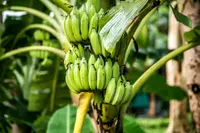
The plant produces small yellow fruits with many hard seeds and very little pulp, so it is grown almost entirely as an ornamental rather than for eating.

Origins in southern Japan

This species is native to the Ryukyu Islands of Japan, where it grows in mild, humid coastal regions and has adapted to withstand occasional cool temperatures unusual for most bananas.

Botan icon

Did you know?

In parts of Okinawa, the tough fibers from this species have traditionally been processed and woven into a textile called bashofu, which has been used for lightweight summer garments and ceremonial clothing.

FAQs about Japanese banana

In warm, favorable conditions, this species is very fast-growing, often adding 1.5–3 m of height in a single season. Growth slows in cool climates or short summers, but strong new shoots usually emerge each spring.

Grow Healthy Plants with Botan Care

Keep your plants happy and healthy with plant identification, disease detection, and easy care guidance.

Botan plant care app — identify plants on mobile

Explore More Plants