


Seasonal rosette resting
During the hottest, driest part of summer, reduce disturbance and avoid repotting or heavy pruning, as the rosettes enter a semi-dormant phase and recover better if left to rest.

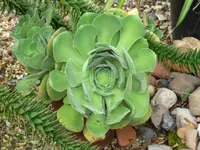
Canary aeonium (Aeonium canariense) is a rosette-forming succulent from the Canary Islands, valued for its broad, spoon-shaped leaves and striking architectural form. Plants grow as low clumps that slowly expand, with rosettes that can become quite large and show warm green tones that may blush in strong light.
This species naturally occurs on rocky, sunny slopes with well-drained, poor soils, which makes it well adapted to container life and dry conditions. It suits growers wanting a sculptural plant that is not demanding, as long as overwatering is avoided. These traits make it relatively straightforward to care for Canary Aeonium in bright, dry indoor or mild outdoor settings.

Care Difficulty
Moderate Care

Light Preference
Full Sun

Water Requirements
Low Water

Temperature Preference
Tropical / Frost Sensitive

Hardiness Zone
10–11

Soil Texture
Sandy, Loamy, Rocky

Soil pH
Slightly acidic (6.5–7.0), Neutral (7.0)

Soil Drainage
Well-drained

Fertilization
Minimal (feed rarely)
Scan your plant to receive care tips personalized for your specific plant
Available on iOS and Android
This succulent prefers bright, mild sun with some protection from harsh midday exposure.
Aeonium canariense prefers thorough but infrequent watering in fast-draining soil.
This species favors mild, frost-free conditions with protection from extremes of heat and cold.
This succulent tolerates typical indoor humidity and does not need special humidity management.
This species needs a sharply draining, mineral-based substrate to prevent root rot.
This species is well suited to container growing.
Aeonium canariense benefits from light, controlled feeding during active growth but is sensitive to excess nutrients.
Pruning is used mainly to tidy Aeonium canariense and manage plant shape rather than to stimulate heavy regrowth.
Aeonium canariense in containers needs only infrequent repotting but responds well when roots become tight or growth slows.
Aeonium canariense is commonly propagated from stem cuttings and offsets, with seeds used mainly by advanced growers.
Aeonium canariense is frost-sensitive and needs protection in regions with cold winters.

Plant Health Check
Not sure what's wrong with your plant? Check your plant's health inside the app.
This species occurs naturally on sun-exposed cliffs and rocky slopes of Tenerife in the Canary Islands, often rooting in very shallow volcanic substrates where many other plants cannot survive.
It typically slows growth and can partially close or shrink its rosettes during the hot, dry summer, then resumes active growth in the cooler, wetter season, a classic drought-avoidance strategy in its native climate.
The broad, upward-facing rosettes form a shallow bowl that helps intercept dew and light rain, directing small amounts of moisture toward the central growing point and roots in its arid habitat.

Aeonium canariense forms part of an endemic Canary Islands radiation of Aeonium species that has been studied as a model for island evolution, showing how a single ancestral lineage diversified into many species adapted to different microhabitats.
This species usually needs to reach several years of age, with a well-developed rosette, before flowering. Blooming is more likely after a cool, bright winter and strong spring growth. Container restriction or significant stress can also delay flower production.
Keep your plants happy and healthy with plant identification, disease detection, and easy care guidance.

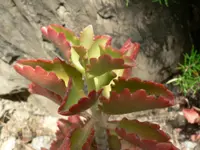
Six-Angled Kalanchoe
Kalanchoe sexangularis
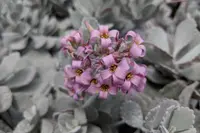
Flower Dust Plant
Kalanchoe pumila
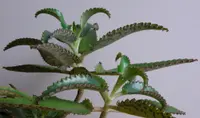 POPULAR
Mother of Thousands
Kalanchoe daigremontiana
saucer-plant
Aeonium undulatum
Nickels' cactus
Coryphantha nickelsiae

hedge cactus
Cereus hildmannianus
lady of the night cactus
Cereus hexagonus
San Pedro cactus
Echinopsis cuzcoensis