


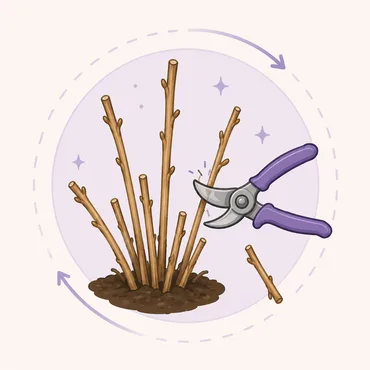
Rejuvenate Old Canes
Cut older bare stems to encourage new shoots from lower nodes. This technique helps restore a fuller appearance without replacing the plant.

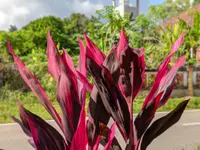
Cordyline fruticosa has beautiful leaves that come in shades of green, red, pink, purple, and burgundy. They create a colorful display indoors and outdoors. It grows in Southeast Asia, Melanesia, and parts of the Pacific Islands. The plant forms upright stems topped with clusters of long leaves.
It is valued for its ornamental beauty but can be somewhat sensitive to environmental changes. Successful care for the ti plant usually depends on providing stable and appropriate conditions.

Care Difficulty
Moderate Care

Light Preference
Bright Indirect Light

Water Requirements
Keep Soil Moist

Temperature Preference
Tropical / Frost Sensitive

Hardiness Zone
10–12

Soil Texture
Loamy, Sandy, Organic-rich

Soil pH
Acidic (5.5–6.5), Slightly acidic (6.5–7.0)

Soil Drainage
Moist but well-drained

Fertilization
Light (every 4–6 weeks)
Scan your plant to receive care tips personalized for your specific plant
Available on iOS and Android
This plant grows best in bright light, but protect it from intense midday sun.
Like its cousin Cordyline australis, Cordyline fruticosa prefers evenly moist soil. However, it does not tolerate prolonged waterlogging. Make sure moisture reaches the root zone when watering. Also, look at the leaf condition: yellowing lower leaves and persistently wet soil may indicate overwatering. Brown leaf tips and drooping can signal drought stress.
Note: These houseplants react poorly to fluoride in tap water. It leads to browning of the leaf tips and margins. Use rainwater or distilled bottled water instead.
Consistently warm conditions support the healthiest growth and foliage color.
Higher humidity helps maintain healthy foliage and vibrant leaf color on the ti plant. Keep humidity levels above 50% (60-80% ideally). Increase humidity with nearby plants, pebble trays, or a humidifier when needed.
Healthy growth depends on a fertile soil that retains moisture without becoming waterlogged. Follow these criteria:
Use a pot with drainage holes and a minimum diameter of 12-16 inches (30-40 cm). Choose a container at least 12 inches (30 cm) deep to provide adequate root space and stem support.
Note: Heavier ceramic or terracotta pots are not as beautiful as plastic, but they help stabilize mature specimens that become top-heavy with age.
Additional feeding helps maintain vigorous growth and rich foliage color.
Note: For outdoor plants, apply a balanced slow-release fertilizer in spring. Keep it at least 1 foot (30 cm) from the base. Spread it evenly over the soil, then water.
If you want to make a more beautiful shape, prune your Cordyline fruticosa in spring or early summer.
Sometimes, this procedure is needed. Plants, like people, tend to grow, and the ti plant is not an exception.
Note: Be careful with the root ball, as that’s the most delicate part of this houseplant.
Use a stem-cutting method. It is the most common and reliable way to propagate this species.
The ti plant is not a big fan of the cold weather. Frost and low temperatures can damage this tropical species. Move container plants indoors before temperatures fall below 50°F (10°C) and keep plants away from drafts.
Tip: Protect outdoor specimens with frost cloth when cold spells are expected.

Plant Health Check
Not sure what's wrong with your plant? Check your plant's health inside the app.
Cut older bare stems to encourage new shoots from lower nodes. This technique helps restore a fuller appearance without replacing the plant.
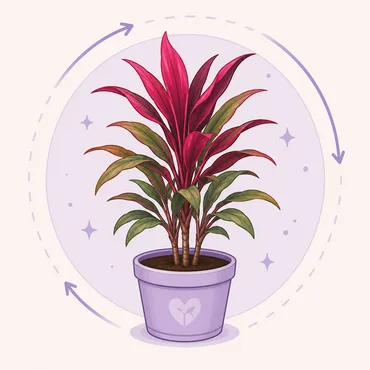
Sudden changes in light exposure can cause fading of colorful leaves. When caring for the ti plant, adjust light levels gradually over one to two weeks.
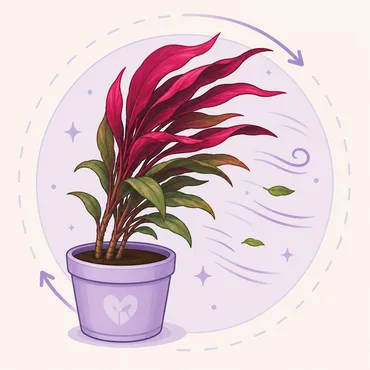
Long leaves can tear or become ragged in exposed locations. Plant Cordyline fruticosa in a sheltered area or provide wind protection.
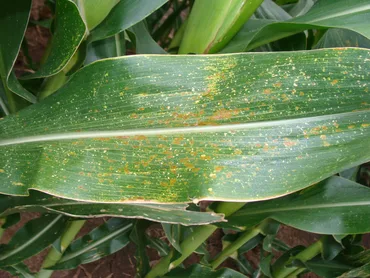
Symptoms of fungal spots include brown, black, or water-soaked spots on leaves, sometimes with yellow halos.
Wet foliage, poor airflow, and crowded growth can increase disease spread.
Solution
Remove affected leaves and avoid splashing water onto the foliage. Improve spacing and airflow.
Use a copper-based fungicide only if spotting continues to spread.
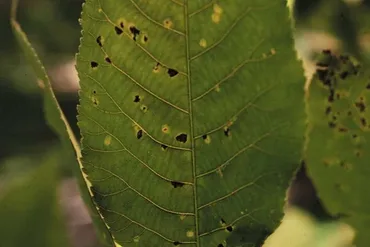
This disease causes dark, soft, or water-soaked lesions that expand in warm conditions.
Damaged leaves turn yellow, collapse, and develop irregular blotches.
Solution
Cut away infected foliage and avoid overhead watering.
Keep leaves dry, improve air movement, and discard severely affected plant parts.
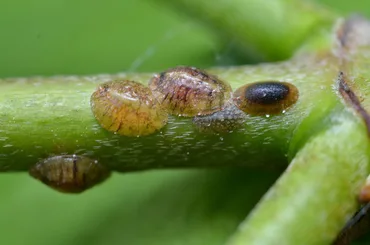
These insects appear as small brown or tan bumps on stems and leaf veins.
There, they suck plant sap. Infestations cause sticky residue, yellowing leaves, and weakened growth.
Solution
Remove visible scale or gently scrape it from the stems.
Treat remaining pests with horticultural oil and inspect new growth regularly.
The ti plant has been cultivated across Polynesia for centuries and holds cultural importance.
Locals traditionally use its leaves to make leis, wrap food, and for various ceremonial purposes.
Cordyline fruticosa is also known as a good-luck plant.
People often grow it near homes and buildings as a symbol of protection and good fortune.
Beneath the soil, the plant develops starch-rich rhizomes that serve as energy reserves.
Historically, these underground structures were used as a food source in several Pacific Island cultures.

Archaeobotanical and cultural studies indicate that humans intentionally transported Cordyline fruticosa during ancient Pacific voyaging, so its current distribution on many islands reflects human migration routes rather than purely natural dispersal.
Yes, mature specimens can produce clusters of small flowers in white, pink, or lavender colors. Flowering is more common in warm climates and outdoor landscapes than in containers.
Keep your plants happy and healthy with plant identification, disease detection, and easy care guidance.

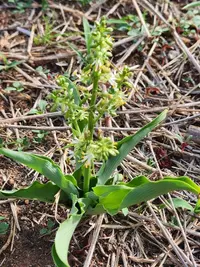
Chlorophytum gallabatense
Chlorophytum gallabatense
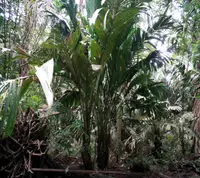
Troolie Palm
Manicaria saccifera
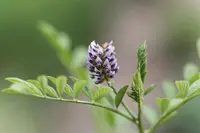
cultivated licorice
Glycyrrhiza glabra
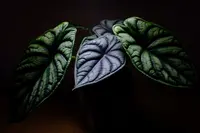
Jewel Alocasia
Alocasia baginda 'Dragon Scale'
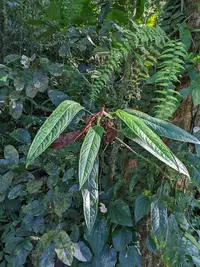
Anthurium microspadix
Anthurium microspadix
Codonanthe devosiana
Codonanthe devosiana

Malaysian persimmon
Diospyros maritima
Elephant's Ear
Alocasia reginula 'Black Velvet'