


Controlled pot sizing
Use a pot only 2–3 cm wider than the caudex to discourage excess moisture retention and encourage compact, sturdy growth of the swollen stem.

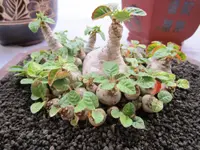
Grendelion is a compact succulent caudiciform, meaning it stores water in a swollen stem base. It is a cultivated form of Dorstenia foetida, a fig relative. The plant forms a thick, knobbly trunk with odd, flat star-shaped flower structures and short, irregular stems, giving it an unusual, sculptural look. Growth is generally slow and stays small, which suits windowsills and indoor collections. Dorstenia foetida comes from arid, rocky habitats in East Africa and the Arabian Peninsula. It adapts fairly well indoors if given bright light, warmth, and a gritty, fast-draining soil mix. With careful watering and avoidance of cold, it is not difficult to care for Grendelion.

Care Difficulty
Moderate Care

Light Preference
Bright Indirect Light

Water Requirements
Moderate Water

Temperature Preference
Tropical / Frost Sensitive

Hardiness Zone
11–12

Soil Texture
Sandy, Loamy, Organic-rich

Soil pH
Acidic (5.5–6.5), Slightly acidic (6.5–7.0)

Soil Drainage
Well-drained

Fertilization
Light (every 4–6 weeks)
Scan your plant to receive care tips personalized for your specific plant
Available on iOS and Android
This succulent prefers bright, indirect light with brief direct sun rather than harsh, all-day exposure.
This species needs careful watering to avoid rot while not staying bone-dry for long periods in active growth.
This plant prefers warm, stable temperatures and is sensitive to cold and frost.
Dorstenia foetida tolerates a wide humidity range but grows best in moderately dry indoor air.
Dorstenia foetida prefers a very free-draining, airy mix that mimics rocky, sandy habitats.
This compact caudiciform is well suited to container growing.
Dorstenia foetida benefits from light, controlled feeding during its active warm-season growth.
Dorstenia foetida needs only light, corrective pruning to maintain a compact, healthy form.
This caudiciform succulent prefers infrequent repotting in a small, well-drained container.
Dorstenia foetida is most commonly propagated from seed under warm, controlled indoor conditions.
This species is frost-sensitive and needs mild, dry conditions during winter dormancy.

Plant Health Check
Not sure what's wrong with your plant? Check your plant's health inside the app.
Its inflorescence is a flat, star-shaped floral disc called a hypanthodium, where many tiny flowers are packed together on a single surface rather than forming a typical separate blossom.
The species name foetida refers to an unpleasant smell that can be released by the inflorescences, especially when bruised, a trait that likely helps attract certain pollinating insects.
This species forms a swollen, knobbly stem base known as a caudex that stores water, an adaptation that allows it to survive long dry periods in its native arid habitats of East Africa and the Arabian Peninsula.

Mature plants can explosively eject their tiny seeds from the surface of the floral disc, using built-up tension to fling them away from the parent plant and increase the chances of successful dispersal.
Lack of blooms usually results from insufficient light, cramped roots, or stress from recent repotting. Ensure bright, indirect light, a stable warm environment, and avoid frequent disturbance. Balanced, low-dose fertilizer during active growth can also support flowering.
Keep your plants happy and healthy with plant identification, disease detection, and easy care guidance.


Elephant's Ear
Alocasia sarawakensis 'Yucatan Princess'
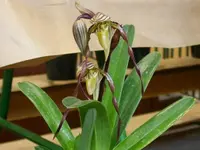
Philippine paphiopedilum
Paphiopedilum philippinense
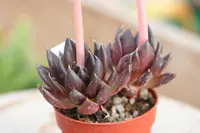
Echeveria affinis
Echeveria affinis
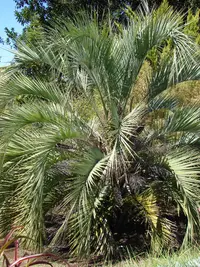
Yatay palm
Butia yatay
purple pricklypear
Opuntia macrocentra
African Mask
Alocasia 'Amazonica'
Canary Islands dragon tree
Dracaena draco

Matucana madisoniorum
Matucana madisoniorum