Deltoid-leaved Dewplant Care (Oscularia deltoides)

Also known as: Rock Toothfig

About Deltoid-leaved Dewplant

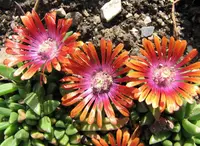
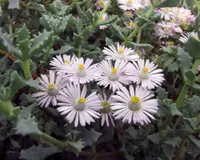
Deltoid-leaved dewplant (Oscularia deltoides) is a compact, clump-forming succulent from the coastal regions of South Africa. It naturally grows in rocky, well-drained habitats with intense sun and low rainfall. Its thick, triangular leaves are blue-green with pinkish edges, and stems can trail or sprawl, making it suitable for containers, rock gardens, and hanging baskets. Small pink, daisy-like flowers appear in bright conditions. This species is generally easy to grow if kept in strong light, low to moderate moisture, and sharply draining soil. Understanding how to care for Deltoid-leaved Dewplant mainly involves avoiding overwatering and providing enough sun.

Main Plant Requirements

Care Difficulty

Easy Care

Light Preference

Full Sun

Water Requirements

Low Water

Temperature Preference

Warm Climate

Hardiness Zone

9–11

Soil Texture

Sandy, Loamy, Rocky

Soil pH

Slightly acidic (6.5–7.0), Neutral (7.0)

Soil Drainage

Well-drained

Fertilization

Minimal (feed rarely)

Get Personalized Care Plan

Scan your plant to receive care tips personalized for your specific plant

Personalized Care in the App

Available on iOS and Android

How to Care for the Deltoid-leaved Dewplant

This compact succulent thrives in bright, direct light but needs some protection from extreme midday sun.

  • Provide 4–6 hours of direct morning sun plus bright light the rest of the day; east or southeast exposure suits Deltoid-leaved Dewplant well.
  • In very hot summers, give light shade from harsh afternoon sun to prevent leaf scorch and bleaching, especially in USDA zones 9–10.
  • If stems stretch or foliage turns pale, the plant is not getting enough sun; move gradually to a brighter position over 7–10 days.

This drought-tolerant succulent prefers infrequent, deep watering and fast-draining soil.

  • Water only when the top 3–5 cm of soil are completely dry; in active growth this may mean every 7–14 days, but rely on soil feel rather than a fixed schedule.
  • Use a sharply draining mix and ensure excess water can exit freely; persistent wetness causes root rot and mushy, yellowing leaves in Oscularia deltoides.
  • In winter or cool, low-light periods, reduce watering to just prevent full shriveling; slightly wrinkled leaves signal thirst, while splitting or translucent leaves suggest excess water.

This species prefers mild, dry conditions and does poorly in hard frost or very humid heat.

  • Aim for 65–80°F (18–27°C) for best growth, with good air movement to reduce fungal problems in humid climates.
  • Protect from frost; short dips to 28–32°F (-2–0°C) may be survived if soil is dry, but repeated freezing damages foliage and stems.
  • In hot spells above 90°F (32°C), give afternoon shade and avoid watering during peak heat so roots are not exposed to sudden temperature shocks.

This succulent prefers dry household air and does not need extra humidity.

  • Aim for 30–50% humidity, which is typical in heated or air-conditioned homes.
  • Dry air is well tolerated; problems arise more from excess moisture than from low humidity.
  • If leaves turn mushy or translucent, reduce nearby humidifiers and improve air movement rather than trying to increase humidity.

Use a very fast-draining, gritty mix to prevent root rot in Oscularia deltoides.

  • Choose sandy or gritty soil with a loose, crumbly structure that does not stay wet longer than 1–2 days.
  • A practical mix is 1 part cactus potting mix with 1–2 parts mineral materials such as pumice, coarse sand, or small gravel.
  • Aim for slightly acidic to neutral pH around 6.0–7.0, which suits most succulent mixes sold for cacti.
  • Avoid dense garden soil, peat-heavy mixes without added grit, or any medium that compacts and restricts air around the roots.

This species is well suited to container growing, especially for patios, balconies, or dry indoor spots.

  • Select a shallow, wide pot to accommodate its spreading, trailing growth while preventing excess wet soil volume.
  • Use a heavy or weighted container outdoors so the trailing stems do not tip the pot in wind.
  • Prefer unglazed clay if you tend to overwater, as it allows faster evaporation and keeps the root zone drier for Oscularia deltoides plant care.

This succulent needs only light feeding to maintain compact, healthy growth when grown in containers.

  • Use a diluted balanced liquid fertilizer (for example 10-10-10 or 20-20-20 at 25–50% strength) during active growth in spring and summer.
  • Feed every 4–6 weeks if the potting mix is low in nutrients; skip if growth is strong and foliage looks healthy.
  • Avoid high-nitrogen lawn or shrub fertilizers, which can cause soft, leggy growth and reduce flowering in Deltoid-leaved Dewplant.
  • Stop feeding in fall and winter, when growth slows, to prevent weak, elongated shoots.

Light pruning keeps Oscularia deltoides dense, tidy, and flowering well.

  • Best time is late winter to early spring, just before the main growth flush, or immediately after flowering finishes.
  • Use clean, sharp scissors or small pruning shears to remove dead, damaged, or diseased stems back to healthy tissue.
  • Thin out crowded or overly long trailing stems to improve airflow and light penetration and to maintain a compact mound.
  • Pinch or cut stem tips to encourage branching and more flower-bearing shoots, avoiding removal of all new growth at once.

This species prefers snug containers and infrequent disturbance, so repot only when clearly necessary.

  • Check for roots circling the pot, emerging from drainage holes, or slow growth despite good light and watering as signs repotting is needed.
  • Repot every 2–3 years at most, in late winter or early spring, using a shallow container with excellent drainage and a gritty succulent mix.
  • Move up only 1 pot size to limit excess moisture retention, and gently loosen circling roots without breaking thick, brittle ones.
  • After repotting, water lightly, keep in bright but indirect light for 5–7 days, and resume normal watering once the plant shows fresh growth.

New plants are most often produced from stem cuttings, which root reliably under suitable conditions.

  • Take 5–8 cm non-flowering stem cuttings in late spring or summer, selecting firm, healthy segments.
  • Allow cut ends to dry and callus for 1–2 days to reduce rot risk, then insert into a dry, gritty succulent mix.
  • Provide bright, indirect light and keep the mix just barely moist until roots form, usually within 2–4 weeks.
  • Seed propagation is possible but slower; sow on the surface of well-draining mix, keep slightly moist, and maintain warm temperatures around 68–75°F.

This succulent is only moderately frost tolerant and benefits from some winter protection in colder climates.

  • In regions colder than USDA zone 9, grow in containers that can be moved indoors before temperatures drop below 30°F.
  • Provide a cool, bright indoor spot with good airflow and reduced watering, allowing the soil to dry more than in summer.
  • In mild-winter climates, a light gravel or coarse sand mulch around the crown improves drainage and reduces cold-related rot.

Care Tips

Encourage Compact Growth

Pinch back soft tips of overly long stems in late spring to keep the plant dense and cushion-like, and replant healthy cuttings in the same pot to thicken the clump.

Protect From Winter Wet

In regions with cool, wet winters, place containers under a roof overhang or move them into a bright, unheated porch so the roots stay drier and less prone to rot.

Use Reflective Surfaces

Position pots near light-colored walls or on pale gravel so reflected light reaches lower stems and reduces bare, woody sections over time.

Salt-Splash Management

If grown near roads or paths that are salted in winter, elevate containers and flush the pot with plain water once in early spring to reduce salt buildup in the root zone.

Monitor Stem Lignification

Check for old, woody stems that no longer carry many leaves and remove a few each year after flowering to stimulate new, vigorous shoots and maintain an attractive cushion when caring for Deltoid-leaved Dewplant.

Common Pests and Diseases

Mealybugs

This pest feeds on succulent stems and leaf joints, drawing sap and leaving white, cottony clusters. Symptoms include sticky honeydew, distorted new growth, and slow decline of the plant.

Solution

Quarantine the plant, then dab visible mealybugs with cotton swabs dipped in 70% isopropyl alcohol and repeat weekly until no new insects appear. For larger infestations, rinse the plant thoroughly with a strong but gentle stream of water, then apply a ready-to-use insecticidal soap or neem oil spray to all stems and leaf joints, keeping the plant in bright, dry conditions between treatments.

Aphids

These insects colonize tender new shoots and flower stalks, sucking sap and causing curling, yellowing, and sticky residue on stems. Ant activity on the plant often increases when aphids are present due to honeydew production.

Solution

Rinse stems and new growth with a firm stream of water to dislodge aphids, repeating every few days as needed. If insects persist, use an insecticidal soap or neem oil spray, making sure to cover undersides of leaves and young stems, and reduce excess fertilization that encourages soft, aphid-prone growth.

Spider mites

This pest thrives on Deltoid-leaved Dewplant in hot, dry conditions, causing fine stippling on leaves and occasional webbing between stems. Symptoms include dull, speckled foliage and gradual leaf drop.

Solution

Move the plant to a slightly more humid, sheltered spot and rinse stems thoroughly, including all crevices, to knock mites off the plant. Follow with repeated applications of insecticidal soap or a miticide-labeled neem product every 5–7 days, and avoid placing the plant in extremely hot, stagnant air where mites multiply quickly.

Fungal leaf spots

This disease develops on succulent leaves and stems under prolonged moisture, leading to dark, sunken spots or patches that may expand and cause tissue collapse. Symptoms include localized discoloration, soft areas, and sometimes a yellow halo at lesion edges.

Solution

Remove and discard all affected leaves or stems, then ensure the plant dries quickly by improving airflow and watering only at the soil level. Allow the soil surface to dry fully between waterings, avoid overhead watering, and if spots spread, apply a sulfur or copper-based fungicide according to the label, particularly during humid or rainy periods.

Edema

This physiological disorder appears when roots take up water faster than leaves can transpire it, common when Oscularia deltoides is overwatered in cool, low-light conditions. Symptoms include corky, blister-like bumps or rough patches on leaves and stems, often on the lower or shaded parts of the plant.

Solution

Reduce watering frequency, allowing the potting mix to dry well before the next watering, and ensure the container has excellent drainage. Provide more light and slightly warmer conditions, and avoid sudden shifts from very dry to heavily saturated soil to prevent new edema lesions from forming.

Interesting Facts

Mat-forming cliff specialist

This species naturally grows in rocky sandstone cliffs and slopes of the Western Cape in South Africa, forming trailing mats that anchor into narrow crevices with a shallow but wide-spreading root system.

Triangle-jointed leaves

The fleshy, blue-green foliage has distinct triangular, jointed segments with toothed edges, an adaptation that reduces surface area and water loss in its dry native habitat.

Night-scented blooms

Its small pink to mauve flowers open in bright light during the day but tend to release a stronger, sweet fragrance toward evening, attracting crepuscular pollinating insects in its native range.

FAQs about Deltoid-leaved Dewplant

This species performs best outdoors in mild, dry climates where it receives abundant light and excellent drainage. Indoors it often becomes leggy and less floriferous, so use bright, cool windowsills or sunrooms for more reliable Deltoid-leaved Dewplant indoor care.

Grow Healthy Plants with Botan Care

Keep your plants happy and healthy with plant identification, disease detection, and easy care guidance.


Botan plant care app — identify plants on mobile

Explore More Plants