Rotate For Symmetry
Turn the pot 90° every 2–3 weeks so the canopy develops evenly and stems do not lean permanently toward one light source.

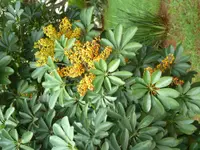
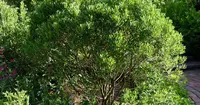
The dwarf umbrella tree, Heptapleurum arboricola, is a compact evergreen shrub often grown indoors for its glossy, divided leaves that resemble a small umbrella canopy. It typically forms a bushy, upright shape and can be pruned to stay small or trained into a small indoor tree.
This species originates from subtropical regions of Taiwan and Hainan, where it grows in warm, bright, and humid conditions below the forest canopy. It is considered moderately easy to grow, as it adapts to typical indoor light levels and tolerates some neglect, but it reacts poorly to overwatering and low light. Understanding how to care for Dwarf umbrella tree mainly involves providing bright, indirect light, a free-draining potting mix, and steady indoor temperatures.

Care Difficulty
Easy Care

Light Preference
Bright Indirect Light

Water Requirements
Moderate Water

Temperature Preference
Tropical / Frost Sensitive

Hardiness Zone
10–12

Soil Texture
Loamy, Sandy, Organic-rich

Soil pH
Acidic (5.5–6.5), Slightly acidic (6.5–7.0)

Soil Drainage
Moist but well-drained

Fertilization
Light (every 4–6 weeks)
Scan your plant to receive care tips personalized for your specific plant
Available on iOS and Android
This species prefers bright, filtered light that mimics a bright understory or bright indoor room.
Watering should keep the root zone evenly moist but never saturated for this species.
Stable, warm conditions support steady growth and reduce stress in this species.
This species prefers moderate to slightly high indoor humidity but adapts to typical home conditions.
Soil for this species should drain freely while retaining moderate moisture and air around the roots.
This species is well suited to container growing for both homes and sheltered outdoor spaces.
Heptapleurum arboricola responds well to light, consistent feeding during its active growing period.
Heptapleurum arboricola benefits from selective pruning to manage size and maintain a dense canopy.
This plant adapts well to containers but resents major root disturbance, so repot only when clear signs appear.
New plants are most often produced from stem cuttings taken from healthy Heptapleurum arboricola shoots.
Indoor plants need stable warmth in winter, as this species is frost-sensitive and not suited to freezing temperatures.

Plant Health Check
Not sure what's wrong with your plant? Check your plant's health inside the app.
In its native range in Taiwan and Hainan, this species often starts life as an epiphyte, rooting in moss or organic debris on trees and rocks before sending roots down into the ground.
Its characteristic “umbrella” look comes from palmately compound leaves, where 7–9 leaflets radiate from a single point at the end of each petiole, an adaptation that helps capture light in understory conditions.
This species was long known in horticulture as Schefflera arboricola, but molecular studies of DNA led botanists to move it to the genus Heptapleurum, reflecting a more accurate understanding of its evolutionary relationships.

In warm, frost-free climates, this commonly grown houseplant can become a small tree over 6 m tall outdoors, where it may flower and produce clusters of small berries that are eaten and spread by birds.
Brown edges usually come from low humidity, underwatering, or salt buildup from fertilizer. Check soil moisture, flush the pot occasionally with plain water, and keep foliage away from hot or cold drafts and heating vents.
Keep your plants happy and healthy with plant identification, disease detection, and easy care guidance.