


Refresh central cup
Every 3–4 weeks, gently pour out the old water from the central rosette, rinse it with room-temperature distilled or filtered water, and refill lightly to reduce salt buildup and prevent bacterial or fungal issues.

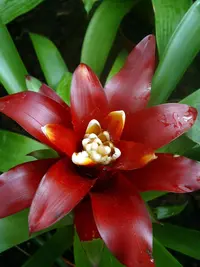
Droophead tufted airplant, Guzmania lingulata, is a tropical bromeliad that naturally grows as an epiphyte on trees in Central and South American rainforests. It is often grown indoors for its bright, long-lasting bracts that can be red, orange, or pink, surrounding a tight rosette of glossy green leaves.
This plant forms a vase-shaped center that holds water rather than relying on dense soil, which shapes how to care for Droophead Tufted Airplant. It stays compact, so it suits shelves, desks, and small indoor spaces.
G. lingulata prefers warm, stable conditions, soft filtered light, and evenly moist but airy growing media, which makes it manageable for most indoor growers who observe its basic needs.

Care Difficulty
Moderate Care

Light Preference
Bright Indirect Light

Water Requirements
Keep Soil Moist

Temperature Preference
Tropical / Frost Sensitive

Hardiness Zone
11–12

Soil Texture
Peaty, Organic-rich, Loamy

Soil pH
Strongly acidic (4.5–5.5), Acidic (5.5–6.5)

Soil Drainage
Moist but well-drained

Fertilization
Light (every 4–6 weeks)
Scan your plant to receive care tips personalized for your specific plant
Available on iOS and Android
This bromeliad thrives in bright, indirect light that mimics dappled tropical shade.
This species prefers a consistently moist environment with careful control of both the tank and root-zone moisture.
This bromeliad prefers warm, stable temperatures similar to a tropical understory environment.
This bromeliad prefers consistently moist air to maintain healthy foliage and flowering.
Guzmania lingulata grows best in a loose, airy mix that mimics its natural epiphytic habitat.
This species is very suitable for container growing due to its compact root system and rosette form.
Guzmania lingulata is a light feeder, so use dilute fertilizer during active growth only.
Pruning Guzmania lingulata focuses on removing old growth rather than reshaping the plant.
Repotting for this bromeliad is mainly to refresh mix or accommodate offsets rather than to increase root space.
Propagation of Guzmania lingulata is most reliable through offsets rather than seed.
This tropical bromeliad is frost-sensitive and needs mild, stable conditions in winter.

Plant Health Check
Not sure what's wrong with your plant? Check your plant's health inside the app.
In the wild, this species often grows as an epiphyte on trees in lowland tropical rainforests of northern South America and the Caribbean, collecting water and leaf litter in its rosette rather than rooting in soil.
What most people see as the colorful flower is mainly a rosette of bright red to orange bracts that can persist for 2–4 months, while the true flowers are small, usually white or yellow, and short‑lived inside the bract cluster.
The funnel‑shaped rosette can hold a small pool of water that becomes a microhabitat for insects and other tiny organisms, contributing to localized nutrient cycling in the forest canopy.

This species exhibits a monocarpic life cycle, meaning the rosette flowers only once and then slowly dies, but typically produces several offsets, or pups, around its base that continue the genetic line and allow the plant to persist in the same tree crevice or substrate over many years.
This species usually flowers once when mature, then slowly declines while forming pups. Lack of bloom is often due to immaturity, stress from cold or low humidity, or recent repotting. Stable warmth and humidity support flowering.
Keep your plants happy and healthy with plant identification, disease detection, and easy care guidance.

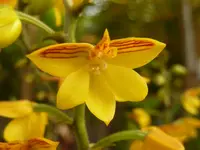
Hairy-lipped Polystachya
Polystachya pubescens
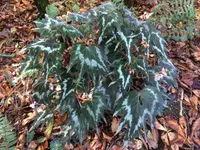
Cut-leaved Begonia
Begonia palmata
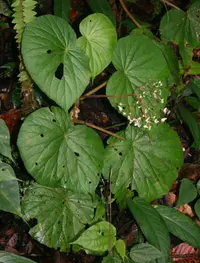
Begonia multinervia
Begonia multinervia
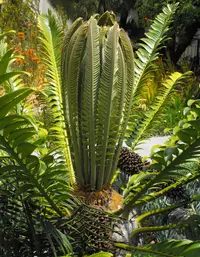
Modjadji Cycad
Encephalartos transvenosus
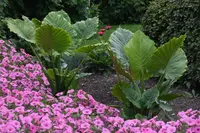
Dwarf Elephant Ear
Alocasia gageana 'California'

Walking Palm
Socratea exorrhiza
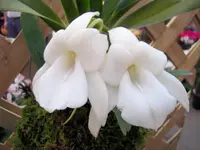
Angraecum magdalenae
Angraecum magdalenae
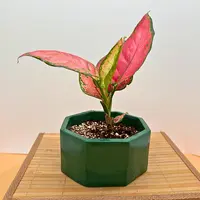
Chinese Evergreen
Aglaonema 'Pink Dalmatian'