


Support heavy stems
As stems elongate and become top-heavy, anchor them with discreet gravel mounds or small rocks at the base rather than staking, so the plant keeps its natural, clumping form and does not snap at the joints.


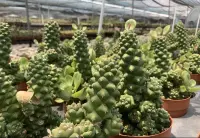
Monadenium ritchiei, often placed in Euphorbia as Euphorbia ritchiei, is a shrubby succulent with thick, knobbly green stems and small leaves near the growing tips. It forms clumping, sculptural mounds that suit containers and rock gardens.
This species is native to East Africa, where it grows in dry, sunny habitats with fast-draining soils. Its drought tolerance and slow, compact growth habit generally make it easy to manage for home growers.
Understanding how to care for Monadenium ritchiei starts with providing bright light, moderate warmth, and a gritty, well-drained mix that dries between waterings.

Care Difficulty
Moderate Care

Light Preference
Partial Sun

Water Requirements
Low Water

Temperature Preference
Tropical / Frost Sensitive

Hardiness Zone
10–11

Soil Texture
Sandy, Loamy, Rocky

Soil pH
Slightly acidic (6.5–7.0), Neutral (7.0)

Soil Drainage
Well-drained

Fertilization
Minimal (feed rarely)
Scan your plant to receive care tips personalized for your specific plant
Available on iOS and Android
This succulent prefers semi-shade with some direct sun for compact, healthy growth.
This species stores water in its stems and needs infrequent but thorough watering.
This succulent prefers warm, stable temperatures and is sensitive to frost.
Euphorbia ritchiei handles typical indoor humidity well and rarely needs special humidity adjustment.
Euphorbia ritchiei performs best in a very fast-draining, mineral-rich substrate that mimics arid, rocky soils.
This species is well suited to container growing. Select a heavy ceramic or clay pot to stabilize the multi-stemmed, top-heavy clumps and reduce the risk of tipping in strong light or outdoor breezes. Choose a pot only 2–4 cm wider than the root mass so the mix dries evenly and does not trap moisture around the base of the stems.
Note: Ensure large, unobstructed drainage holes and, if needed, elevate the pot on feet so water clears quickly after each watering.
This succulent Euphorbia has modest nutrient needs, so light, infrequent feeding is sufficient for caring for Monadenium ritchiei.
Pruning Euphorbia ritchiei is mainly done to maintain shape and remove unhealthy growth.
This slow-growing succulent prefers infrequent repotting and slight root crowding.
Propagation of Euphorbia ritchiei is commonly done from stem cuttings rather than seed.
Tip: Water very lightly until roots form, then transition gradually to normal succulent watering.
Cold-sensitive Euphorbia ritchiei needs protection in regions with freezing winters.

Plant Health Check
Not sure what's wrong with your plant? Check your plant's health inside the app.
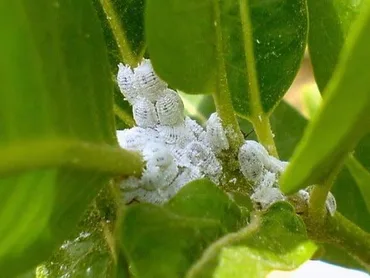
This pest often hides in stem joints and between the knobbly segments, sucking sap and causing distorted new growth and sticky honeydew deposits.
Solution
Isolate the plant, then dab visible insects with cotton swabs dipped in 70% isopropyl alcohol and repeat weekly until clear.
For larger populations, use a ready-to-use neem oil or insecticidal soap spray, making sure to reach crevices, and reduce excess nitrogen fertilizer that encourages soft, mealybug-prone growth.
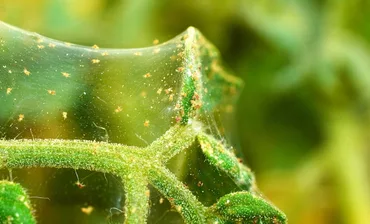
These insects thrive on Euphorbia ritchiei in warm, dry indoor air, causing fine stippling, dull patches on the stems, and sometimes very fine webbing in crevices.
Solution
Increase humidity around the plant slightly, rinse stems thoroughly under a gentle stream of lukewarm water.
Follow with insecticidal soap or horticultural oil applied every 7–10 days, ensuring good air movement so the plant dries quickly after treatment.
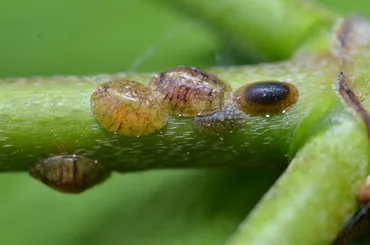
This pest appears as small, hard or slightly waxy bumps along the ridged stems and at the base of leaves, leading to yellowing, poor growth, and honeydew that can attract sooty mold.
Solution
Physically scrape or pry off individual scales with a fingernail or soft brush, then spot-treat remaining insects with alcohol on a cotton swab.
For persistent infestations on growing Monadenium ritchiei, apply a systemic insecticide labeled for ornamental succulents according to package directions and monitor new growth closely.
This species is native to rocky slopes and outcrops in central Kenya, where it grows in seasonally dry, highland conditions rather than lowland deserts.
It forms thick, tuberous, knobbly stems with prominent ridges and small spines, an adaptation that helps store water and reduce herbivory in its native habitat.
The plant produces small, temporary leaves near the stem tips and bears typical Euphorbia cyathia, which are specialized cup-like flower structures that often go unnoticed compared with the sculptural stems.

In habitat, this species often grows partly shaded among rocks or shrubs, which protect its swollen stems from intense midday sun while allowing enough light for photosynthesis, an unusual niche compared with many more open-growing succulent Euphorbia species.
Lack of blooms usually comes from insufficient light, irregular dry rest periods, or recent repotting. This species flowers best when slightly pot-bound, given strong light, and allowed a cooler, drier winter rest, then watered more in the growing season.
Keep your plants happy and healthy with plant identification, disease detection, and easy care guidance.

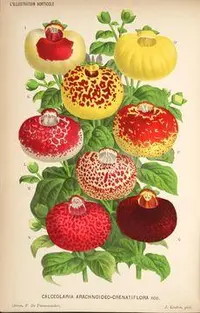
Calceolaria crenatiflora
Calceolaria crenatiflora
-1-200x200.webp)
Contorted Capespinach
Trachyandra tortilis
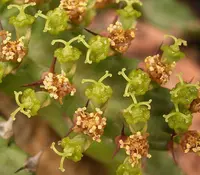
Milkthorn
Euphorbia stellata
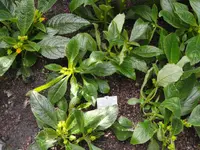
Chrysothemis friedrichsthaliana
Chrysothemis friedrichsthaliana
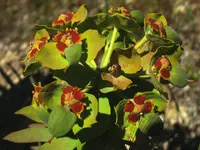
Euphorbia oxyphylla
Euphorbia oxyphylla
Dorstenia drakena
Dorstenia drakena
Brazilian-plume
Justicia carnea
Columnea schiedeana
Columnea schiedeana