


Deep Pot Choice
Use a relatively deep pot with ample drainage so the long taproots can grow straight down, which reduces stress and helps the leaves stay plump and compact.

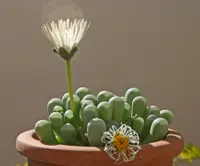
Baby toes, Fenestraria rhopalophylla, is a small succulent from arid regions of South Africa and Namibia. It grows in tight clumps of upright, finger-like leaves. The leaf tips have translucent windows that let light reach internal tissues, an adaptation to strong sun and sandy, shifting soils. This plant stays compact and slow-growing, making it suitable for small pots and bright indoor spots. It is generally easy to care for Baby Toes if watering is infrequent, drainage is excellent, and light is strong but not scorching. Overwatering is the main reason it can be challenging for beginners.

Care Difficulty
Moderate Care

Light Preference
Full Sun

Water Requirements
Low Water

Temperature Preference
Tropical / Frost Sensitive

Hardiness Zone
10–11

Soil Texture
Sandy, Rocky, Loamy

Soil pH
Slightly acidic (6.5–7.0), Neutral (7.0)

Soil Drainage
Well-drained

Fertilization
Minimal (feed rarely)
Scan your plant to receive care tips personalized for your specific plant
Available on iOS and Android
This compact succulent prefers bright, cool sun that mimics open desert light conditions.
This species stores water in its swollen leaves and needs infrequent, careful watering.
This succulent thrives in warm, dry conditions with a marked difference between day and night temperatures.
Humidity is rarely a concern for this desert succulent when grown indoors.
Use a very fast-draining, mineral-rich mix that mimics sandy desert soil.
This species is very suitable for container growing, especially in small, shallow pots.
Fenestraria rhopalophylla needs very light feeding to avoid soft, weak growth in its compact leaves.
Fenestraria rhopalophylla requires almost no pruning, as it naturally maintains a compact clump.
This slow-growing succulent prefers infrequent disturbance and only occasional repotting in a very free-draining mix.
New Fenestraria rhopalophylla plants are most reliably produced by careful division of mature clumps.
This succulent is not frost hardy and needs controlled, dry, cool conditions in winter, especially in colder climates.

Plant Health Check
Not sure what's wrong with your plant? Check your plant's health inside the app.
This species has translucent leaf tips, called leaf windows, that allow light to penetrate into the buried photosynthetic tissues while most of the leaf stays underground, protected from heat and water loss.
In habitat, the short cylindrical leaves are mostly submerged in sandy or gravelly soil, so only the rounded tips show, helping the plant visually blend with pebbles and reduce herbivore attention.
In its native arid climate, the plant often enters a pronounced summer dormancy, shrinking and sometimes partially retreating below the soil surface to survive high temperatures and drought.

This species is native to the winter-rainfall regions of Namibia and South Africa, where it has evolved to grow and flower primarily during the cooler, wetter months rather than in the hot season, an adaptation that helps it exploit a narrow and highly predictable moisture window.
Brown leaf tips or collapsed segments usually result from overwatering, salt buildup, or sudden intense sun. Check roots for rot, refresh the gritty soil, reduce watering frequency, and introduce stronger light gradually to prevent scorching.
Keep your plants happy and healthy with plant identification, disease detection, and easy care guidance.

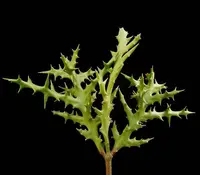
Silver thicket
Euphorbia stenoclada
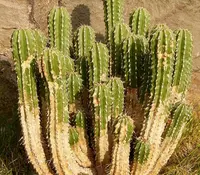
Euphorbia officinarum
Euphorbia officinarum
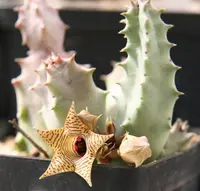
Huernia thuretii
Huernia thuretii
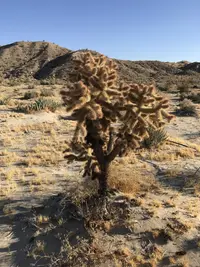
Hoffmann's teddybear cholla
Cylindropuntia fosbergii
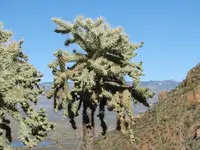
jumping cholla
Cylindropuntia fulgida
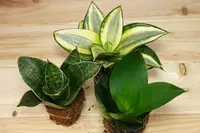
Bird's Nest Snake Plant
Dracaena trifasciata 'Hahnii'
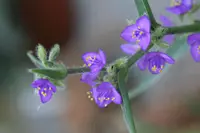
leatherleaf spiderwort
Tradescantia crassifolia
 POPULAR
African Milk Tree
Euphorbia trigona