Offset management
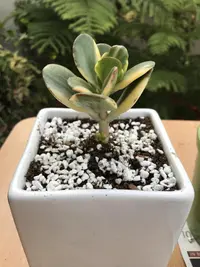
Inspect clumps twice a year and remove crowded offsets with a clean, angled cut so each rosette has space and airflow, then let the cut surfaces dry 2–3 days before replanting to reduce rot risk.

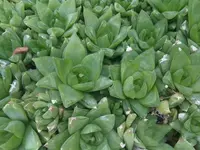
Cathedral window haworthia (Haworthia cymbiformis) is a compact, slow-growing succulent from South Africa. It forms tight rosettes of thick, boat-shaped leaves with translucent “window” tips that let light into the leaf interior.
This species usually stays small and clumps over time, making it suitable for windowsills, desks, and small containers. Its fleshy leaves store water, so it tolerates short dry periods and is forgiving of occasional missed watering.
Because it prefers bright, indirect light, minimal watering, and very free-draining soil, many indoor growers find it easy to care for Cathedral Window Haworthia.

Care Difficulty
Easy Care

Light Preference
Bright Indirect Light

Water Requirements
Low Water

Temperature Preference
Tropical / Frost Sensitive

Hardiness Zone
10–11

Soil Texture
Sandy, Loamy, Rocky

Soil pH
Acidic (5.5–6.5), Slightly acidic (6.5–7.0)

Soil Drainage
Well-drained

Fertilization
Minimal (feed rarely)
Scan your plant to receive care tips personalized for your specific plant
Available on iOS and Android
This compact succulent prefers bright, indirect light and gentle sun exposure to keep its leaves firm and green.
This species stores water in its leaves and needs infrequent, careful watering to prevent root rot.
This succulent prefers mild, stable temperatures and avoids damage when kept away from frost and extreme heat.
This species handles typical indoor humidity well, so humidity is rarely a concern.
This succulent needs a very fast-draining, mineral-rich mix to prevent root rot.
This compact succulent is very suitable for container growing.
This succulent needs light feeding, as Haworthia cymbiformis is adapted to low‑nutrient soils.
Pruning needs for Haworthia cymbiformis are minimal and focus on cleanliness and shape control.
This compact succulent prefers slightly tight quarters and only occasional repotting.
This species is commonly propagated vegetatively, making it straightforward to expand a healthy clump.
This succulent is not frost hardy and needs careful indoor winter conditions in most climates.

Plant Health Check
Not sure what's wrong with your plant? Check your plant's health inside the app.
The triangular leaves have translucent tissue at the tips that acts as a light window, allowing sunlight to penetrate deeper into the leaf for photosynthesis while most of the leaf stays buried and protected from intense sun.
In its native habitat in the Eastern Cape of South Africa, this species often grows tightly packed in shallow rock crevices and sandstone cracks, where the rosette shape and compact roots help it exploit tiny pockets of soil and moisture.
This plant readily produces offsets from its base, forming dense, dome-like clusters over time that can stabilize sandy or rocky substrates and slowly expand across small rock shelves.

In the wild, many populations grow with the rosettes sunk so deeply into the ground that only the translucent leaf tips are visible at soil level, an adaptation that reduces water loss and leaf damage in intense sun and dry conditions.
Brown tips usually come from low humidity, excess fertilizer, or mineral buildup in tap water. Brown, mushy bases point to rot from chronic overwatering and poor drainage. Remove damaged leaves, adjust watering, and flush the substrate if needed.
Keep your plants happy and healthy with plant identification, disease detection, and easy care guidance.