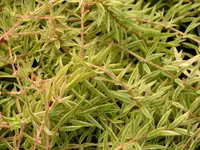
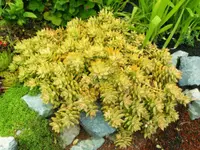
Flower Dust Plant Care (Kalanchoe pumila)

Also known as: Flour-dust plant

About Flower Dust Plant

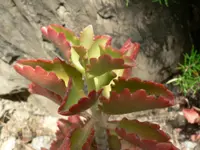
Flower dust plant, Kalanchoe pumila, is a compact succulent shrublet known for its silvery, powder-coated leaves and trailing growth habit. It is often used in containers, hanging baskets, and rock gardens.

This species comes from Madagascar, where it grows in sunny, dry habitats with well-drained, rocky soil. Its thick leaves store water, which makes it relatively forgiving of short dry periods.

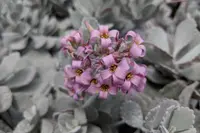
Small clusters of pink to lavender flowers appear above the foliage, adding color without needing much maintenance. Many growers find it easy to care for Flower Dust Plant when given bright light, low to moderate watering, and gritty soil that drains quickly.

Main Plant Requirements

Care Difficulty

Easy Care

Light Preference

Full Sun

Water Requirements

Low Water

Temperature Preference

Tropical / Frost Sensitive

Hardiness Zone

10–11

Soil Texture

Sandy, Loamy, Rocky

Soil pH

Slightly acidic (6.5–7.0), Neutral (7.0)

Soil Drainage

Well-drained

Fertilization

Minimal (feed rarely)

Get Personalized Care Plan

Scan your plant to receive care tips personalized for your specific plant

Personalized Care in the App

Available on iOS and Android

How to Care for the Flower Dust Plant

This compact succulent prefers bright, indirect light with some direct sun for best color and compact growth.

  • Provide 4–6 hours of morning sun or late-afternoon sun, plus bright indirect light for the rest of the day.
  • Tolerates light partial shade, but stems of Flower Dust Plant may stretch and leaf color fades if light stays low for weeks.
  • Avoid harsh midday summer sun, especially in hot climates, as leaves can scorch or develop pale, dry patches; increase light gradually in spring.

Watering for this succulent should imitate brief rain followed by a full dry-down.

  • Let the top 3–5 cm of soil dry completely before watering, then soak the root zone thoroughly and drain away excess water.
  • In warm, bright seasons water more often as drying quickens; in cooler or low-light periods, reduce frequency to prevent root rot in Kalanchoe pumila.
  • Watch for mushy, yellowing leaves as a sign of overwatering and shriveled, thin leaves or limp stems as a sign it has stayed dry too long.

This species prefers warm, dry conditions and dislikes prolonged cold or frost.

  • Aim for 65–80°F (18–27°C) during active growth, with slightly cooler nights improving color and compact growth.
  • Protect from temperatures below 40°F (4°C); brief dips to 35–39°F (2–4°C) may be tolerated but repeated exposure risks cold damage.
  • In hot weather above 90°F (32°C), provide light shade and good air movement to limit heat stress and leaf scorch, especially in strong sun.

Humidity is rarely limiting for Kalanchoe pumila in typical household conditions.

  • Aim for 30–50% relative humidity, similar to most heated or air-conditioned homes.
  • Dry indoor air is usually tolerated; avoid placing the Flower Dust Plant right next to heat vents or fans that cause constant leaf desiccation.
  • Watch for limp, puckered leaves or browning tips as possible stress signs, then move the plant away from drafts rather than adding heavy humidity.

Use a lean, sharply draining mix that mimics rocky, sandy ground.

  • Choose a gritty mix such as 50–60% cactus potting mix combined with coarse perlite or pumice to keep the root zone airy.
  • Aim for slightly acidic to neutral pH, around 6.0–7.0, which suits Kalanchoe pumila and prevents nutrient lockout.
  • Incorporate only a small amount of organic matter, like fine bark or compost, to avoid moisture retention that promotes root rot.
  • Avoid dense, peat-heavy or clay-based mixes that stay wet more than 2–3 days after watering, and never let the pot sit in collected runoff.

This succulent is very suitable for container growing.

  • Select a shallow but wide container to support its trailing habit and prevent the lightweight plant from tipping as stems elongate.
  • Use unglazed terracotta if extra evaporation is needed, since it helps the mix dry faster after infrequent deep watering.
  • Elevate the container slightly on pot feet or a grid so drainage holes stay clear and excess water exits quickly after each watering.

This succulent benefits from light feeding during its active season but is sensitive to excess nutrients.

  • Use a balanced liquid fertilizer (around 10-10-10 or 20-20-20) diluted to 1/4–1/2 strength for Flower Dust Plant.
  • Feed every 4–6 weeks in spring and summer only, on already moist soil to avoid root burn.
  • Avoid compost-heavy mixes; salt buildup stresses roots in Kalanchoe pumila.
  • Stop feeding in fall and winter when growth slows, resuming only when new growth appears.

Kalanchoe pumila responds well to light pruning that keeps the plant compact and encourages new growth.

  • Best time is late winter to early spring, just before or after main flowering has finished.
  • Remove dead, damaged, or stretched stems back to a healthy node using clean, sharp scissors or snips.
  • Pinch or trim soft tips to maintain a low, mounding shape and promote branching.
  • Discard diseased material rather than composting to reduce risk of fungal or pest carryover.

This small succulent needs infrequent repotting, mainly when the root system fills its container.

  • Check for roots circling the pot, pushing through drainage holes, or noticeably slowed growth as signs to repot.
  • Plan repotting for spring, every 2–3 years, when Kalanchoe pumila is beginning active growth.
  • Choose a pot only 2–3 cm wider with excellent drainage and a gritty cactus or succulent mix.
  • Gently loosen circling roots, replant at the same depth, water lightly once, then keep slightly dry for 5–7 days to limit stress.

This species is commonly propagated from stem or leaf cuttings rather than seeds for faster, reliable results.

  • Take 5–8 cm non-flowering stem cuttings in late spring or summer, choosing firm, healthy growth.
  • Allow cut ends or individual leaves to dry and callus for 1–2 days before planting to reduce rot risk.
  • Set cuttings in a barely moist, gritty succulent mix under bright, indirect light at 70–80°F.
  • Avoid heavy watering; mist or lightly moisten until roots form, then transition gradually to normal succulent watering.

This succulent is frost sensitive and needs protection in climates with freezing winters.

  • Keep outdoor plants above 35–40°F; prolonged frost can damage foliage and roots.
  • Move containers indoors to a bright, cool room before nighttime temperatures drop near freezing.
  • Use a very well-drained mix and water sparingly in winter, letting the soil dry almost fully between waterings.
  • In mild climates, shelter plants under eaves or a cold frame to shield them from freezing rain and cold winds.

Care Tips

Timed light rotation

Rotate the pot by 90° every 1–2 weeks so stems receive even light and stay compact instead of leaning and stretching toward one side.

Controlled bloom cycling

To encourage repeat flowering, provide a short-day period of 10–12 hours of darkness each night for 4–6 weeks in late fall, keeping the plant dryish and cool but frost-free during this time.

Stem renewal pruning

After a flowering flush, trim back the longest, woody stems by 1/3 to a junction with healthy leaves to stimulate dense new growth and prevent the plant from becoming leggy.

Clean, dry propagation

For easy expansion of your collection, root 5–8 cm stem cuttings in a dry, gritty mix after letting the cut ends callus for 2–3 days, and avoid any misting while they form roots.

Winter wet protection

If placed outdoors in mild climates, keep the pot in a covered, airy spot through cool, wet months so foliage and the root zone stay dry, which is critical for growing Flower Dust Plant without rot issues.

Common Pests and Diseases

Mealybugs

This pest feeds on succulent leaf and stem tissues, often hiding in the tight leaf rosettes and along the powdery leaf margins. Symptoms include white cottony clusters, sticky honeydew, and slowed growth.

Solution

Isolate the plant, then dab visible insects with cotton swabs dipped in 70% isopropyl alcohol and repeat weekly until no new clusters appear. For heavier infestations, rinse the plant under a gentle lukewarm shower, let it dry well, and apply a ready-to-use insecticidal soap or neem oil spray to all leaf surfaces while reducing excess humidity and crowding with other plants.

Aphids

These insects are often attracted to the tender new growth and flower stalks, sucking sap and distorting leaves and flower buds. Symptoms include sticky residue, curled tips, and sometimes the growth of black sooty mold on honeydew deposits.

Solution

Move the plant to a sink and wash off colonies with a firm but gentle stream of water, repeating every few days as needed. If aphids persist, use an insecticidal soap spray, focusing on new growth and flower stems, and improve air movement around the plant to discourage reinfestation while following basic Kalanchoe pumila care to avoid overly soft, lush growth.

Powdery mildew

This disease appears as white, floury patches on the silver leaves, which can be difficult to notice at first because of the plant’s natural leaf bloom. Symptoms include fuzzy white areas that spread, along with dulling of the leaf surface and possible leaf distortion.

Solution

Increase airflow, avoid overhead watering, and allow the soil surface to dry well between waterings to reduce humidity around the foliage. Remove heavily affected leaves and apply a sulfur-based or potassium bicarbonate fungicide labeled for ornamentals, making sure the product is safe for succulents and testing on a small area first.

Edema

This physiological disorder develops when roots take up water faster than the leaves can transpire, which is common in succulents kept too wet or cool. Symptoms include corky, blister-like spots or rough patches on leaves that do not rub off.

Solution

Allow the potting mix to dry more thoroughly between waterings, ensure the pot has good drainage, and reduce watering volume in cool or low-light conditions. Provide bright light and moderate airflow to stabilize water use and prevent new lesions, although existing scars will remain.

Botrytis blight

This disease causes soft, water-soaked patches on leaves or flower stems that quickly turn brown and develop gray fuzzy mold, particularly on old flowers or damaged tissue. Symptoms include collapsed patches of tissue and rapid spread in cool, humid conditions.

Solution

Promptly remove and discard all affected flowers and leaves, keeping dead material out of the pot and away from other plants. Improve air circulation, avoid wetting foliage, water in the morning only at the soil level, and if needed apply a fungicide labeled for Botrytis on ornamentals, paying close attention to dosage and reapplication intervals.

Interesting Facts

Natural rock crevice specialist

This species is naturally found growing in shallow soil pockets and rock crevices in Madagascar, where its compact habit and shallow roots let it anchor tightly and exploit brief pulses of moisture.

Silvery foliage coating

The leaves are covered with a dense layer of fine, powdery wax known as epicuticular wax, which gives the characteristic frosted look and helps reduce water loss and reflect strong sunlight.

Contrasting winter blooms

Despite its grey-lilac foliage, the plant produces relatively tall clusters of small, bright pink to pink-purple tubular flowers, often in late winter to early spring, which stand out strongly against the muted leaves.

Botan icon

Did you know?

In its native habitats in Madagascar, this plant often forms low, mat-like colonies that can act as pioneer vegetation on exposed rocky slopes, gradually trapping organic debris and helping create the first thin layer of soil for other species to establish.

FAQs about Flower Dust Plant

Lack of blooms often comes from insufficient light, too much nitrogen fertilizer, or very warm nights. Provide bright conditions, a slight temperature drop at night, and avoid overfeeding to support bud formation and repeat flowering.

Grow Healthy Plants with Botan Care

Keep your plants happy and healthy with plant identification, disease detection, and easy care guidance.

Botan plant care app — identify plants on mobile

Explore More Plants