Secure flower spikes
As soon as a new spike reaches 10–15 cm, stake it gently with a thin bamboo stick and soft ties so the heavy, night-scented flowers develop without kinking or snapping the stem.


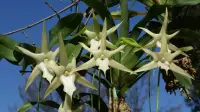
Darwin’s orchid, Angraecum sesquipedale, is an epiphytic orchid from the warm, humid forests of Madagascar. It typically grows on trees, using its roots to anchor rather than to draw nutrients from soil.
The plant produces long, stiff leaves and striking star-shaped white flowers with an exceptionally long nectar spur. These flowers are fragrant at night and pollinated by moths with very long tongues.
Angraecum sesquipedale can be moderately challenging, as it dislikes temperature extremes, drying out completely, or staying waterlogged. Understanding how to care for Darwin’s orchid starts with stable warmth, bright filtered light, and good air movement.

Care Difficulty
Hard Care

Light Preference
Bright Indirect Light

Water Requirements
Regular Water

Temperature Preference
Tropical / Frost Sensitive

Hardiness Zone
12–13

Soil Texture
Sandy, Organic-rich

Soil pH
Acidic (5.5–6.5)

Soil Drainage
Well-drained

Fertilization
Moderate (every 2–4 weeks)
Scan your plant to receive care tips personalized for your specific plant
Available on iOS and Android
This orchid prefers bright, indirect light that mimics bright forest edges or high canopy shade.
Compared with the more drought-tolerant Lady of the Night Orchid, this species should not remain completely dry for long, although both orchids need rapid drainage and air around their roots.
Stable warm conditions are important for this species to grow and flower reliably.
This orchid needs consistently high humidity to maintain healthy leaves and roots.
This species prefers a coarse, airy, bark-based medium rather than traditional potting soil.
This orchid is well suited to container growing when the pot stabilizes its tall, top-heavy growth.
This orchid benefits from light, consistent feeding during its active growth period.
Angraecum sesquipedale needs minimal pruning, mainly for cleanliness and to maintain a tidy outline.
Repotting is infrequent but important to keep this orchid’s roots healthy and well aerated.
This species is slow-growing and most home propagation of Angraecum sesquipedale is limited and challenging.
This orchid is frost-sensitive and needs warm, stable indoor conditions in winter.

Plant Health Check
Not sure what's wrong with your plant? Check your plant's health inside the app.
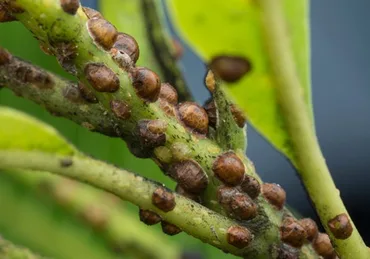
This pest feeds on sap along the stiff leaves and flower spikes, often appearing as small brown or whitish bumps.
Symptoms include sticky honeydew, sooty mold growth, and slowed growth or reduced flowering.
Solution
Remove visible scale by gently scraping with a cotton swab dipped in isopropyl alcohol, then rinse the plant with lukewarm water.
Improve air movement around the plant, avoid excess nitrogen fertilization, and repeat targeted alcohol swab treatments weekly; use a light horticultural oil spray only if the plant is kept in warm conditions.
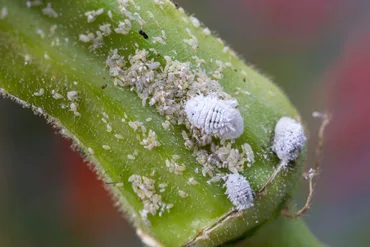
These insects hide in leaf axils and along roots and mounts, producing white cottony clusters and sticky honeydew.
Symptoms include yellowing leaves, poor new growth, and increased risk of sooty mold on the glossy foliage.
Solution
Inspect leaf bases, flower stems, and mounting material regularly, and remove mealybugs with cotton swabs dipped in isopropyl alcohol, then rinse.
Isolate heavily infested plants, reduce overcrowding on the growing bench, and repeat spot treatments every 7–10 days.
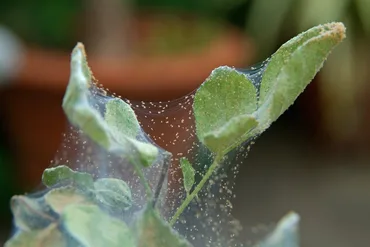
These pests thrive on Angraecum leaves in warm, dry indoor air, especially under high light, causing fine stippling and dull, rough-looking foliage.
Symptoms include tiny webbing on the underside of leaves and gradual yellowing or bronzing.
Solution
Increase humidity to 50–70%, rinse foliage thoroughly under a gentle shower, and wipe leaf undersides to remove mites and webbing.
Improve air circulation, avoid letting the plant dry out completely, and use an insecticidal soap or miticidal spray labeled for orchids, applied in 2–3 rounds at 5–7 day intervals.
In 1862 Charles Darwin predicted that this orchid’s very long nectar spur meant a moth with an equally long proboscis must exist; decades later, the hawkmoth Xanthopan morganii praedicta with a proboscis matching the spur length was discovered, confirming his hypothesis and becoming a classic case of coevolution.
The flower has a nectar-filled spur that can reach about 25–35 cm in length, accessible only to long-tongued hawkmoths, which strongly restricts its natural pollinators but improves pollination efficiency.
Its large, white, star-shaped flowers open at night and release a strong, sweet fragrance in the dark, an adaptation to attract nocturnal hawkmoths that rely on scent and pale color to find flowers.

The species is native to lowland coastal forests of Madagascar, where it typically grows as an epiphyte on trees, relying on humid, shaded microhabitats that are now threatened by deforestation, which has made wild populations of this orchid increasingly vulnerable.
Lack of flowering usually comes from insufficient light, too-warm nights, or no cool, drier rest in winter. Mature plants need stable conditions, balanced fertilizer, and a distinct seasonal drop in temperature to set buds successfully.
Keep your plants happy and healthy with plant identification, disease detection, and easy care guidance.