Winter dormancy setup
In cold climates, overwinter outside in a cold frame or unheated but bright porch so the plant gets 3–4 months near-freezing temperatures without being exposed to drying winds or repeated freeze–thaw of the pot.

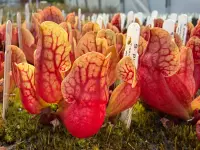
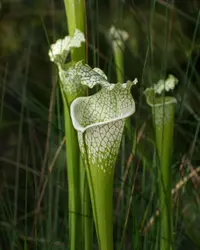
Purple pitcher plant, Sarracenia purpurea, is a cold-hardy, insect-eating bog plant native to northern North America. It grows in nutrient-poor wetlands, relying on trapped insects for nutrients.
The plant forms low rosettes of tubular, purple-green leaves that hold rainwater and capture prey. Flowers appear on tall stalks, usually in spring, held above the pitchers.
This species prefers full sun, constant moisture, and very low-nutrient, acidic substrate, which makes ordinary potting soil unsuitable. Once its needs are understood, it is a relatively reliable choice for those who want to learn how to care for Purple pitcher plant.

Care Difficulty
Moderate Care

Light Preference
Full Sun

Water Requirements
Aquatic

Temperature Preference
Cold Hardy

Hardiness Zone
2–7

Soil Texture
Sandy, Peaty, Organic-rich

Soil pH
Strongly acidic (4.5–5.5)

Soil Drainage
Waterlogged tolerant

Fertilization
Minimal (feed rarely)
Scan your plant to receive care tips personalized for your specific plant
Available on iOS and Android
This carnivorous bog species needs strong, direct light to form sturdy, colorful pitchers.
This bog plant requires consistently wet conditions, not standard houseplant watering habits.
This hardy species tolerates a wide range of outdoor temperatures when seasonal changes are gradual.
This species prefers moderately humid air but adapts to many home conditions if roots stay wet.
This carnivorous bog plant needs permanently moist, nutrient-poor, acidic media rather than standard potting soil.
This species is very suitable for container growing, including outdoor bog-style pots and tray setups.
Sarracenia purpurea gains most nutrients from captured insects and usually needs no added fertilizer.
Pruning Sarracenia purpurea focuses on removing old growth to keep the plant healthy and tidy.
Repotting Purple pitcher plant maintains healthy roots and fresh, low-nutrient media.
Sarracenia purpurea is most reliably propagated by division, with seed used mainly for breeding or larger projects.
This species is naturally cold hardy and needs a cool winter dormancy rather than warm indoor conditions.

Plant Health Check
Not sure what's wrong with your plant? Check your plant's health inside the app.
This species naturally ranges farther north than any other pitcher plant, occurring in cold bogs of Canada, the northern US, and even subarctic regions where winter frost and snow are common.
Instead of producing strong digestive enzymes like many carnivorous plants, its pitchers host a mini ecosystem of bacteria, protozoa, and insect larvae that break down prey, with the plant absorbing released nutrients.
Unlike many tropical carnivores, this plant is evolutionarily adapted to prolonged cold dormancy, surviving frozen pitchers and temperatures well below freezing in its native sphagnum bog habitats.

This species has been used as a model organism in ecological research on food webs, because each pitcher functions like a tiny, self-contained pond where scientists can study predator–prey interactions, nutrient cycling, and community dynamics on a very small scale.
Brown pitchers usually result from old age, low humidity, tap water with minerals, or past drought stress. Trim only fully dried pitchers, switch to rain or distilled water, and maintain consistently moist, acidic conditions to support new growth.
Keep your plants happy and healthy with plant identification, disease detection, and easy care guidance.