Piedmont primrose-willow Care (Ludwigia arcuata)

About Piedmont primrose-willow

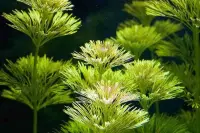
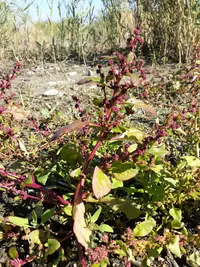
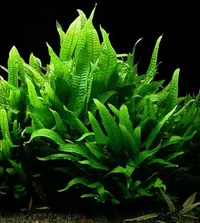
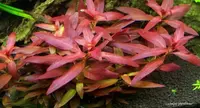
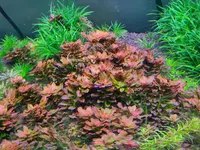
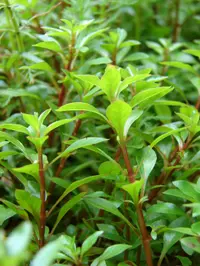
Piedmont primrose-willow (Ludwigia arcuata) is a fine-leaved aquatic plant often used in freshwater aquariums and specialized water gardens. It forms dense, bushy stands with narrow, willow-like leaves that can turn reddish under strong light.

In nature it occurs in shallow, slow-moving waters of the southeastern United States, where it anchors in muddy or sandy substrates. The plant grows moderately fast but needs stable water conditions and adequate nutrients, so it suits aquarists with at least some experience.

Those learning how to care for Piedmont primrose-willow should note that it prefers bright light, clean, well-filtered water, and consistent moisture, as it is not tolerant of neglect or extreme fluctuations.

Main Plant Requirements

Care Difficulty

Moderate Care

Light Preference

Full Sun

Water Requirements

Aquatic

Temperature Preference

Tropical / Frost Sensitive

Hardiness Zone

8–11

Soil Texture

Sandy, Loamy, Organic-rich

Soil pH

Acidic (5.5–6.5), Slightly acidic (6.5–7.0)

Soil Drainage

Waterlogged tolerant

Fertilization

Moderate (every 2–4 weeks)

Get Personalized Care Plan

Scan your plant to receive care tips personalized for your specific plant

Personalized Care in the App

Available on iOS and Android

How to Care for the Piedmont primrose-willow

This aquatic stem plant needs strong light to maintain compact growth and intense red coloration.

  • Provide 8–10 hours of bright light daily; full sun in shallow outdoor water or high-output aquarium lighting encourages dense, upright stems.
  • Tolerates light shade for a few hours, but sustained low light causes Piedmont primrose-willow to elongate, lose lower leaves, and turn more green than red.
  • In summer, very intense midday sun combined with shallow, warm water can cause algae competition; balance light with nutrients and CO2 for healthy growth.

This species thrives in consistently wet to submerged conditions rather than fluctuating soil moisture.

  • Grow in shallow standing water, slow-moving margins, or fully submerged; do not allow the root zone to dry out, even at the top 2–3 cm of substrate.
  • In aquaria, aim for stable water level and moderate flow; wilting, dull leaves, and brittle stems indicate underwatering or drying margins in emergent setups.
  • Yellowing, mushy stems and a sour smell from the substrate point to poor drainage or stagnant, oxygen-poor conditions around Ludwigia arcuata roots.

This plant prefers stable, mild to warm conditions to sustain rapid aquatic growth.

  • Optimal growth occurs at 70–82°F (21–28°C), where stems branch well and foliage colors develop strongly.
  • It tolerates down to about 60°F (16°C) but growth slows; brief drops below 55°F (13°C) can cause leaf loss and dieback, especially in shallow outdoor setups.
  • Heat above 86°F (30°C) is tolerated if water is well-oxygenated, but prolonged exposure with strong sun increases stress, algal growth, and risk of tissue melt.

This aquatic stem plant prefers high, stable humidity close to its water surface conditions.

  • Aim for 70–90% humidity when grown emergent, using open water surfaces or trays to keep surrounding air moist.
  • Dry air below 50% leads to curled, brittle tips and slowed growth in Piedmont primrose-willow.
  • Increase humidity by clustering aquatic containers, using shallow water trays, or adding a lid with vents rather than misting leaves.

Ludwigia arcuata thrives in saturated, nutrient-rich substrates that stay wet but not anaerobic.

  • Use a fine-textured mix of aquatic plant soil or sand blended with clay-rich loam and 20–30% organic matter such as compost.
  • Ensure slow drainage with constant submersion or very wet conditions while avoiding foul, black, sulfur-smelling anaerobic pockets.
  • Aim for slightly acidic to neutral pH around 6.0–7.2 for stable nutrient availability and healthy root growth.
  • Add a thin top layer of sand or fine gravel to anchor stems, improve water flow around roots, and limit substrate disturbance.

This species is well suited to growing in containers, especially in aquariums or patio water tubs.

  • Choose tall, narrow containers so stems can reach the surface while roots stay fully submerged and stable at the base.
  • Use heavier pots or place rocks at the bottom to prevent tipping as upright, fast-growing stems create top weight.
  • Select non-porous containers to maintain constant water levels and reduce rapid evaporation around the root zone.

Ludwigia arcuata benefits from light, consistent nutrition rather than heavy feeding.

  • Use a balanced liquid aquarium fertilizer or aquatic plant formula with complete micronutrients, rather than compost or slow-release granules.
  • Dose at 1/4–1/2 strength once per week during the active growing season, adjusting based on plant density and light level.
  • Reduce feeding to every 2–3 weeks in winter or low-growth periods, watching for algae as a sign of excess nutrients.
  • For caring for Piedmont primrose-willow in high-tech aquaria, coordinate fertilization with COâ‚‚ and strong light to prevent nutrient imbalance.

Pruning supports compact, bushy growth and maintains healthy stems in Ludwigia arcuata.

  • Trim stems during peak growth, typically spring through early fall, to prevent legginess and shading of lower leaves.
  • Remove dead, damaged, or algae-covered tips first, then thin crowded stems to improve light penetration and water flow.
  • Use sharp aquascaping scissors and make clean cuts just above a node to encourage branching from that point.
  • Shaping the plant group with staggered heights can enhance color display and keep tops from shading neighboring species.

This aquatic species is usually transplanted within the substrate rather than traditionally repotted.

  • Transplant when stems become overly dense, growth slows, or roots form thick mats in the top substrate layer.
  • Best timing is during stable warm conditions, avoiding major moves right after large water changes or other stress events.
  • Lift stems gently, trim long roots, and replant healthy tops 2–3 cm apart into fine gravel or nutrient-rich aquatic soil.
  • Work slowly to keep root disturbance low, and perform partial water changes afterward to remove debris and reduce stress.

Propagation of Ludwigia arcuata is commonly done through stem cuttings in aquaria.

  • Take 8–10 cm stem cuttings during active growth, ideally spring to early fall under strong, stable lighting.
  • Cut just below a node, remove lower leaves, and insert the bare section into the substrate so at least 2 nodes are buried.
  • Provide 72–80°F water, moderate water flow, and a stable nutrient supply to support rapid root formation and new shoots.
  • For dense groupings, replant healthy stem tops and discard weak or heavily algae-covered lower sections.

In most indoor aquaria, Ludwigia arcuata needs minimal specific winter care.

  • Maintain stable water temperature within the preferred range, avoiding exposure to near-freezing air during maintenance.
  • In unheated or cool rooms, use a reliable heater and thermometer to prevent sudden temperature drops.
  • For outdoor tubs in mild climates, move containers indoors or to a frost-free space before temperatures fall below 50°F.

Care Tips

Substrate Anchoring

Use fine-grain aquarium soil or sand and plant stems deeply with planting tweezers so the narrow roots anchor well and do not float up during maintenance.


Bushy Growth Trimming

Once stems reach the water surface, trim and replant the top 5–10 cm to create dense, bushy groups and prevent the lower portions from becoming bare and shaded out.

Flow Pattern Positioning

Place stems in moderate, indirect filter flow rather than in the strongest current so leaves are gently moving but not bent over, which helps maintain upright, compact growth.

Nutrient Gradient Use

Arrange taller stems toward the back or sides of the tank where flow delivers more dissolved nutrients, and keep the front group slightly less dense to reduce competition and improve light penetration.

Algae Pressure Management

When caring for Piedmont primrose-willow in high light, combine consistent COâ‚‚ levels with a strict, weekly pruning routine to remove shaded or algae-prone leaves before algae becomes established.

Common Pests and Diseases

Aquarium snails

These pests graze on soft shoot tips and fresh leaves, slowing growth and causing ragged edges on Ludwigia stems. Symptoms include missing leaf tissue and clusters of small snails on leaves and hardscape near the plant.

Solution

Reduce overfeeding to limit snail breeding, manually remove visible snails, and use snail traps overnight to lower the population. In heavy infestations, introduce a biological control such as assassin snails or carefully use a shrimp-safe commercial snail treatment while monitoring fish and invertebrates closely.

Hair algae

This pest forms green, stringy growth on fine stems and leaf edges, smothering foliage and blocking light. Symptoms include tangled, filamentous masses clinging to the plant, especially in high-light zones with excess nutrients.

Solution

Manually remove algae with a soft brush or tweezers during water changes, then correct the underlying imbalance by slightly reducing light intensity or duration and stabilizing COâ‚‚ and fertilization. Improve flow around dense stems and consider adding algae grazers such as Amano shrimp or Siamese algae eaters if compatible with the tank.

Black beard algae

This pest appears as short, dark, tuft-like growth on stems and leaf margins, often in areas with fluctuating COâ‚‚ or inconsistent fertilization. Symptoms include dark patches that do not rub off easily and can overgrow slower leaves.

Solution

Trim and discard heavily infested stems, spot-treat remaining patches outside the tank with liquid carbon or hydrogen peroxide when replanting, and stabilize COâ‚‚ levels and nutrient dosing to prevent regrowth. Increasing stable flow around Ludwigia groups and avoiding sudden light or COâ‚‚ changes are key parts of Ludwigia arcuata care instructions in aquaria.

Nutrient deficiency chlorosis

Symptoms include pale or yellowing new leaves with weak, thin stems despite adequate light, often due to imbalanced iron or micronutrients. This issue is common in fast-growing, red-stem aquatic plants that rely on regular dosing.

Solution

Increase or rebalance comprehensive liquid fertilization with attention to iron and trace elements, and ensure COâ‚‚ and macros (nitrate, phosphate, potassium) are not limiting. Regular small water changes and careful testing help maintain stable nutrient levels and restore healthy red coloration and compact growth.

Staghorn algae

This pest develops as gray to dark green, forked filaments on leaf edges and older stem sections, especially where flow is weak or ammonia has spiked. Symptoms include coarse, branched strands that are hard to pull off and often start on stressed leaves.

Solution

Remove the worst-affected leaves and stems, then improve filtration and flow around dense plant groups to prevent debris buildup. Address excess organic waste with more frequent substrate vacuuming, stabilize COâ‚‚, and use targeted spot treatments with diluted liquid carbon during water changes if livestock tolerates it.

Interesting Facts

Fine needle-like leaves

This species forms very narrow, thread-like submerged leaves that increase the surface area for gas exchange and help it tolerate low dissolved CO2 conditions better than many broader-leaved aquatic stems.

Amphibious growth form

Ludwigia arcuata can change its leaf shape and structure when grown emersed compared with submerged, an example of phenotypic plasticity that allows it to adapt to fluctuating water levels.

Red coloration triggers

Its red or bronze hues intensify under strong light and adequate iron availability, because higher light and micronutrient levels increase the production of protective red pigments called anthocyanins.

Botan icon

Did you know?

In the aquarium trade, Ludwigia arcuata is often confused and intermixed with closely related narrow-leaved species such as Ludwigia brevipes and various hybrids, so verified botanical identification typically requires examining floral and fruit structures rather than foliage alone.

FAQs about Piedmont primrose-willow

This species spreads quickly by seed and creeping stems in shallow, wet areas. In suitable conditions it can form dense mats. Regular trimming and physical barriers help keep it contained, especially in ponds, ditches, and wet gardens.

Grow Healthy Plants with Botan Care

Keep your plants happy and healthy with plant identification, disease detection, and easy care guidance.


Botan plant care app — identify plants on mobile

Explore More Plants