Dwarf Sagittaria Care (Sagittaria subulata)

Also known as: awl-leaf arrowhead, dwarf sagittaria, rubbon wapato, dwarf arrowhead

About Dwarf Sagittaria

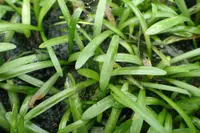
Dwarf sagittaria (Sagittaria subulata) is a small, grass-like aquatic plant commonly used in freshwater aquariums as a foreground or midground carpeting species. It forms low clumps of narrow, ribbon-like leaves that spread by runners, creating a simple, uniform underwater meadow look.

This species is native to shallow, slow-moving waters in the Americas, where it grows rooted in soft, nutrient-rich substrates. It is generally considered undemanding, which makes it suitable for beginners who want to learn how to care for Dwarf Sagittaria. Moderate light, stable water conditions, and a nutrient-rich substrate usually support steady, healthy growth.

Main Plant Requirements

Care Difficulty

Easy Care

Light Preference

Partial Sun

Water Requirements

Aquatic

Temperature Preference

Warm Climate

Hardiness Zone

8–11

Soil Texture

Sandy, Loamy, Organic-rich

Soil pH

Acidic (5.5–6.5), Slightly acidic (6.5–7.0)

Soil Drainage

Waterlogged tolerant

Fertilization

Light (every 4–6 weeks)

Get Personalized Care Plan

Scan your plant to receive care tips personalized for your specific plant

Personalized Care in the App

Available on iOS and Android

How to Care for the Dwarf Sagittaria

Sagittaria subulata grows best with consistent, moderate to high light in shallow water or at the tank edge.

  • Provide 8–10 hours of bright light daily; in outdoor ponds, aim for morning sun with light afternoon shade to prevent leaf scorch.
  • Tolerates partial shade (4–5 hours direct sun) but growth becomes slower and leaves may elongate or thin if light is too low.
  • In strong summer sun, use floating plants or shade cloth to diffuse light; in winter, supplement aquarium lighting to maintain steady growth for Dwarf Sagittaria.

This aquatic plant needs constantly saturated conditions rather than traditional soil-style watering.

  • In ponds or aquariums, keep the crown just above the substrate with water fully covering the leaves; never allow Sagittaria subulata to dry out.
  • Use fine gravel or sand with good water movement so detritus does not accumulate and cause root rot or foul-smelling substrate.
  • Yellowing, melting, or transparent leaves often signal poor water quality or sudden changes; test for ammonia, nitrite, and nitrate instead of changing water volume on a fixed schedule.

This species prefers stable, mild temperatures and reacts poorly to sudden extremes.

  • Optimal growth occurs at 72–78°F (22–26°C), which supports steady leaf production and root development in most aquariums and shallow ponds.
  • It can tolerate 68–82°F (20–28°C), but prolonged exposure below 64°F (18°C) slows growth and may cause dieback of older leaves.
  • Avoid frost and freezing; outdoor plantings should be protected or moved if water may drop near 32°F (0°C), and shading helps during heat waves above 86°F (30°C).

This aquatic species is flexible about air humidity but benefits from stable, moderately humid conditions above the water surface.

  • Aim for room air at 40–60% humidity when foliage emerges above the waterline, which is sufficient for healthy growth.
  • Dry air above 35% can cause leaf tips to brown and fine emergent leaves to curl or thin out over time.
  • Increase humidity by raising water level slightly, grouping aquariums away from vents, or using a lid that limits evaporation drafts.

Sagittaria subulata prefers a nutrient-rich, fine to medium aquatic substrate that anchors roots firmly while allowing slow water movement through the bed.

  • Use a 5–8 cm layer of fine gravel or sand mixed with nutrient-rich aquatic plant substrate or laterite to support strong root growth.
  • Aim for mildly acidic to neutral conditions, roughly pH 6.5–7.5, which support nutrient availability and stable growth.
  • Avoid sharp, coarse gravel or very loose pebbles that let roots float up or trap uneaten food and debris in large gaps.
  • Improve structure by placing root tabs or aquatic plant fertilizer near the root zone rather than mixing large amounts of organic matter directly into the substrate.

This species is well suited to container growing in aquariums or pond baskets.

  • Choose a wide, shallow container or basket so the plant can send out runners horizontally without crowding the crown.
  • Use a heavy substrate and, for pond baskets, add a top layer of coarse gravel to prevent soil from escaping into the water column.
  • Position the container where water flow is gentle so leaves are not battered yet fresh, oxygenated water still reaches the root zone.

Aquarium-grown Sagittaria subulata benefits from light, consistent nutrition rather than heavy feeding.

  • Use a balanced aquatic plant fertilizer or root tabs with roughly equal NPK, placed near the root zone.
  • Dose every 2–4 weeks during active growth, following the lower end of the manufacturer’s rate.
  • Dilute liquid fertilizers to 50% strength to limit algae and prevent leaf burn.
  • Reduce or stop dosing in winter or when growth slows, especially in low-light setups.

Pruning keeps Sagittaria subulata tidy, encourages new shoots, and maintains good light penetration in the tank.

  • Trim yellowing, melting, or damaged leaves at the base using small aquascaping scissors.
  • Thin out crowded rosettes to prevent shading and maintain a low, dense carpet form.
  • Remove very tall flower stalks if they shade other plants or disrupt the desired layout.
  • Schedule light pruning every few weeks during peak growth to stabilize plant shape and density.

This species is usually planted directly in aquarium substrate, so transplanting focuses on repositioning clumps rather than true repotting.

  • Plan to lift and divide dense patches every 6–12 months if growth slows or leaves become small and crowded.
  • Gently loosen the substrate and tease out rosettes by the base to avoid tearing roots excessively.
  • Replant individual rosettes or small groups, spacing them 2–3 cm apart in nutrient-rich substrate.
  • Trim very long roots slightly and keep plants submerged and shaded for a few days to reduce transplant shock.

Sagittaria subulata spreads mainly through runners, making vegetative propagation the standard approach in aquariums.

  • Allow healthy mother plants to send out runners with small daughter rosettes along the substrate.
  • Once daughter plants have several leaves and a small root system, cut the runner with clean scissors.
  • Replant separated rosettes 2–3 cm apart in fine-grain substrate for stable anchoring and quick establishment.
  • Maintain stable water parameters, moderate light, and gentle flow to support rooting and growing Dwarf Sagittaria.

In indoor heated aquariums, this plant usually needs no special winter care beyond stable conditions.

  • Keep water temperature steady, typically 68–77°F, avoiding sudden cold drops that can trigger dieback.
  • Ensure lighting duration remains consistent, around 8–10 hours, to limit seasonal growth slowdown.
  • For outdoor ponds in cold climates, move container-grown clumps indoors or to a frost-free tank before freezing conditions.

Care Tips

Dense carpet shaping

Trim the tallest leaves just above the substrate with aquascaping scissors every 2–3 weeks to encourage horizontal runners and a thicker, more even carpet rather than tall, sparse tufts.

Controlled runner management

Periodically thin or redirect runners by gently uprooting excess daughter plants with tweezers and replanting them in bare areas so the carpet does not choke slower foreground species or block water flow.

Substrate maintenance routine

Use a narrow siphon to lightly vacuum detritus from the top 1–2 cm of the substrate around the plants during water changes, taking care not to disturb roots, to prevent anaerobic pockets and algae-fueling waste buildup.

CO2 and flow positioning

Place this plant where it receives moderate, steady water flow and good CO2 distribution, using the filter outlet or a small circulation pump, so leaves remain gently moving rather than stagnant, which improves nutrient uptake and reduces algae on blades.

Propagation planning

When planning on growing Dwarf Sagittaria for new tanks, allow a healthy mother patch to establish, then periodically lift and separate well-rooted daughter plants with their own root clusters to transplant into other aquariums as ready-made foreground starters.

Common Pests and Diseases

Snail and slug damage

This pest feeds on soft leaf tissue, often creating irregular holes and shredding the narrow blades. Symptoms include missing leaf tips and nighttime grazing patterns in pond or paludarium setups.

Solution

Hand-pick snails and slugs after lights out, use species-safe snail traps, and reduce excess fish food that attracts them. In aquariums, introduce suitable natural predators (such as certain loach species) where appropriate, and avoid copper-based treatments if invertebrates or sensitive fish are present.

Algae overgrowth

This disease-like issue competes with the plant for light and nutrients, often coating leaves with green, brown, or filamentous growth. Symptoms include slowed growth, shaded leaves, and poor overall vigor.

Solution

Reduce light intensity or duration to about 6–8 hours if excessive, improve nutrient balance, and increase water changes to lower organic waste. Manually remove algae from leaves, increase plant mass with fast growers, and ensure stable CO2 levels to favor healthy growing Dwarf Sagittaria over algae.

Nutrient deficiency

This disorder appears when essential nutrients in the water column or substrate are imbalanced or depleted. Symptoms include pale new leaves, yellowing between veins, stunted growth, or transparent patches in older leaves.

Solution

Test water parameters and adjust fertilization with a complete aquatic plant fertilizer that supplies nitrogen, potassium, and trace elements. Provide an enriched substrate or root tabs near the crown, and maintain consistent dosing rather than large, infrequent additions.

Melting from parameter shock

This physiological problem occurs after sudden changes in water chemistry, temperature, or light, often seen after introduction to a new tank. Symptoms include soft, translucent, or dissolving leaves that detach near the base.

Solution

Keep water conditions stable, avoid rapid shifts in pH, hardness, or temperature, and acclimate new plants slowly to the aquarium. Trim away melted leaves to prevent decay, maintain good filtration and circulation, and allow time for new, adapted growth to emerge from the crown.

Interesting Facts

Amphibious growth habit

This species can live fully submerged in aquariums yet also transition to emergent growth in shallow water, changing leaf shape and height depending on water depth and light.

Built-in oxygen channels

Its leaves and roots contain aerenchyma, specialized air-filled tissues that move oxygen from the leaves down to the roots so it can survive in low-oxygen, waterlogged substrates.

Specialized freshwater range

In nature it is native to coastal and lowland freshwater habitats of South America, where it colonizes slow-moving streams, ditches, and shallow margins with soft, sandy or silty bottoms.

Botan icon

Did you know?

In aquarium conditions this species often forms dense underwater meadows that act as a nursery structure for small fish and invertebrates, increasing available shelter and surface area for biofilm and beneficial microorganisms.

FAQs about Dwarf Sagittaria

This species spreads by runners, gradually forming a dense carpet under suitable light and nutrients. It is not usually considered invasive in aquariums, but regular thinning prevents overcrowding, poor water flow, and competition with slower plants.

Grow Healthy Plants with Botan Care

Keep your plants happy and healthy with plant identification, disease detection, and easy care guidance.

Botan plant care app — identify plants on mobile

Explore More Plants