Frequent Tip Pinching
Regularly pinch back the stem tips with clean fingers or scissors to keep the mat dense, prevent legginess, and encourage many small leaves instead of a few long runners.

-1-200x150.webp)
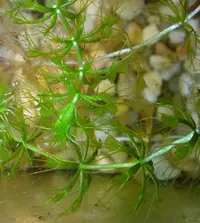
Hydrocotyle Japan (Hydrocotyle tripartita) is a small, creeping aquatic or semi-aquatic plant often used in aquariums and moist terrariums. It forms dense mats of bright green, clover-like leaves on fine trailing stems.
In nature it occurs in parts of East Asia and Australasia, where it grows along stream edges, wet banks, and damp forest floors. Its fast growth and compact size make it popular for foreground and carpeting effects.
This plant prefers consistent moisture, gentle water movement, and moderate light, and it can adapt well when these basics are stable. Understanding how to care for Hydrocotyle Japan mainly involves managing light intensity and avoiding sudden changes in water or substrate conditions.

Care Difficulty
Moderate Care

Light Preference
Partial Shade

Water Requirements
Keep Soil Moist

Temperature Preference
Tropical / Frost Sensitive

Hardiness Zone
9–11

Soil Texture
Loamy, Silty, Organic-rich

Soil pH
Acidic (5.5–6.5), Slightly acidic (6.5–7.0)

Soil Drainage
Waterlogged tolerant

Fertilization
Moderate (every 2–4 weeks)
Scan your plant to receive care tips personalized for your specific plant
Available on iOS and Android
This creeping aquatic or marginal plant prefers bright, soft light rather than intense direct sun.
Hydrocotyle tripartita thrives in consistently moist to wet conditions and does not tolerate drying out.
This species grows best in mild, stable temperatures without frost or extreme heat swings.
This species prefers consistently moist air but adapts to typical indoor humidity if not overly dry.
Hydrocotyle tripartita grows best in a light, moisture-retentive but free-draining mix that stays evenly damp.
This species is well suited to container culture due to its shallow, spreading roots and compact foliage.
This compact aquatic or terrarium plant responds well to modest, steady feeding rather than heavy applications.
Hydrocotyle tripartita benefits from light, frequent trimming to maintain a dense, low mat.
This fast-spreading species rarely needs large pots but does benefit from occasional division and substrate refresh.
Hydrocotyle tripartita is commonly multiplied by using its naturally creeping stems and divisions.
This plant is frost-sensitive and needs protection in regions with cold winters.

Plant Health Check
Not sure what's wrong with your plant? Check your plant's health inside the app.
This species forms dense mats of tiny three-lobed leaves that closely resemble miniature clover, which is why aquarists often use it to create carpet-like foregrounds in aquascapes.
It can grow fully submerged, partially submerged, or emersed above the waterline, shifting leaf shape and internode length depending on whether it is in an aquarium or in moist terrestrial conditions.
Originally described from East Asia, it has become a standard carpeting plant in planted aquaria worldwide because it adapts quickly to stable CO2 levels, moderate light, and frequent trimming compared with many more delicate foreground species.

In aquascaping competitions, this species is frequently used to simulate terrestrial groundcovers or mossy meadows at small scale, taking advantage of its very fine leaf size and creeping stolons to create detailed, landscape-like scenes underwater.
This species spreads by fast, creeping stems and can quickly form a dense mat in favorable conditions. In containers or small aquariums, regular trimming and removal of runners keeps growth controlled and prevents it from overrunning other plants.
Keep your plants happy and healthy with plant identification, disease detection, and easy care guidance.